Choosing new railings for your Toronto home should feel exciting a chance to improve safety, elevate your interior design, and boost long term property value. But many homeowners unintentionally make decisions that lead to safety issues, code violations, unnecessary expenses, or designs that simply don’t last.
To help you avoid the most common pitfalls, this guide breaks down the 7 mistakes Toronto homeowners make most often, explains why they happen, and offers smarter alternatives that protect both your family and your investment.
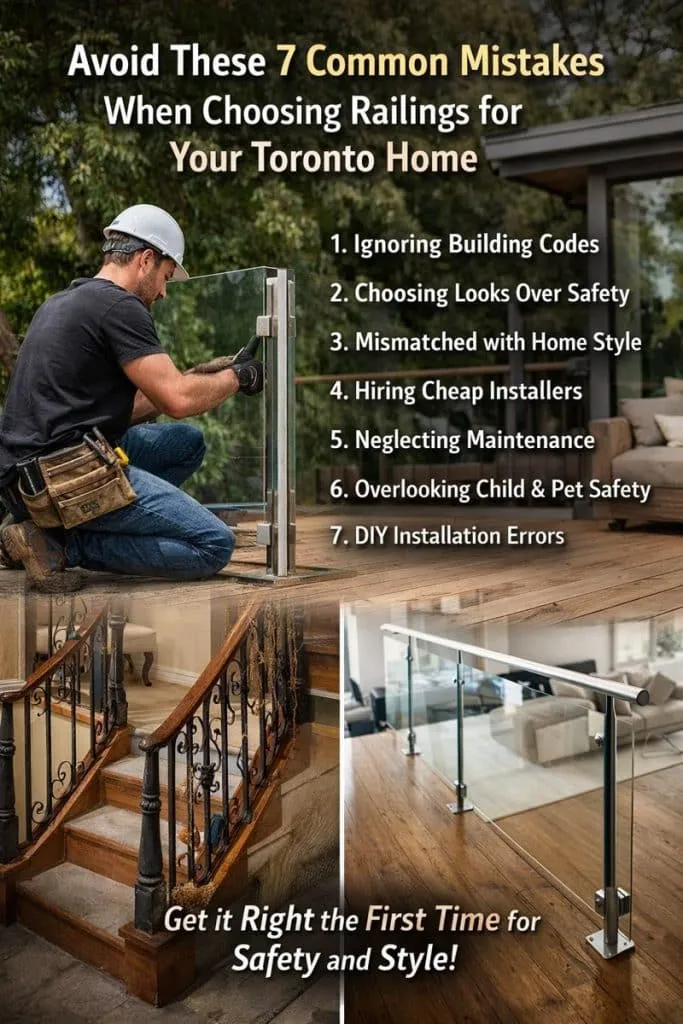
Quick Overview: 7 Common Railing Mistakes & Smarter Alternatives
Here’s a summary of the most common mistakes Toronto homeowners make when choosing railings, and how to avoid them:
| Common Mistake | Why It’s a Problem | Better Alternative |
|---|---|---|
| Ignoring Ontario Building Code Requirements | Risk of costly rework, safety issues, failed inspections | Work with a professional contractor to ensure code compliance |
| Choosing Aesthetics Over Safety | Wobbly or unstable railings, weak materials, poor load performance | Use tempered/laminated glass, solid hardwood, or high grade metal |
| Not Matching the Railing to Your Home’s Architecture | Visually mismatched railings that reduce property appeal | Select a style that complements your home’s design |
| Using Low Quality Hardware or Budget Installers | Loose railings, early rust, short lifespan | Hire specialized fabricators and installers for durability |
| Not Considering Long Term Maintenance | High upkeep, rust, scratches, and poor performance over time | Choose materials suited to your lifestyle and maintenance expectations |
| Forgetting About Child, Senior, or Pet Safety | Climbable bars, wide gaps, sharp edges, hard to grip rails | Opt for anti climb designs, proper spacing, comfort grip, and safe glass |
| Trying to Install Railings DIY | Uneven posts, loose clamps, incorrect measurements, unsafe mounting | Hire a professional installer for precision and code compliance |
1. Ignoring Ontario Building Code Requirements (Leading to Costly Rework)
Many homeowners start with style inspiration from Pinterest, Instagram, or model homes and forget to confirm whether the design meets Ontario Building Code requirements. This is one of the most expensive mistakes you can make.
Why It’s a Problem
- Incorrect railing height
- Improper spacing between balusters
- Unsafe glass thickness
- Non compliant structural support
Any of these issues can result in failed inspections, forced reinstallation, and serious safety risks for children, seniors, or pets.
Better Alternative
Work with a contractor experienced in code compliant railing installation in Toronto. A professional team will ensure your railings meet all legal and safety standards from day one.
2. Choosing Aesthetics Over Safety
It’s easy to fall in love with sleek designs like ultra minimal frames, floating glass, or thin metal posts. But style should never come at the cost of structural strength.
Risks
- Wobbling or unstable railings
- Weak or uncomfortable handrails
- Breakable or low grade materials
- Poor load bearing performance
Better Alternative
Choose materials engineered for durability and impact resistance, such as tempered or laminated glass, solid hardwood, or high grade metal. Professional glass railing systems are designed to balance modern aesthetics with real world safety.
3. Not Matching the Railing to Your Home’s Architecture
Toronto homes vary widely, from modern downtown condos to traditional detached houses. A railing that looks perfect in one setting may feel completely out of place in another.
Common Mismatches
- Heavy wrought iron in minimalist interiors
- Ultramodern glass in classic or heritage homes
- Rustic wood in sleek urban condos
Better Alternative
Select a railing style that complements your home’s architecture instead of competing with it. A professional stair and railing company can help you create visual harmony while maintaining safety and function.
4. Choosing Low Quality Hardware or Budget Installers
Low cost installers often reduce prices by cutting corners on materials and craftsmanship.
Common Shortcuts
- Low quality brackets and fasteners
- Thin or weak metal components
- Untested or low grade glass
- Inexperienced fabricators
What This Leads To
- Loose or shaky railings
- Early rust and corrosion
- Glass discoloration or damage
- Short lifespan and costly replacements
Better Alternative
Invest in a specialized railing fabricator and installer. High quality workmanship, like the custom solutions offered by Darvish Inc., delivers long term durability, safety, and added property value.
5. Not Considering Long Term Maintenance
Many homeowners focus only on how railings look on installation day, not how they perform years later.
Examples
- Wood railings require refinishing over time
- Low grade metals can rust or corrode
- Poor quality glass scratches easily
Better Alternative
Choose materials that match your lifestyle and maintenance expectations:
- Glass railings for easy cleaning and a modern look
- Metal railings for durability indoors and outdoors
- Hardwood railings for warmth and timeless appeal
An experienced railing specialist can explain realistic maintenance needs before you commit.
6. Forgetting About Child, Senior, or Pet Safety
Every household has different safety needs. Many Toronto families choose railings without considering who uses the stairs daily.
Common Safety Gaps
- Horizontal bars that children can climb
- Wide gaps that pets can slip through
- Sharp metal edges
- Handrails that are hard to grip for seniors
Better Alternative
Opt for railings designed with real life use in mind:
- Anti climb designs for children
- Narrow spacing for pet safety
- Comfort grip handrails for seniors
- Tempered or laminated glass for added security
7. Trying to Install Railings DIY
Railing installation often looks simple, until small errors compromise safety and code compliance.
Common DIY Failures
- Uneven posts
- Loose glass clamps
- Incorrect measurements
- Unsafe mounting points
Better Alternative
Hire a professional railing installer who can:
- Measure with precision
- Ensure structural integrity
- Meet Ontario Building Code standards
- Deliver a clean, seamless finish
Final Advice: Partner With the Right Experts
Whether you live in a condo, townhouse, or detached home in Toronto, choosing railings should balance design, durability, safety, and long term performance.
For the best results, work with a professional stair and railing company that specializes in:
- Custom railing fabrication
- Ontario Building Code compliance
- Modern and traditional railing designs
- High quality installation
- Long term durability
Making the right choice today protects your family and enhances your home’s value for years to come.