





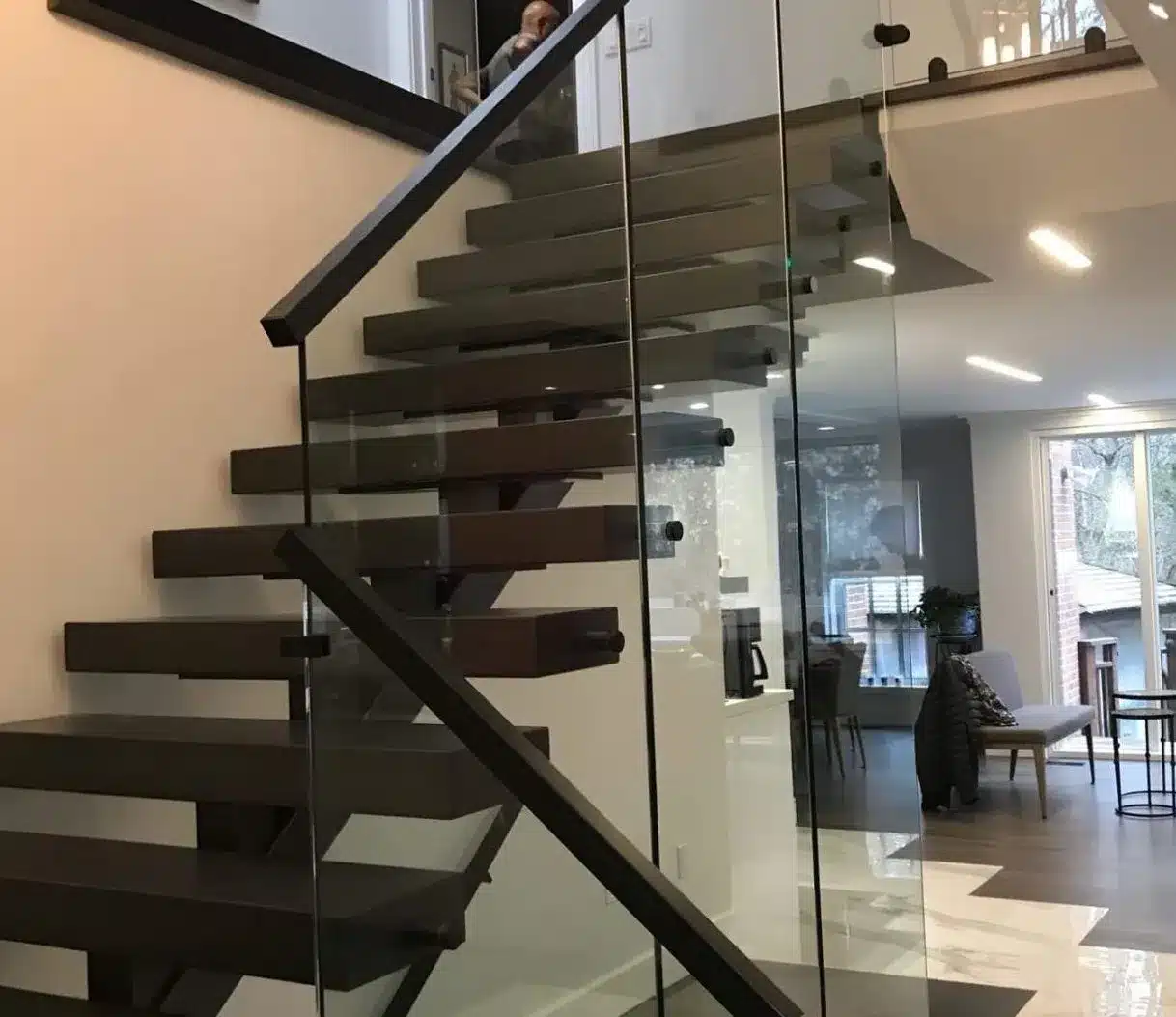
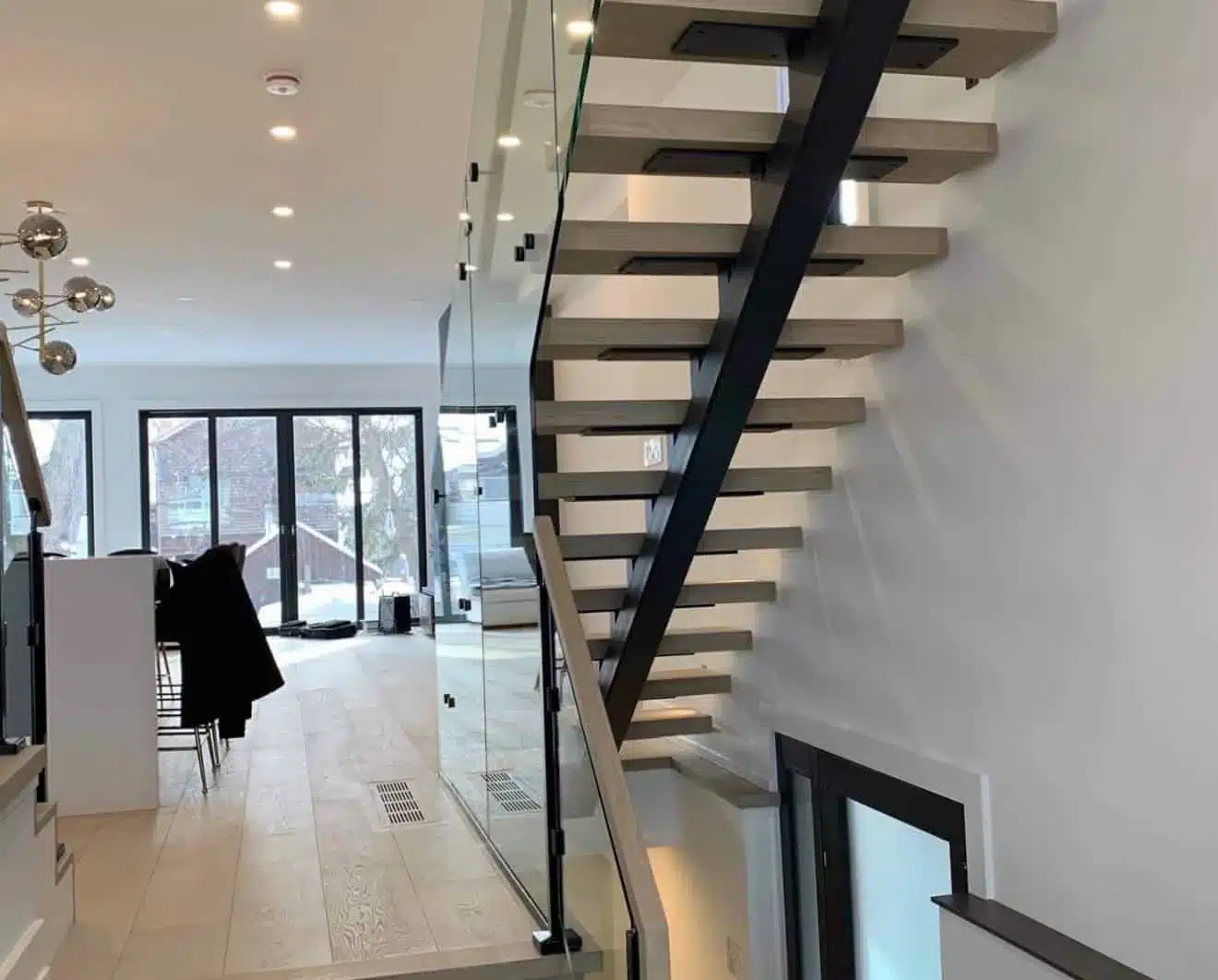
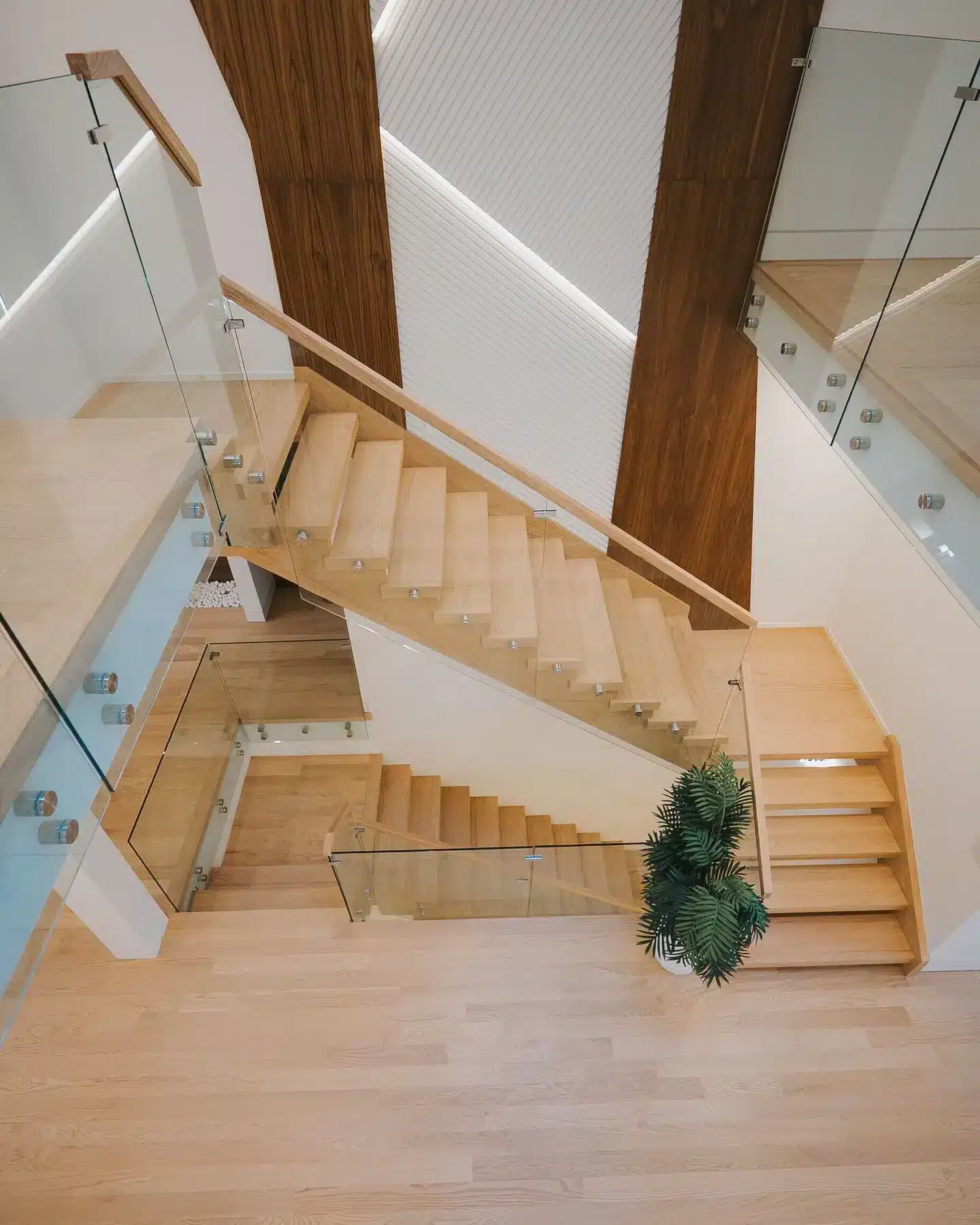
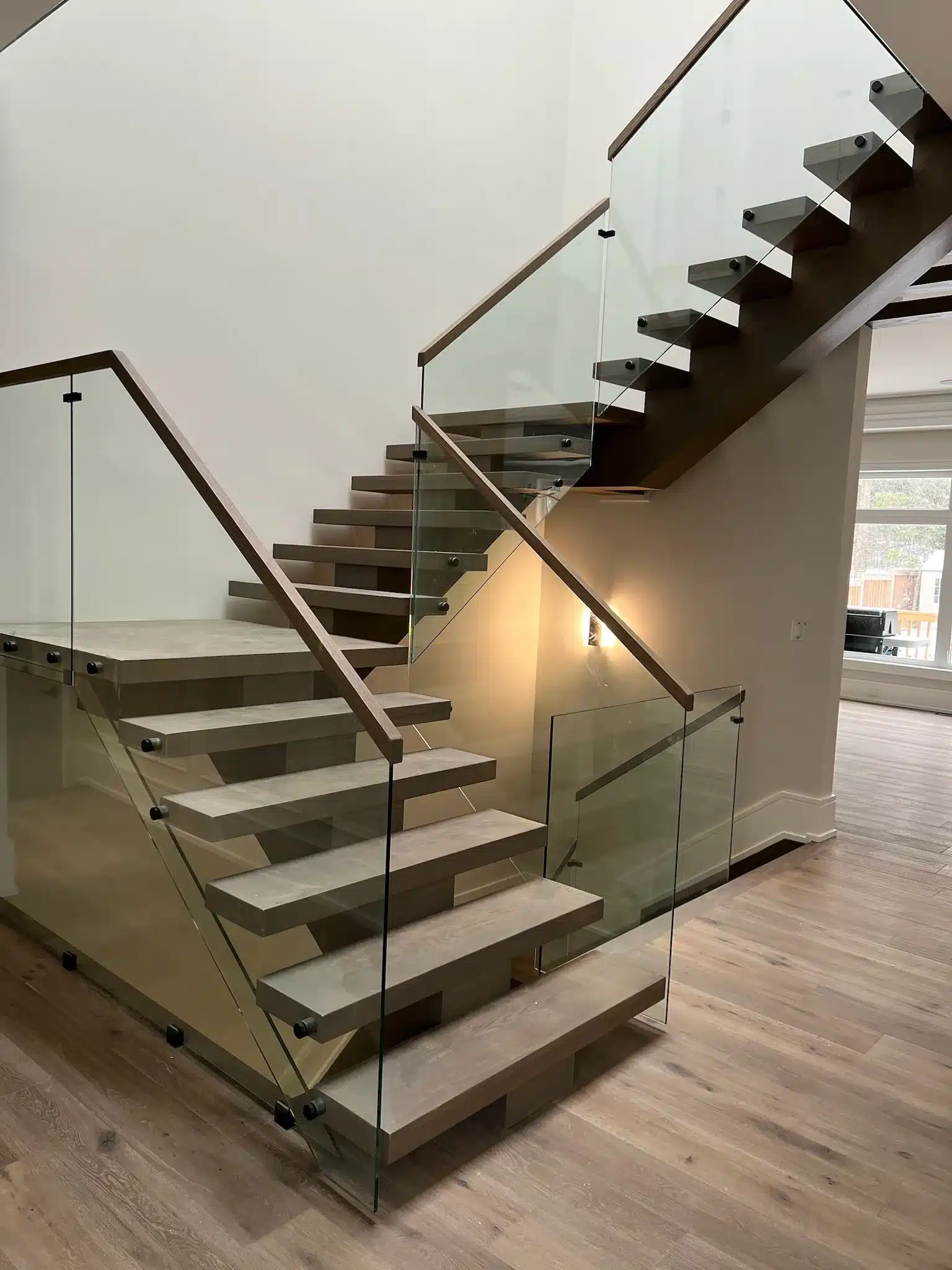
Floating Stairs in Toronto

Toronto’s residential market is demanding. Whether you’re in a narrow Victorian semi in the Annex, a detached house in North York, or a newer build in Etobicoke, floating stairs have to do more than look modern. They have to meet code, handle real use, and work within the structural constraints of your specific floor plan.

At Darvish Inc., we’ve designed and installed floating staircases across Toronto for over 27 years. This page explains how we approach floating stair projects in Toronto: the engineering, the materials, the code requirements, and what actually determines the final cost. Our floating stairs in Toronto are part of our broader Custom Staircase Toronto work across the GTA.

Get in Touch for a Free Quote

Floating Stairs Case Study in Toronto

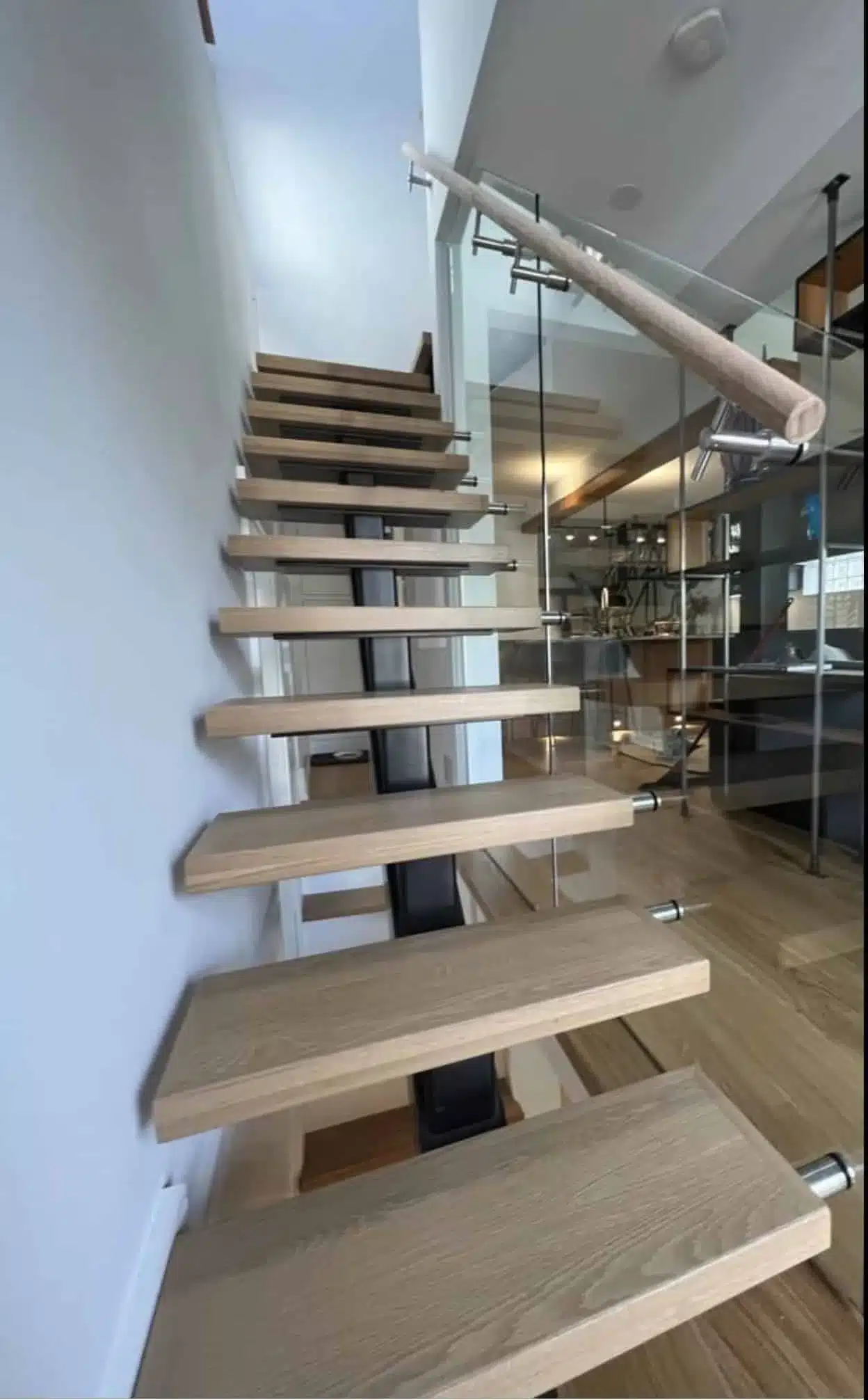
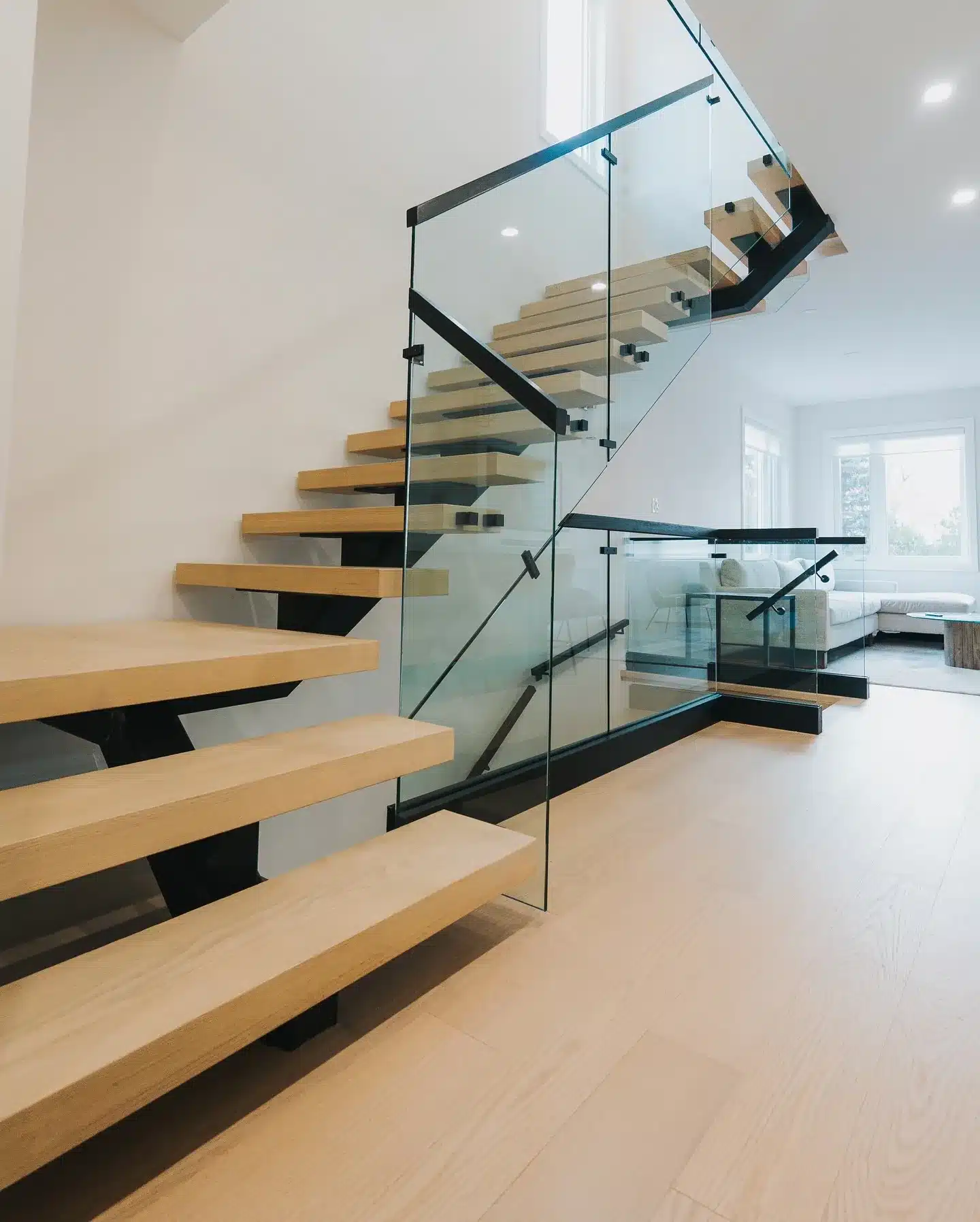
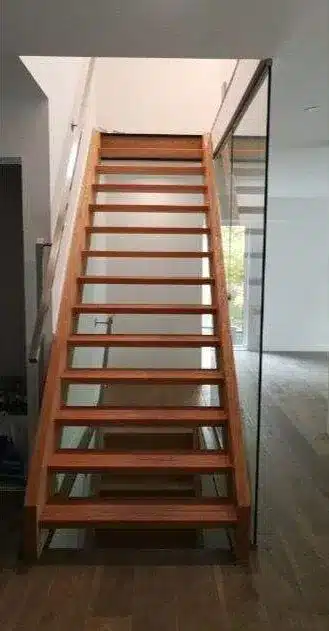
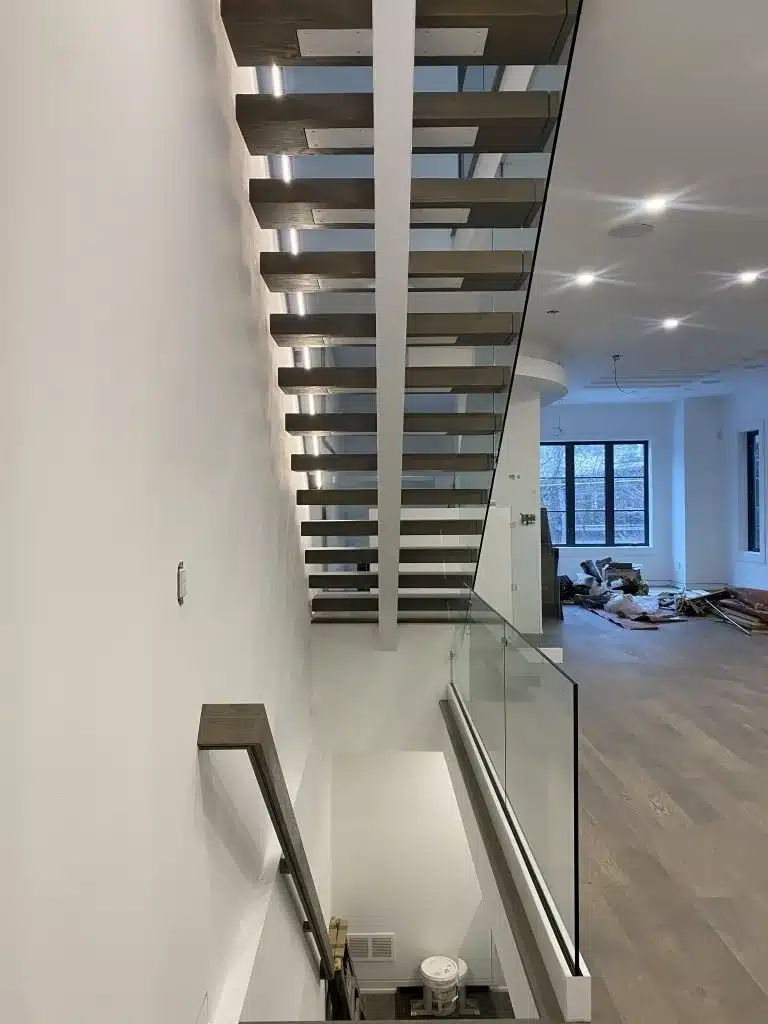
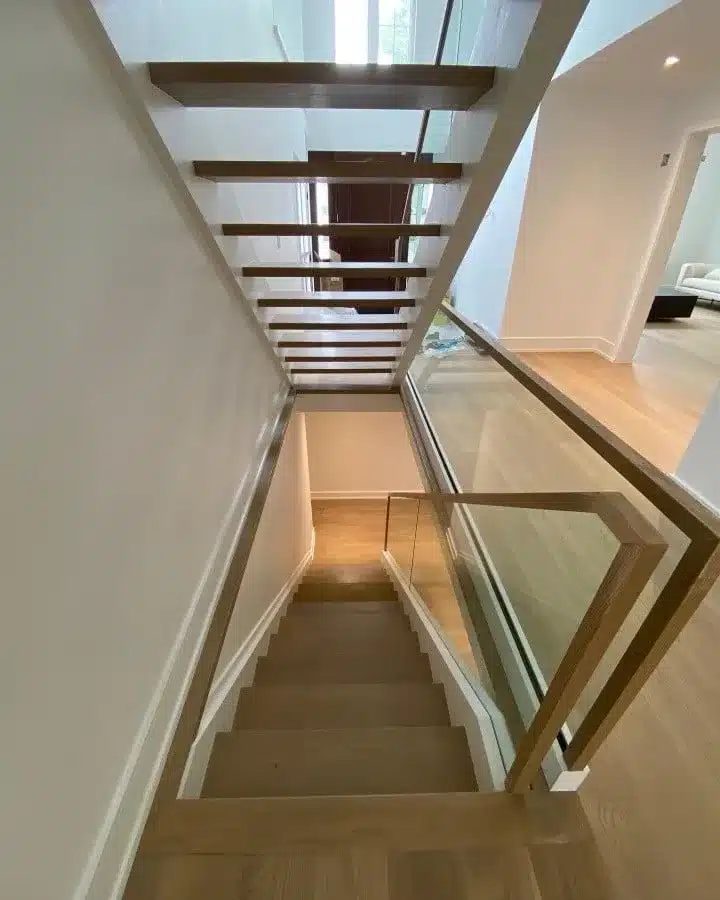
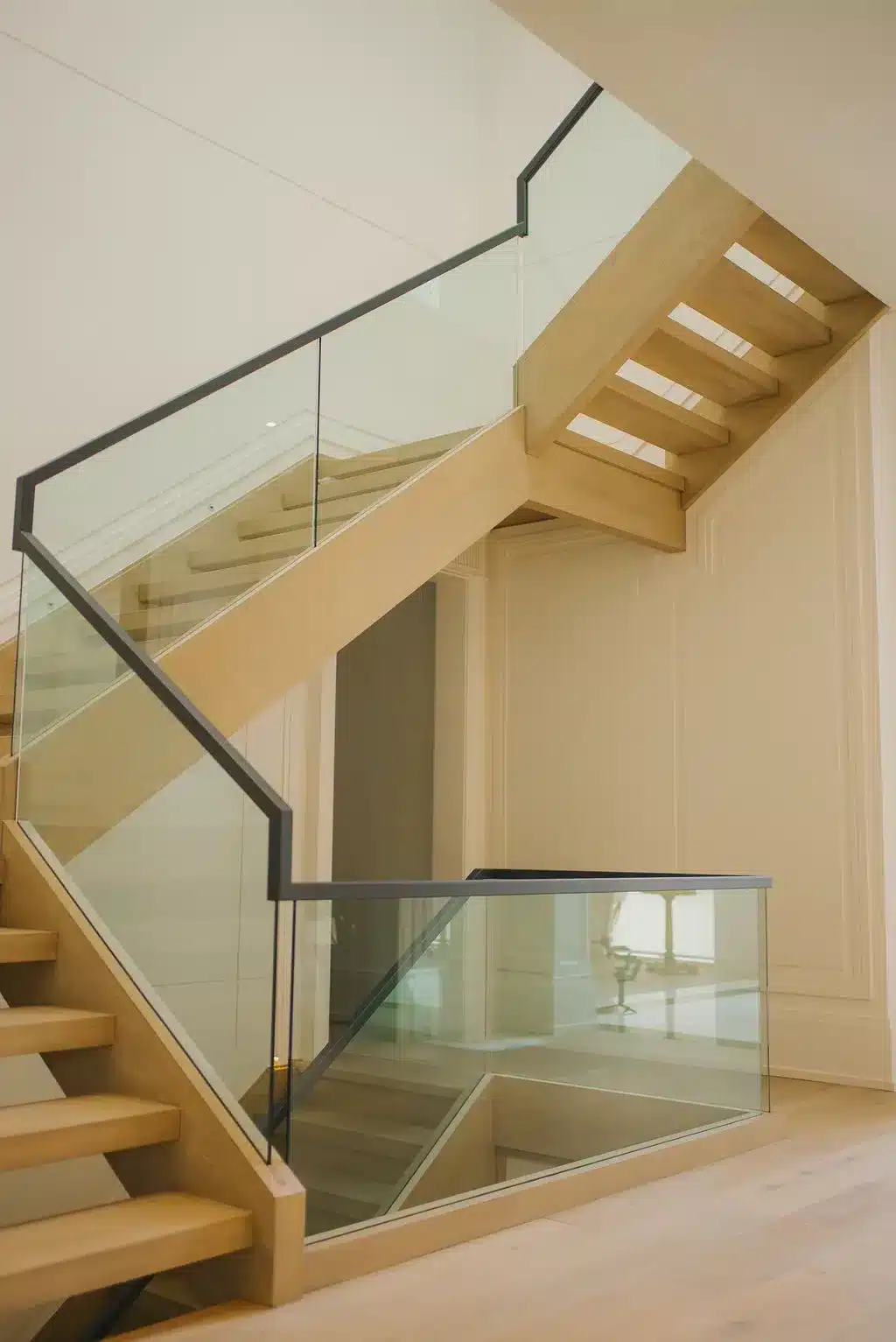
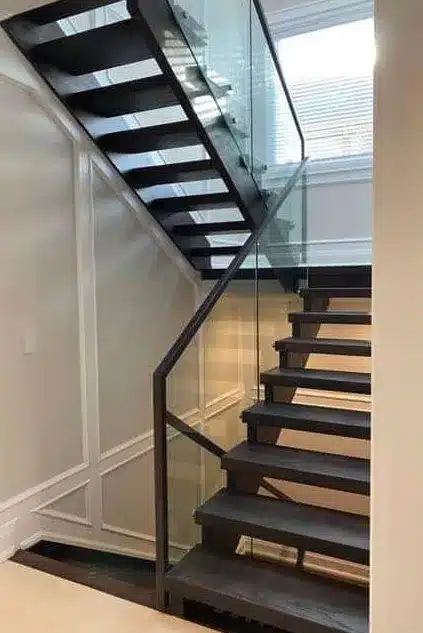
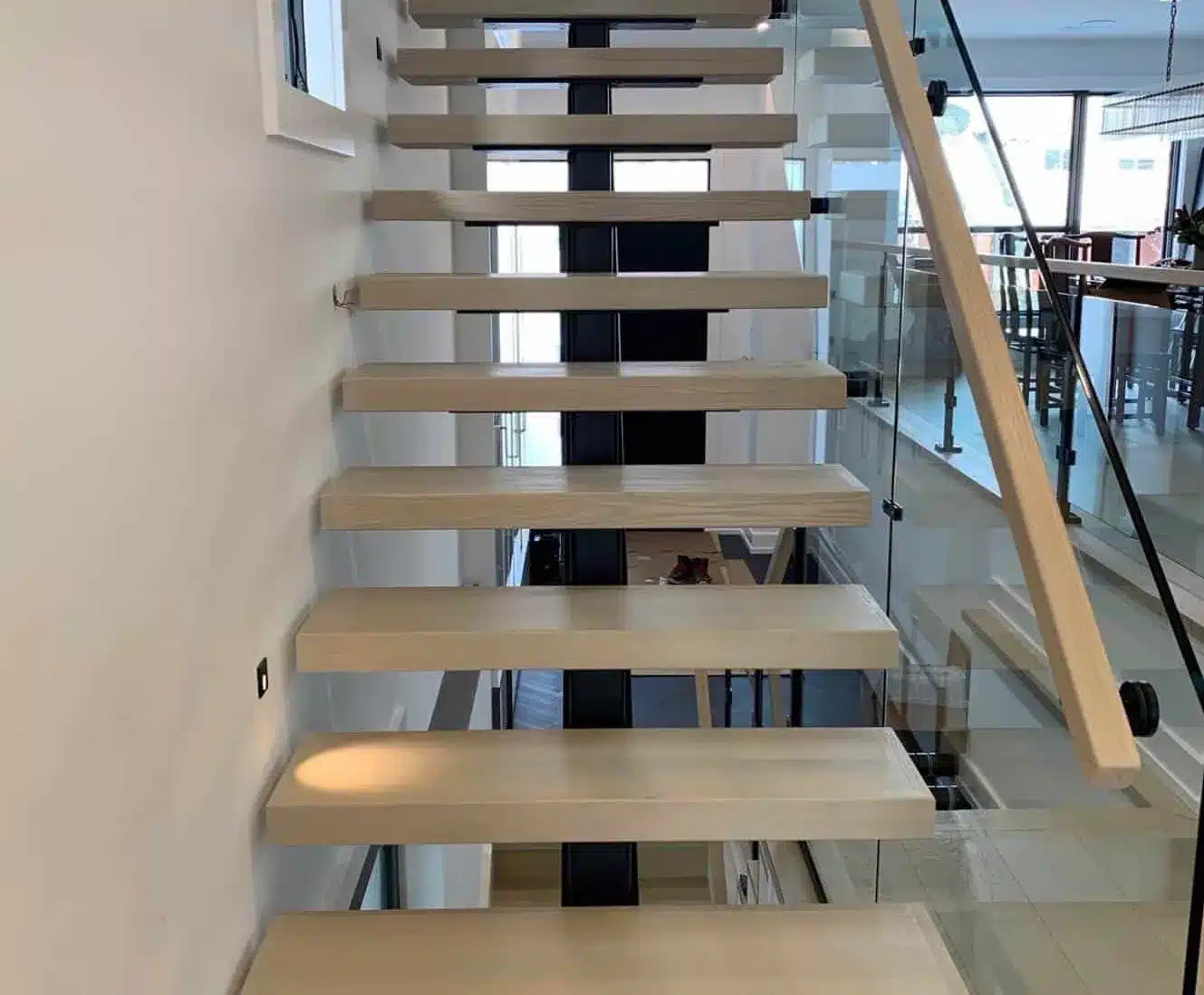
The house was a 1930s semi-detached, two storeys, with the original oak staircase still in place. The opening width was 34 inches, just at OBC minimum. The left side shared a brick party wall with the neighbour, which ruled out any wall-anchored stringer system from the start.

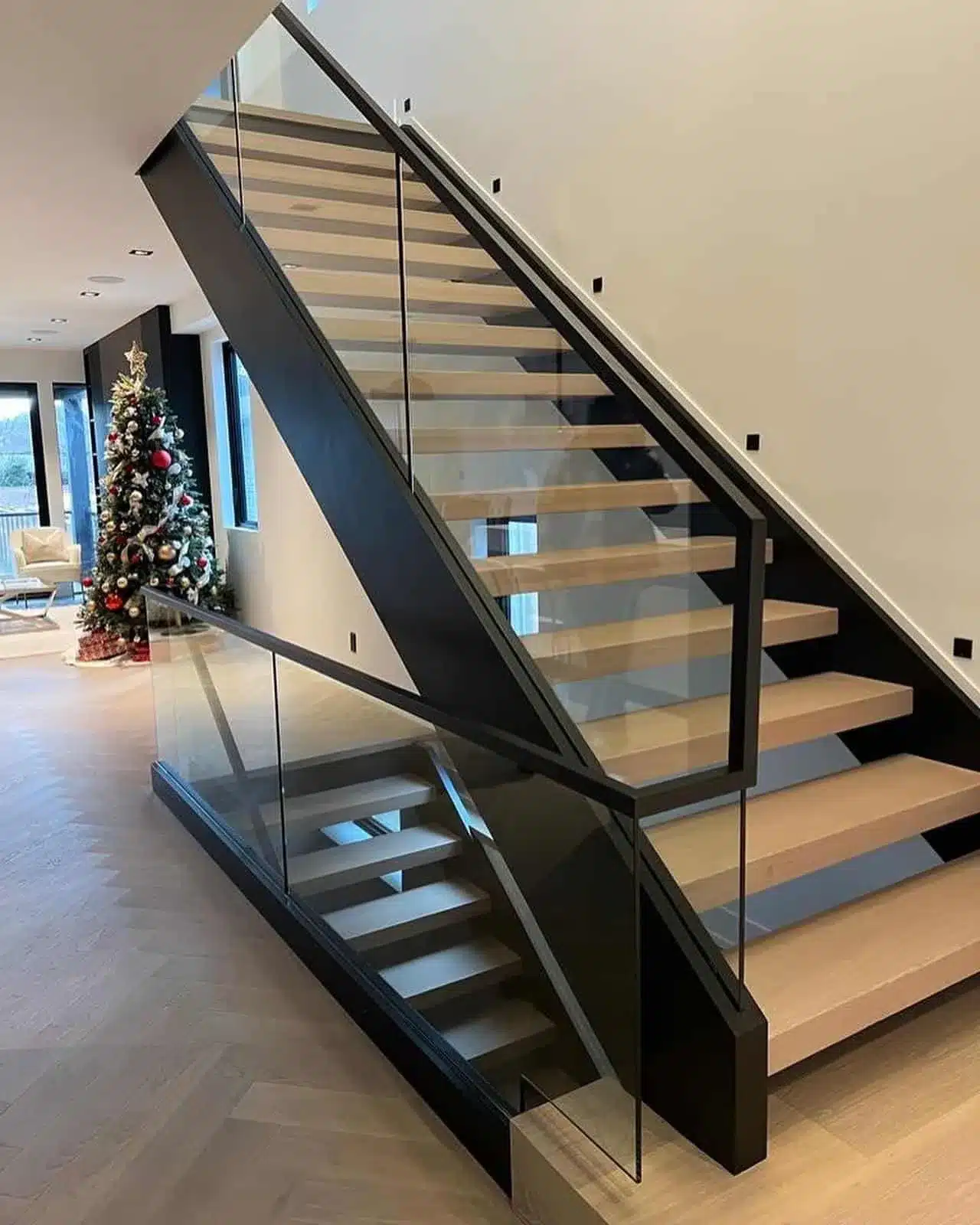
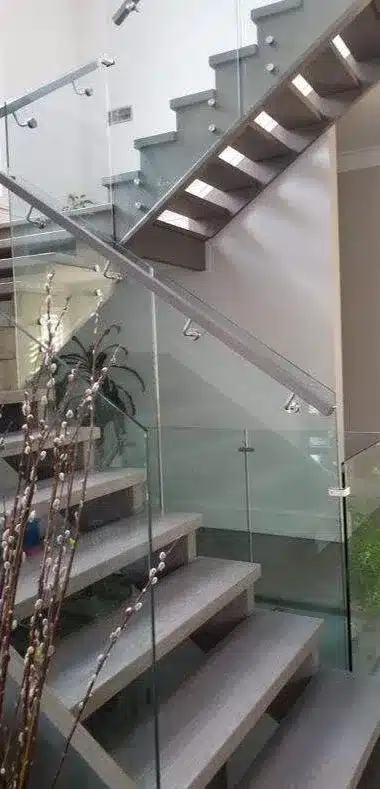
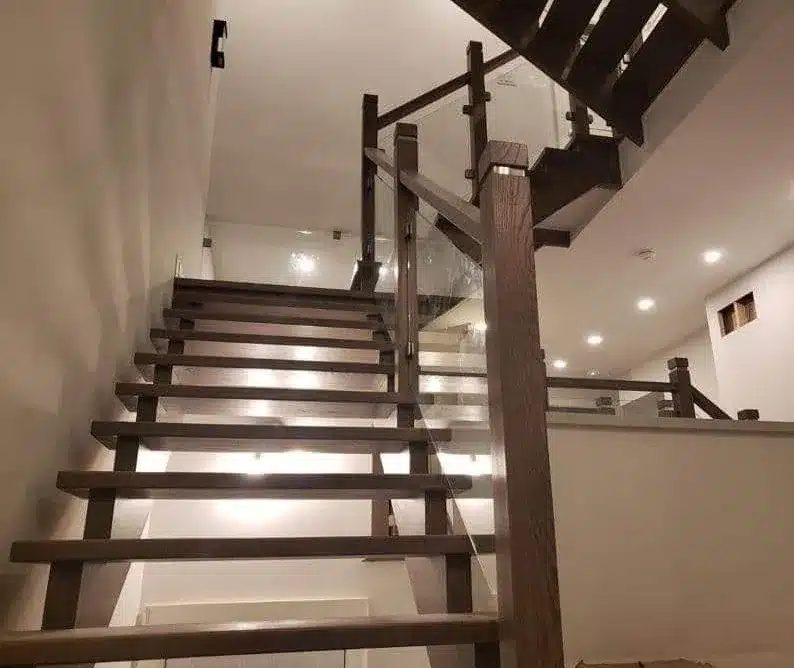
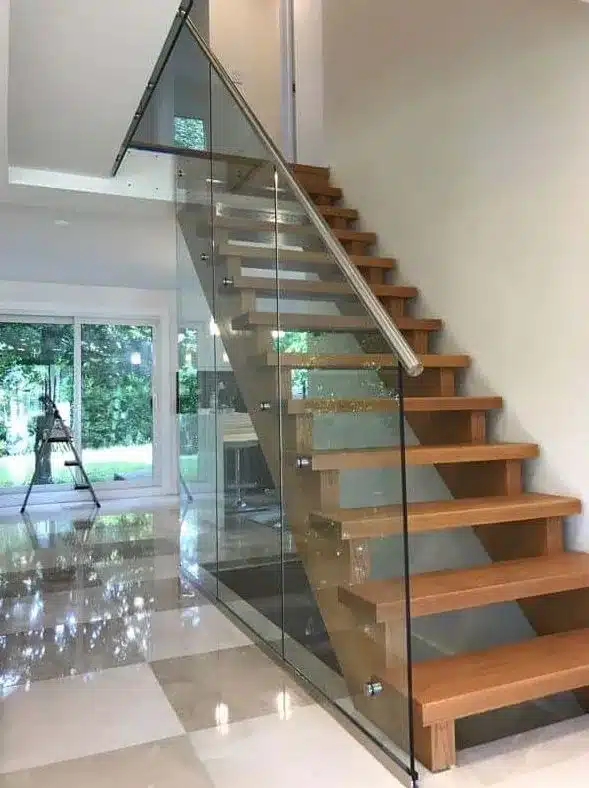
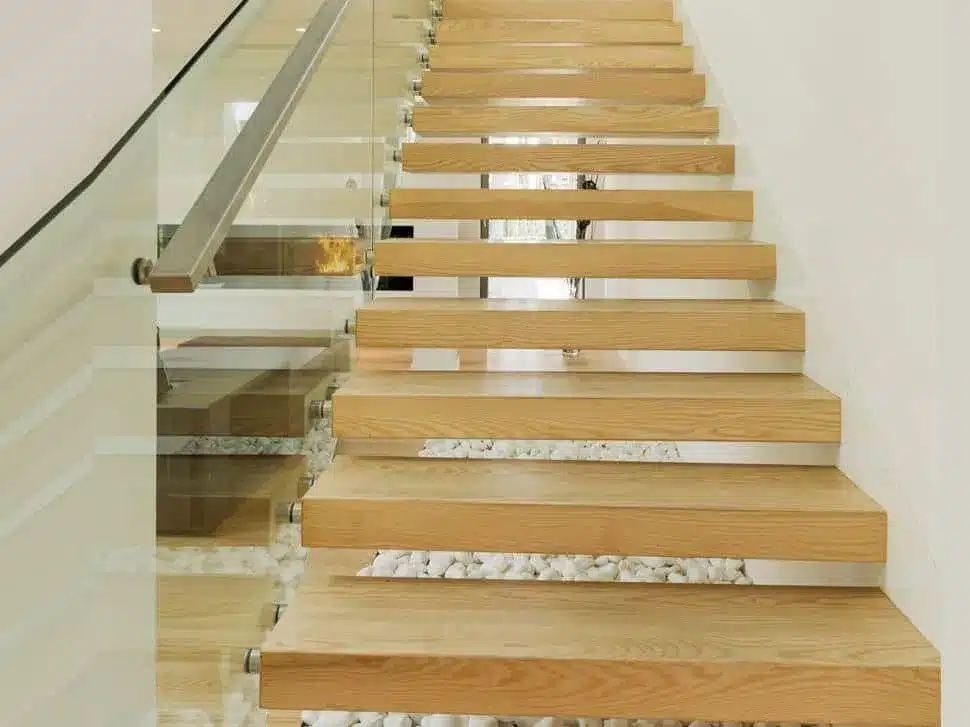
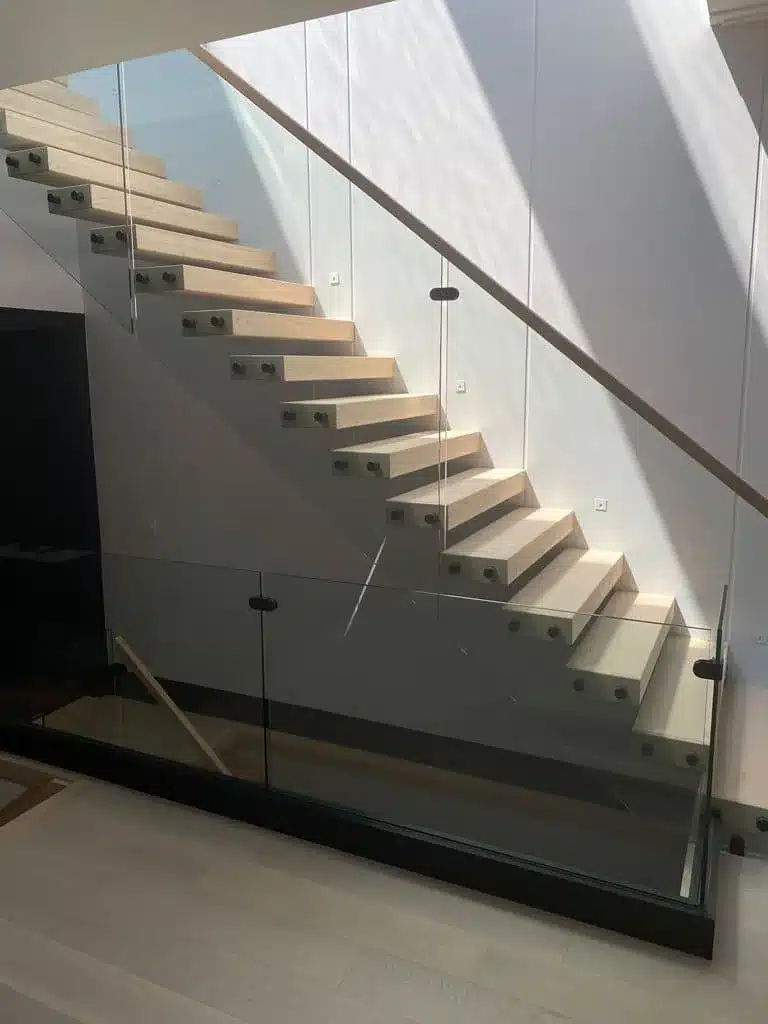
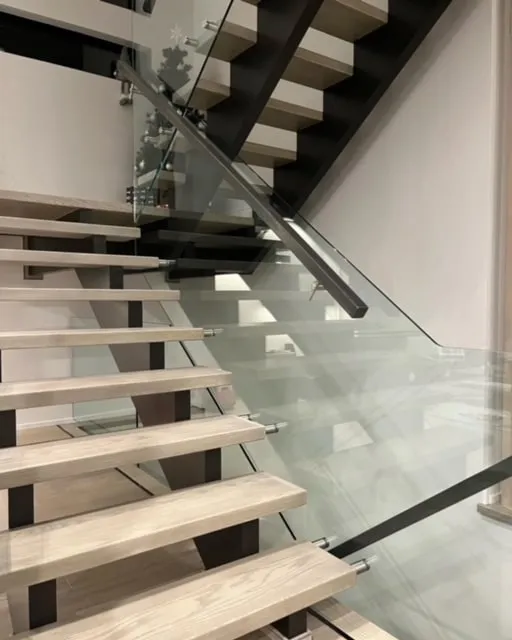
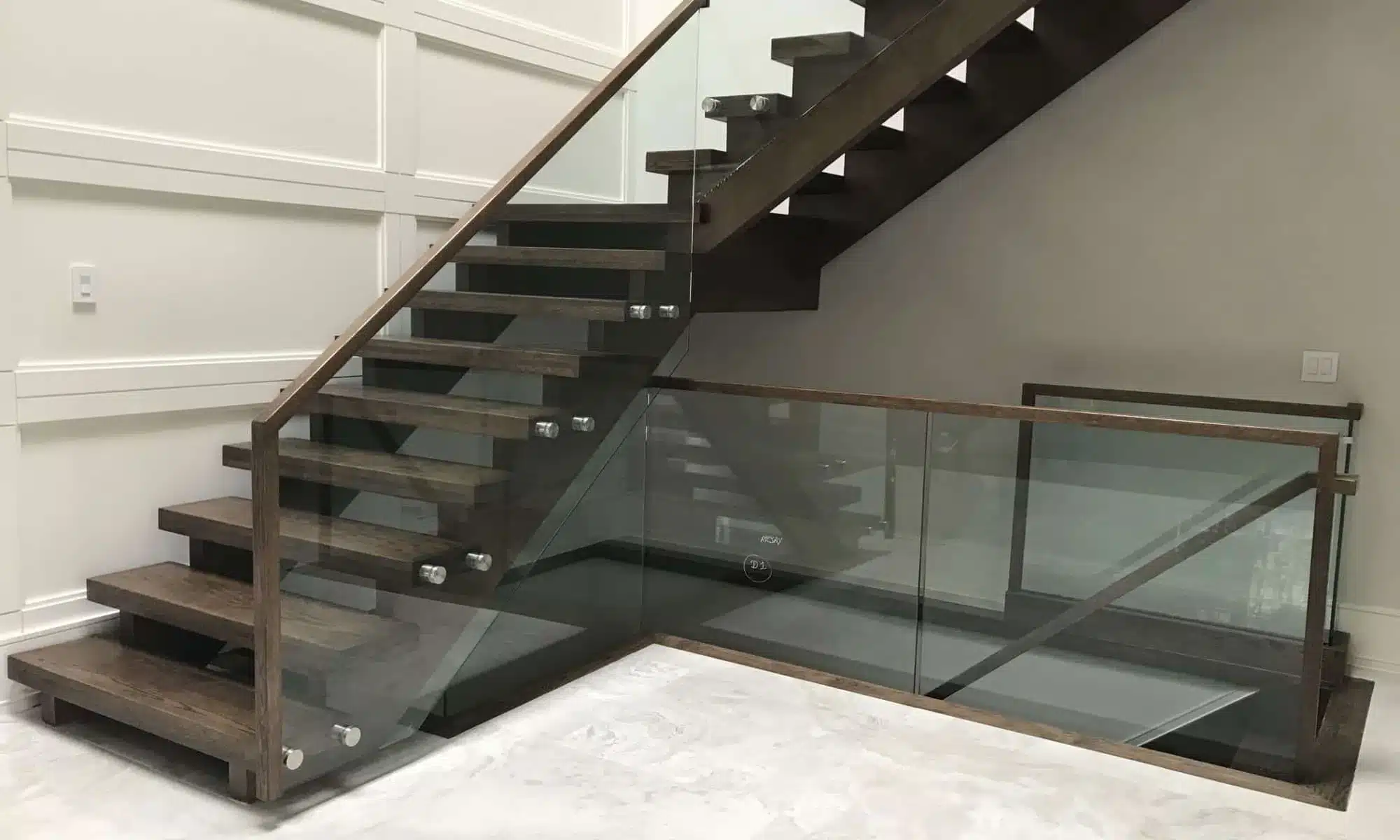
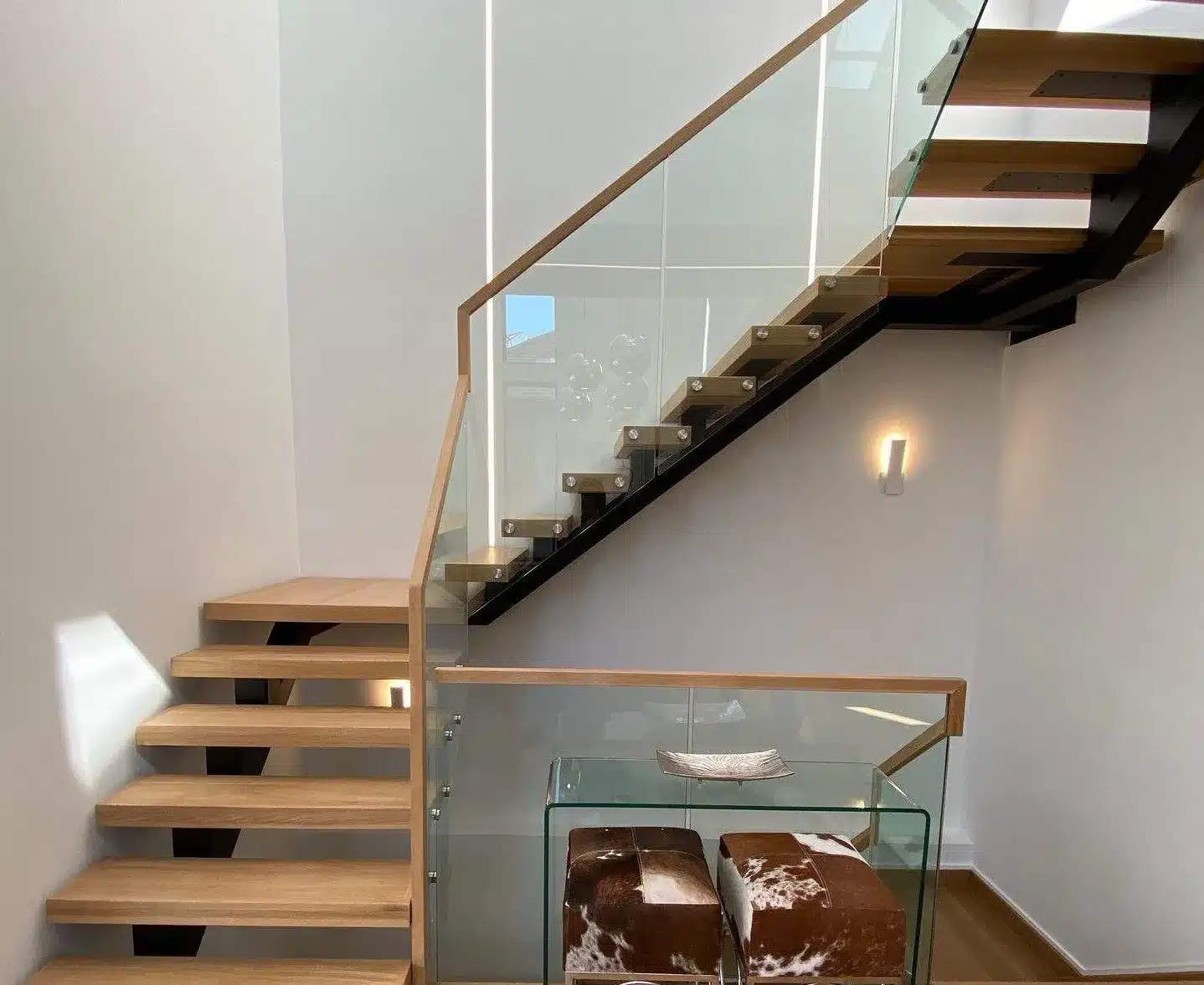
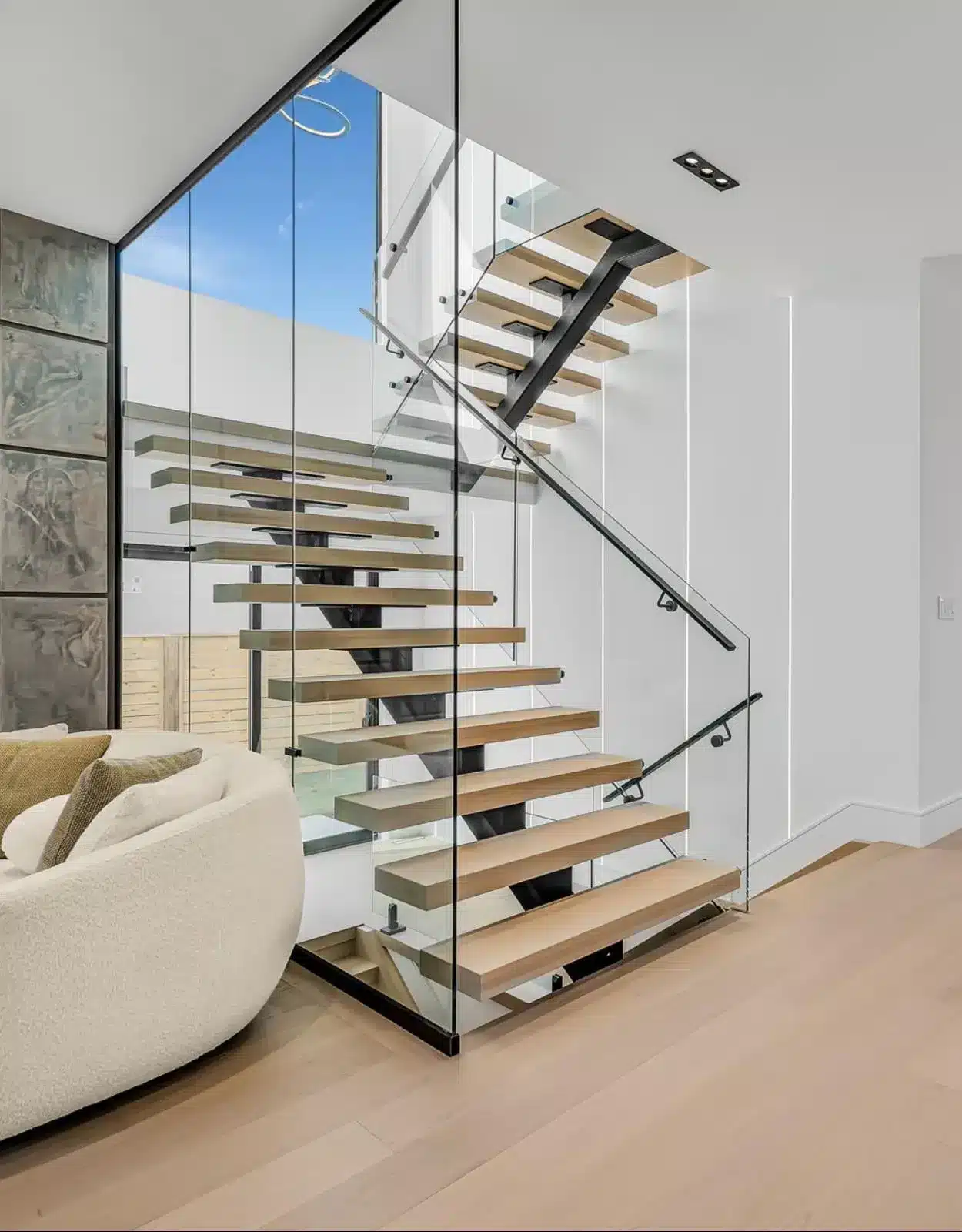
The homeowners wanted a straight floating run with frameless glass on the open right side, white oak treads to match the existing hardwood on the main floor, and no visible metal on the finished staircase.

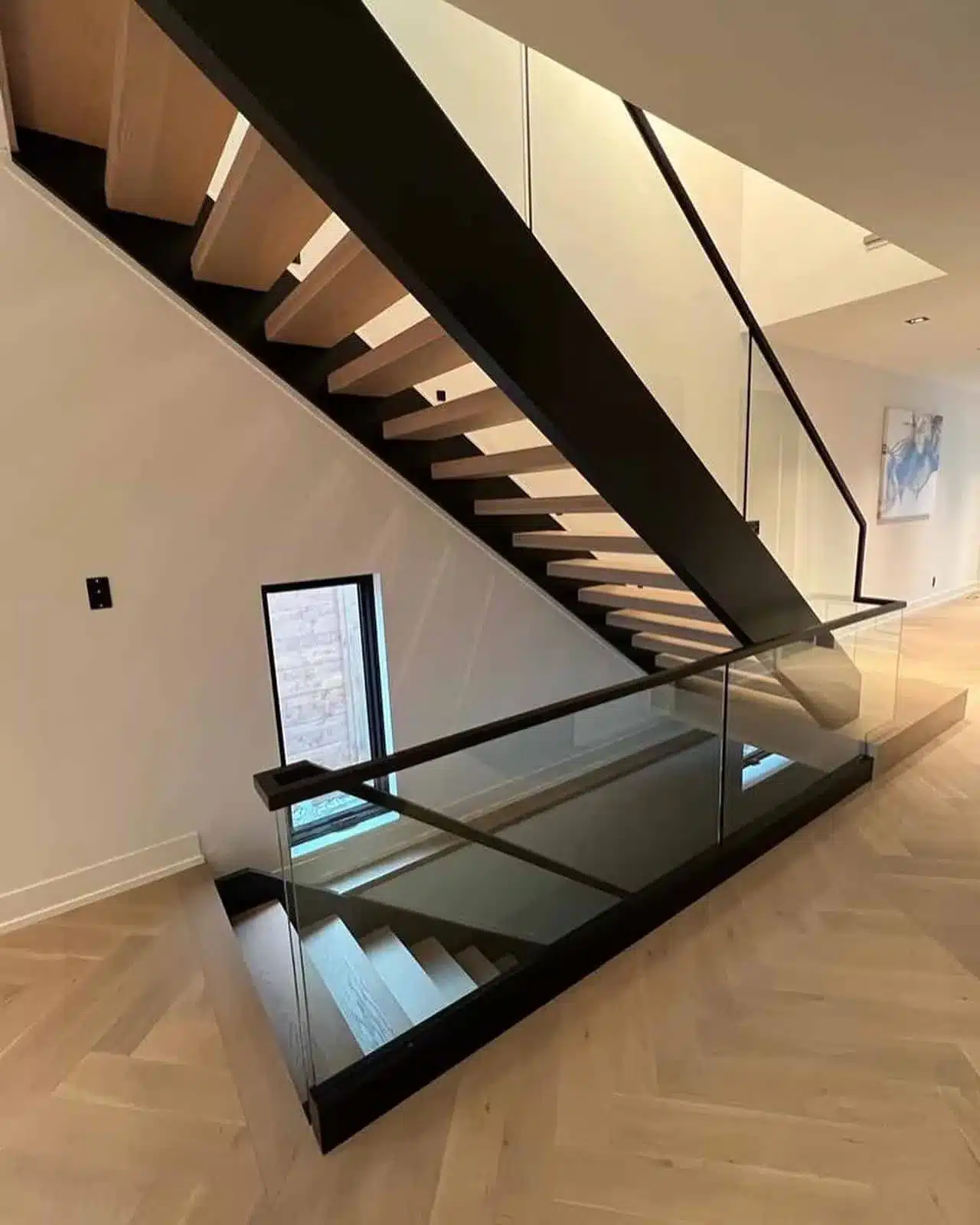
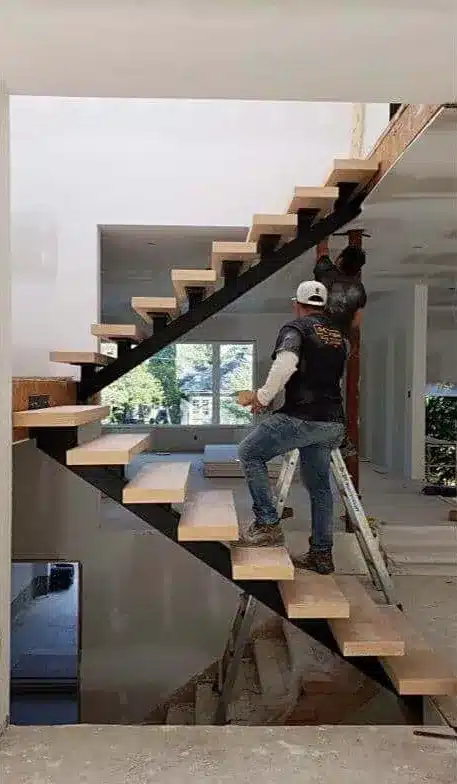
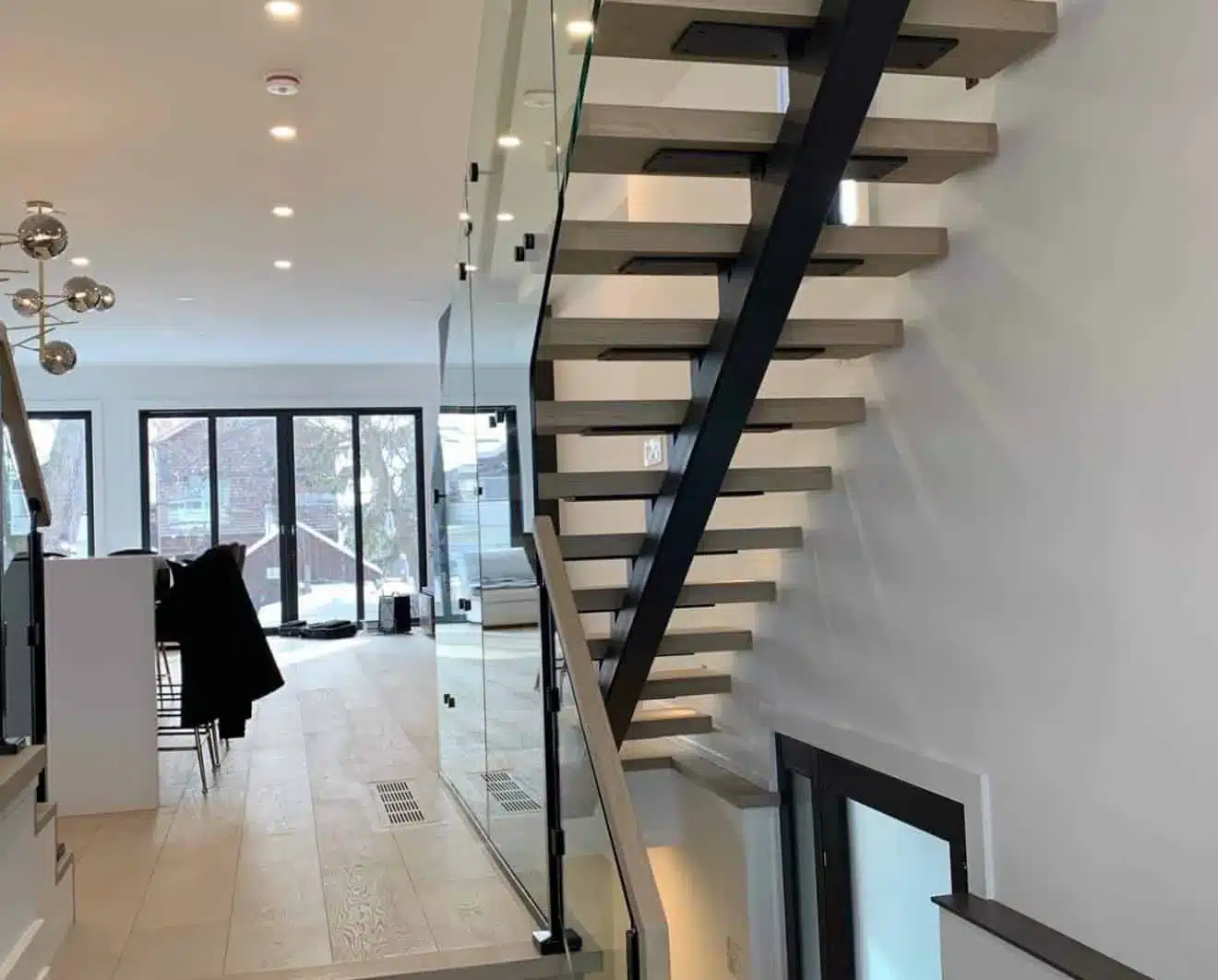
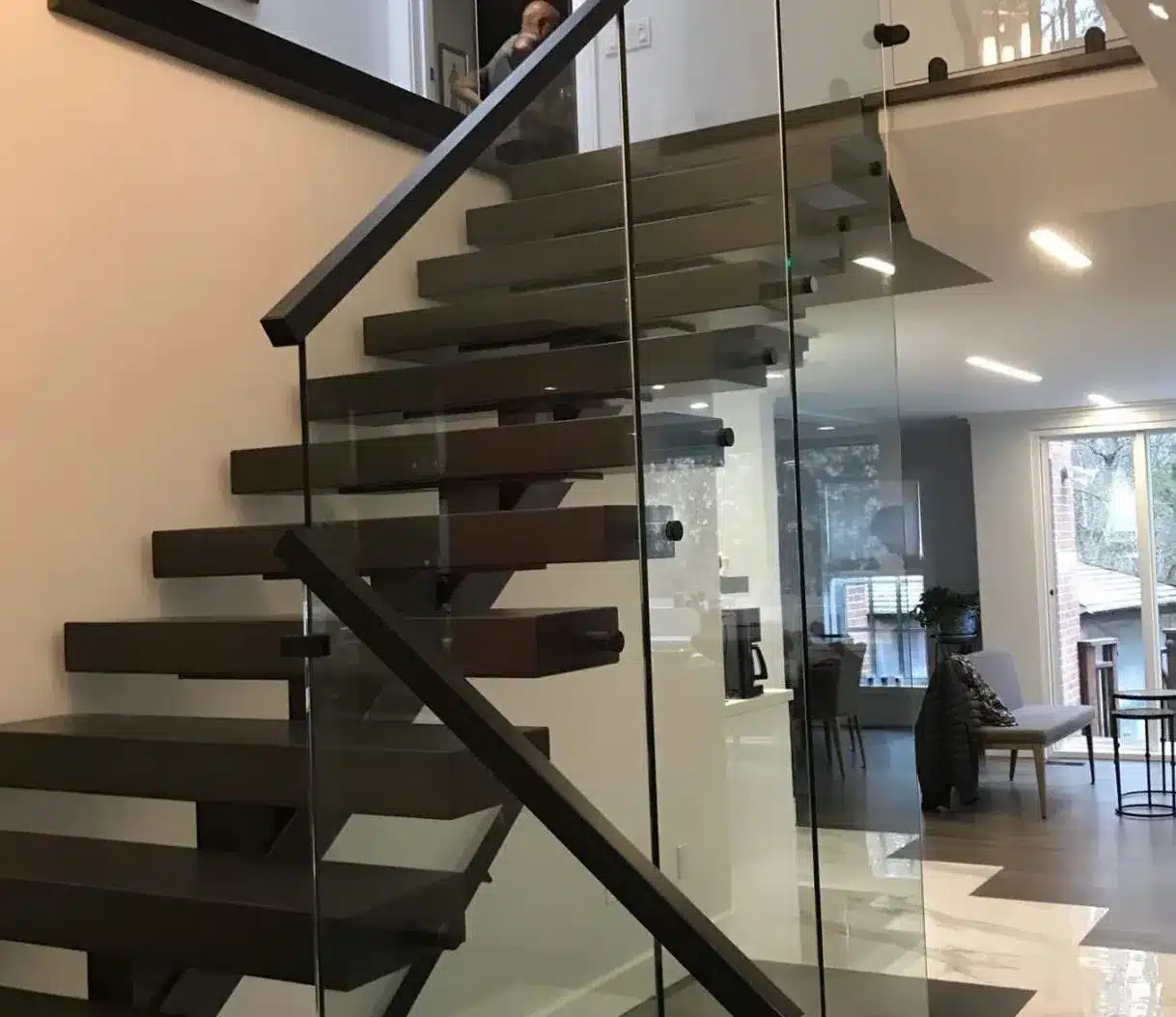
The structural solution was a double-stringer side-plate system: two custom-fabricated steel plates, each 8mm thick, running the full height of the stair and bolted to the header above and the concrete slab below. All load transfers happen through the floor framing on both sides, with zero contact to the party wall masonry. The steel was powder-coated matte black before installation.

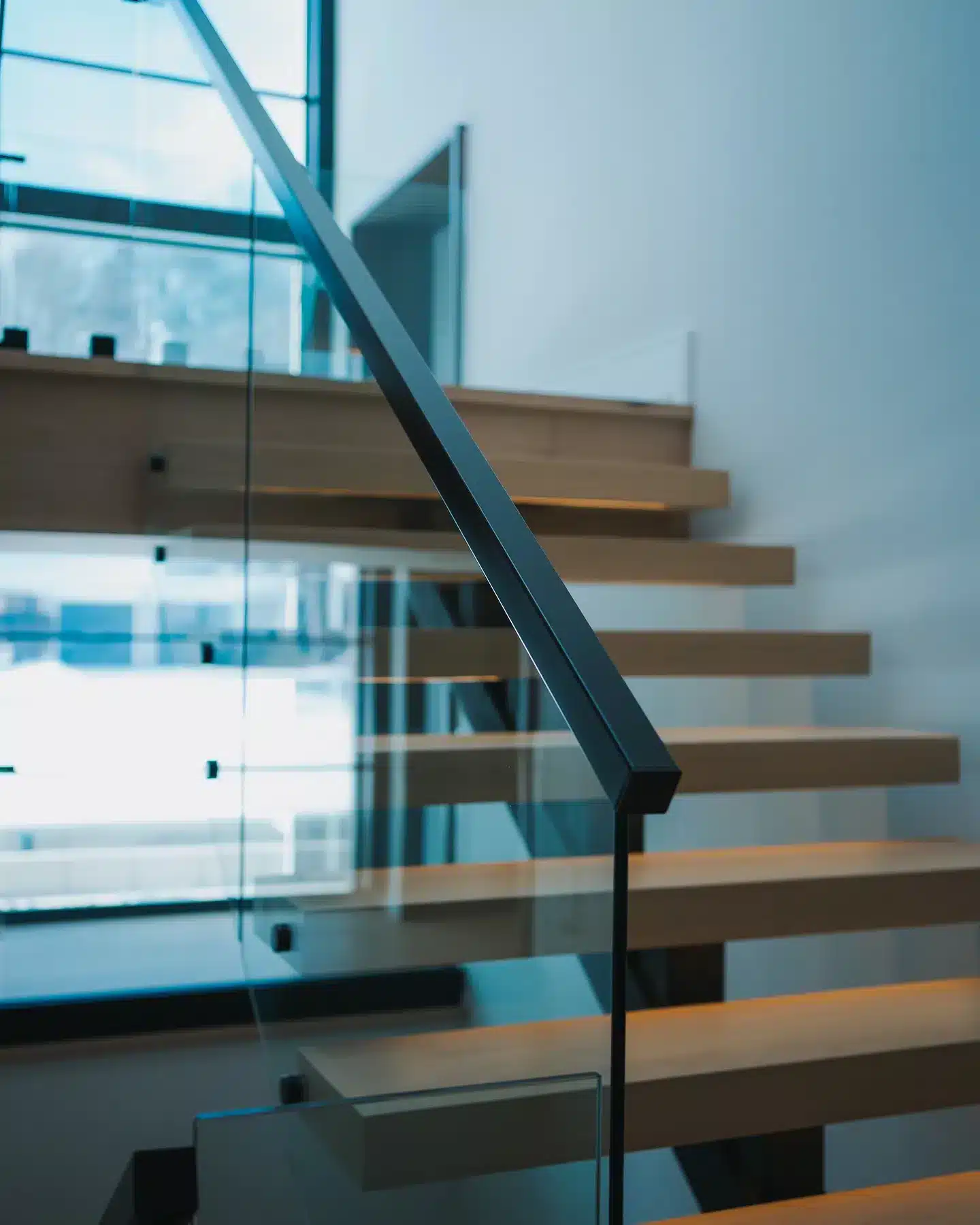
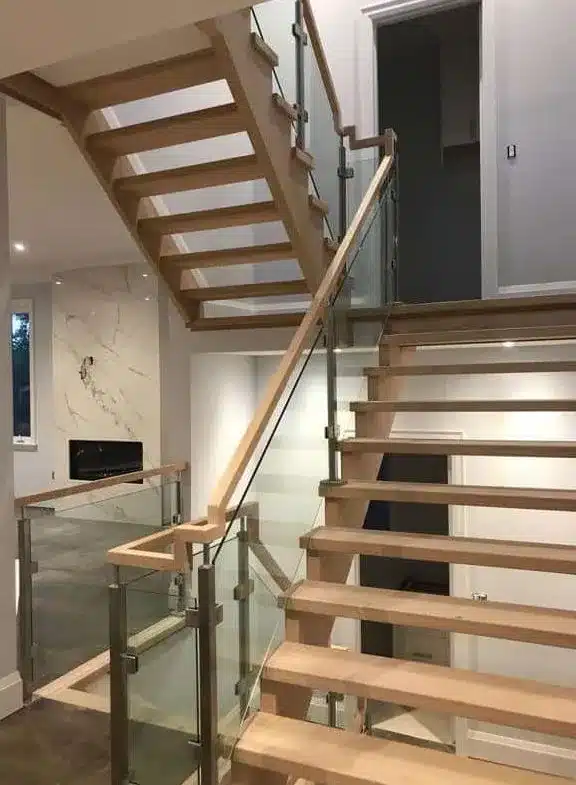
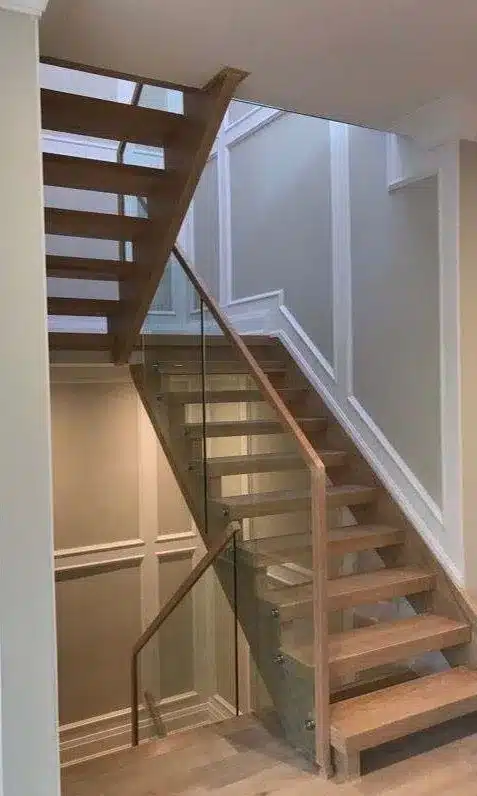
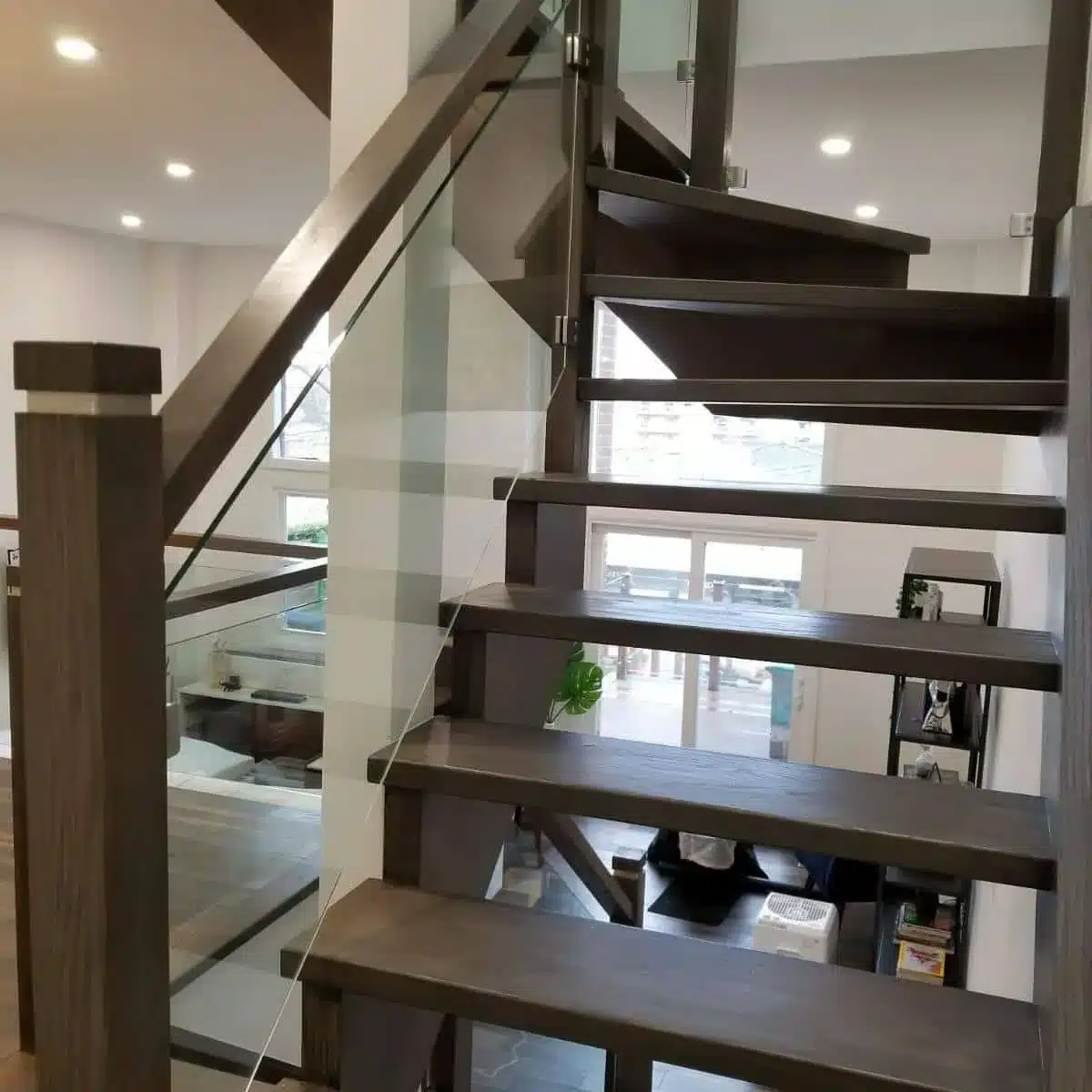
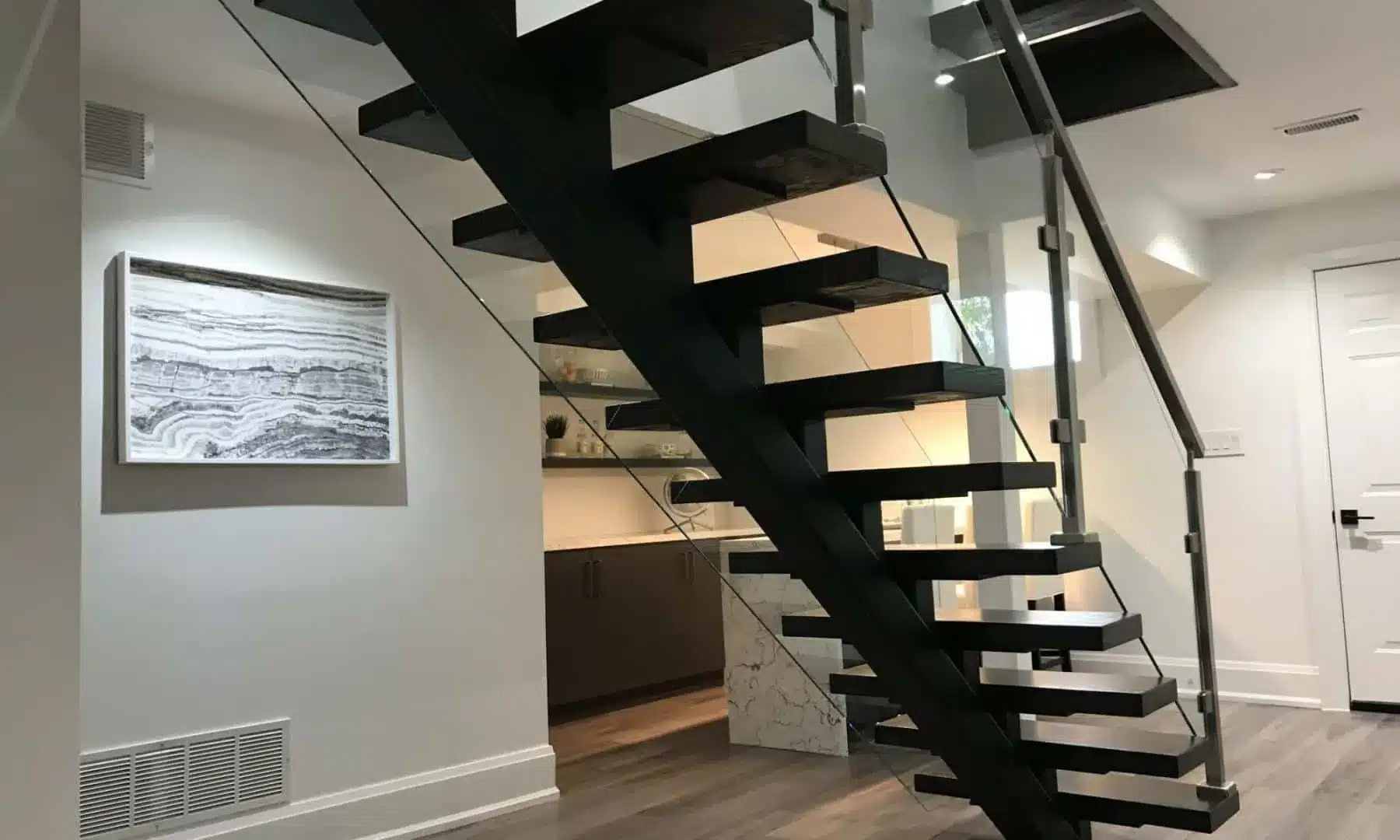
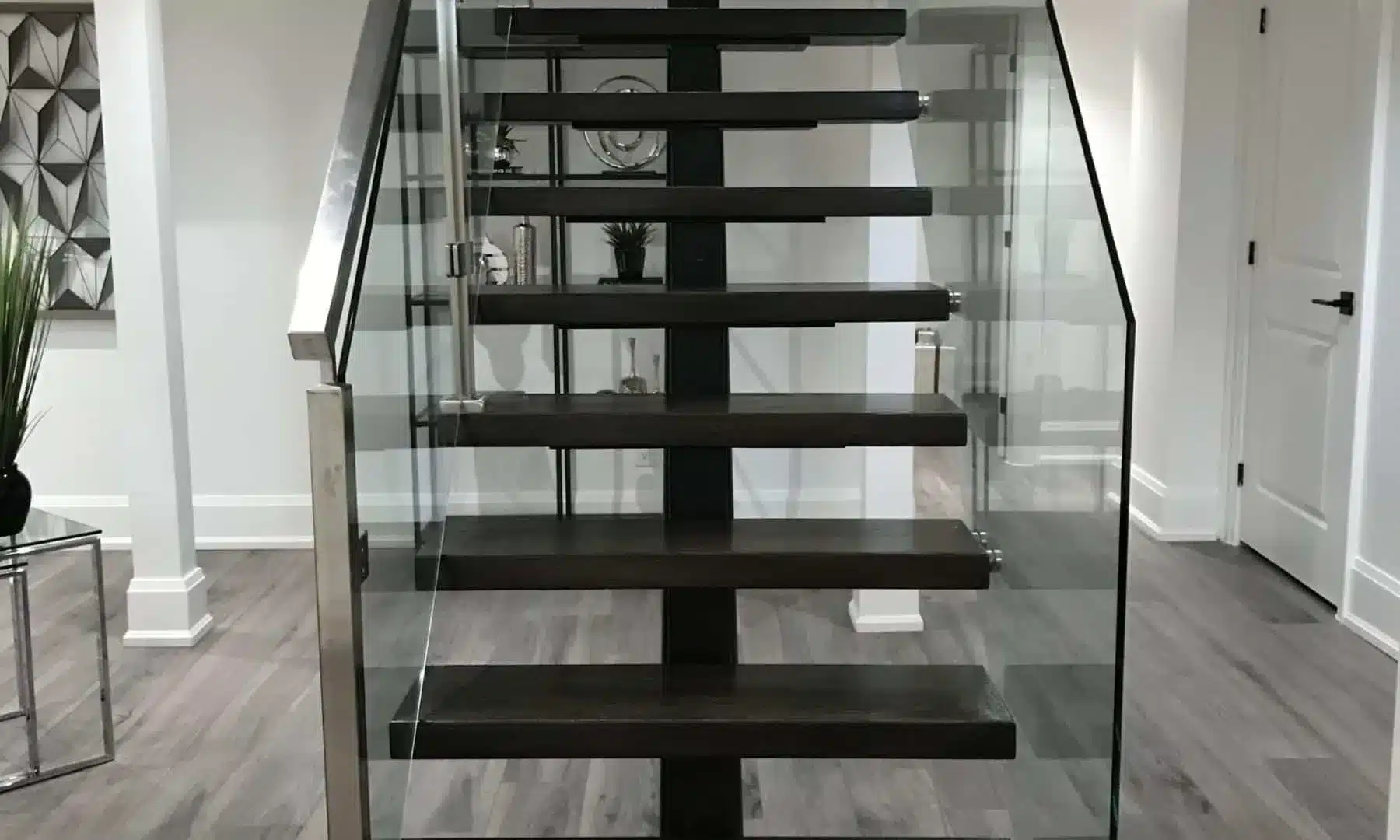
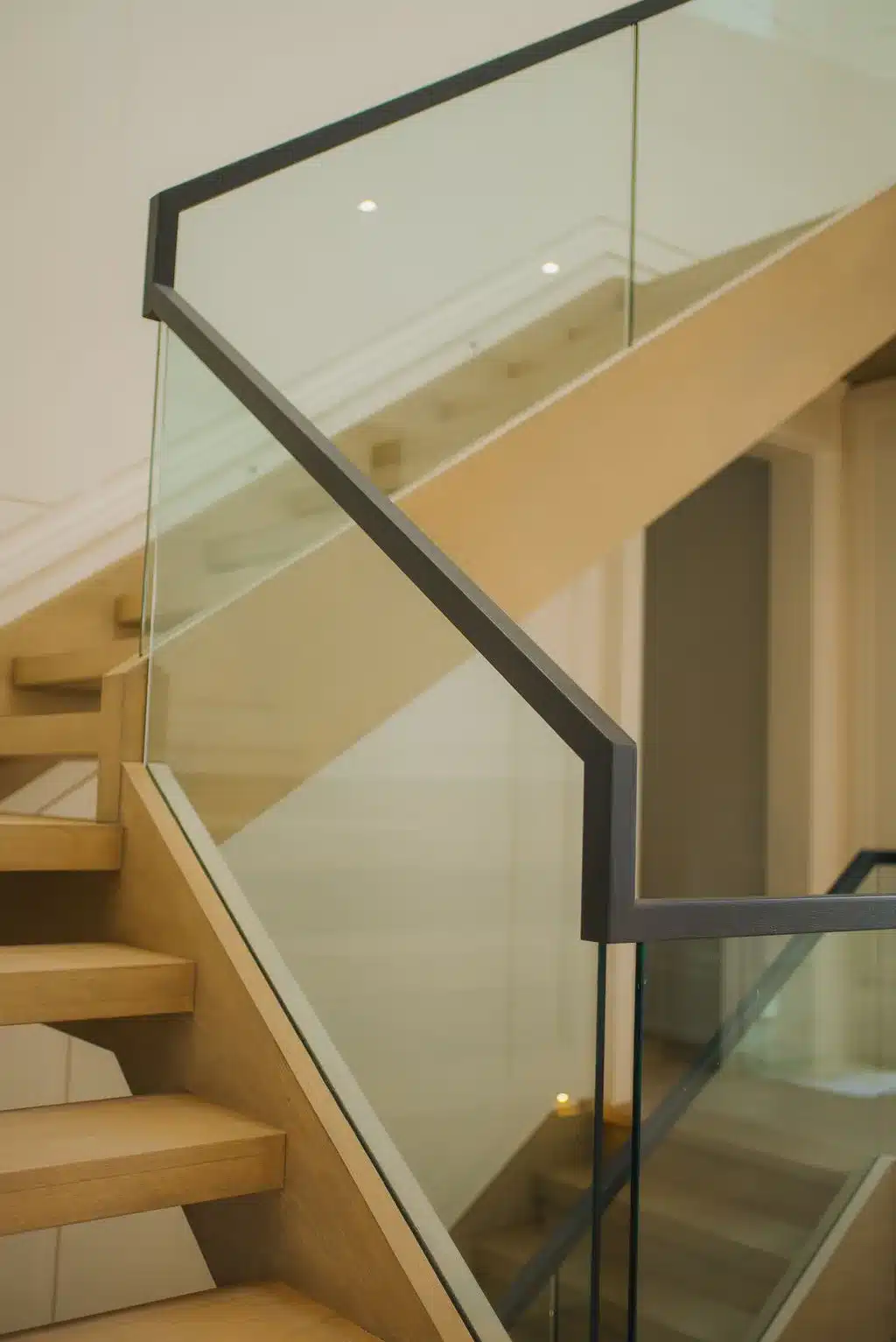
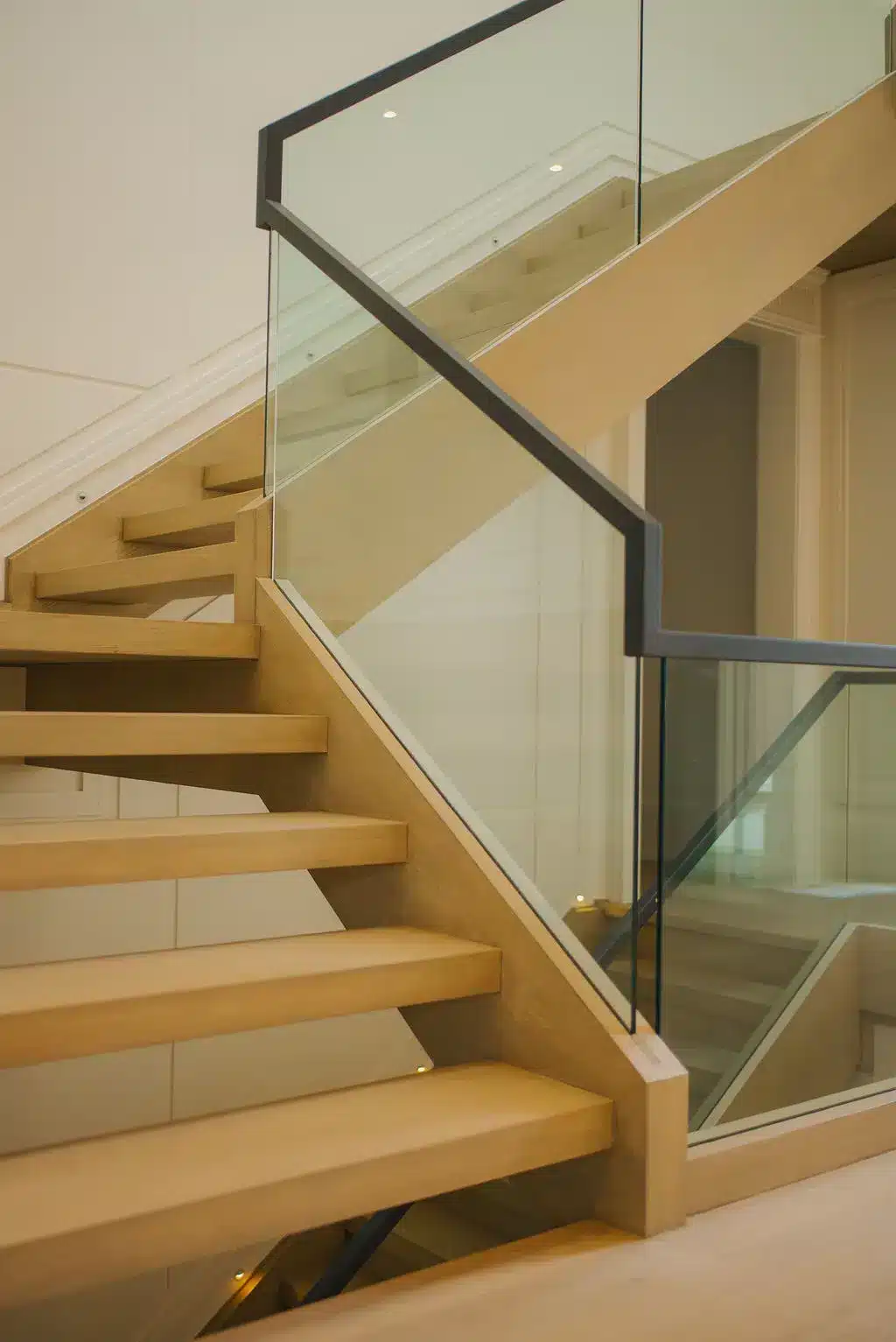
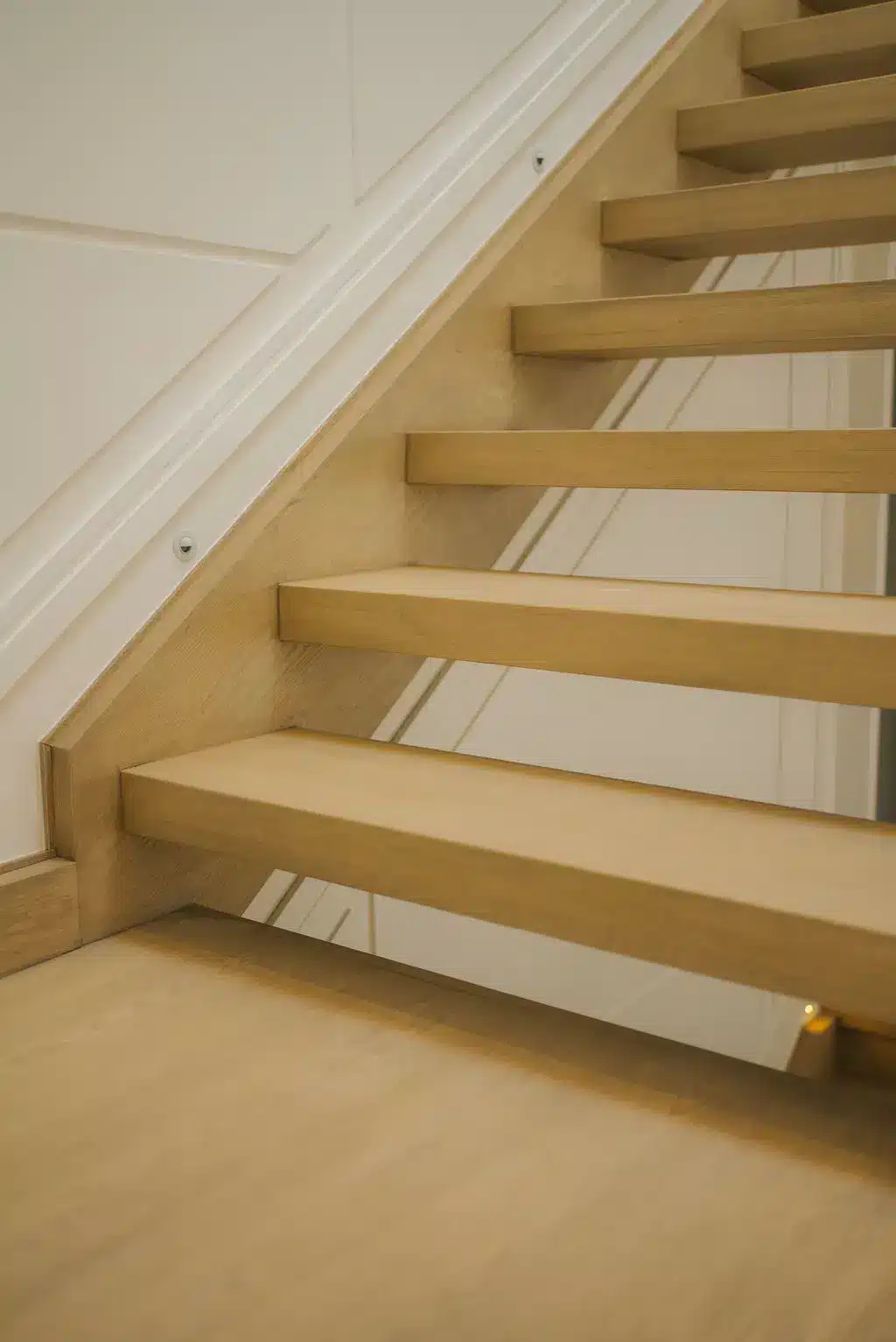
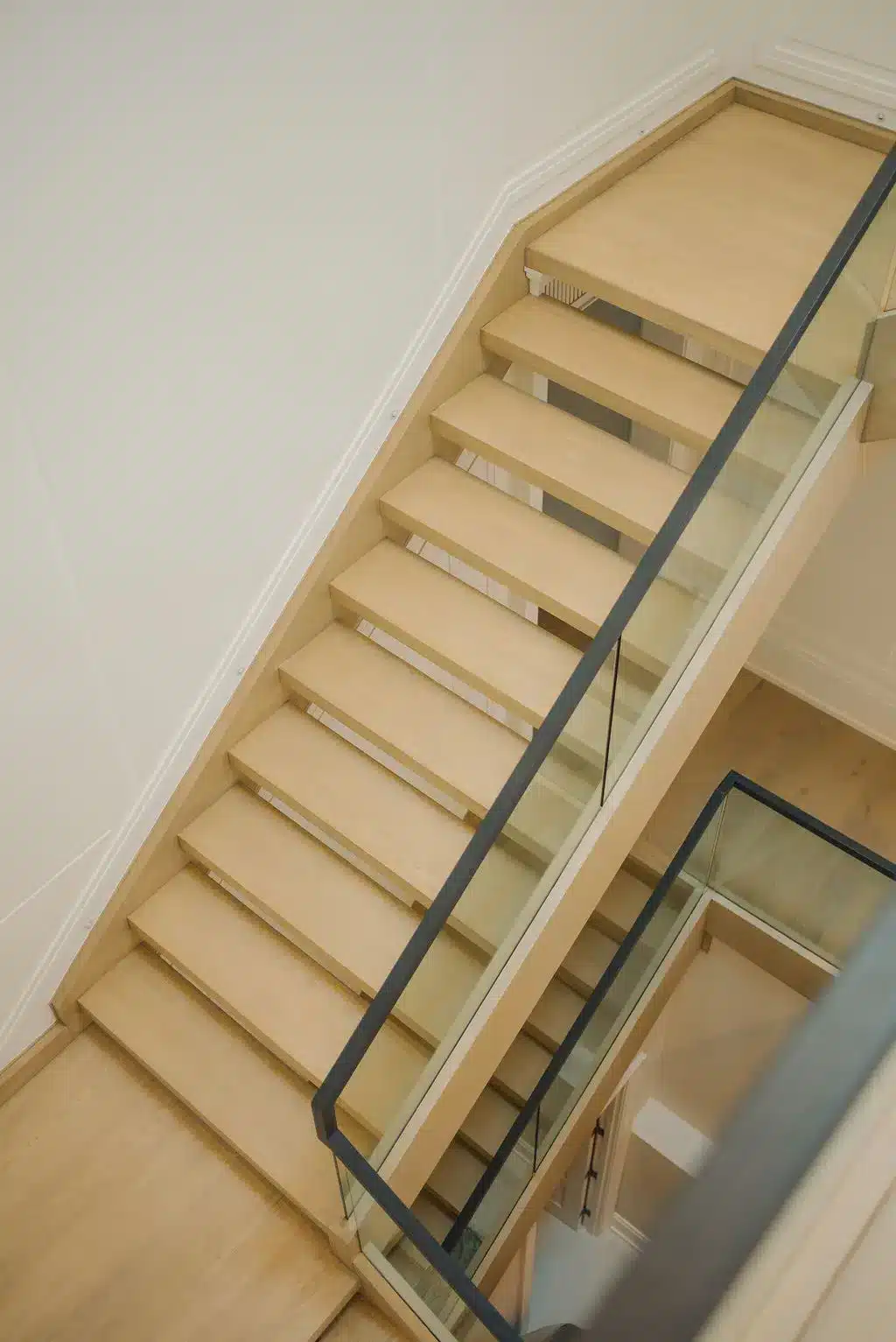
Treads are 2-inch white oak with a wire-brushed finish, stained to match the main floor. Each tread slots into the side plates with concealed brackets, so the steel is visible only at the very edge of each step. The glass guard is 12mm tempered, channel-mounted into the tread surface, with a brushed stainless top rail at 38 inches.

Permit was pulled before demolition. The old staircase came out in one day. Steel installation took two days, treads and glass another two. Total on-site time: 6 days. Permit closed 4 weeks after rough-in inspection.

Toronto floating stairs case study

Ontario Building Code Requirements for Floating Stairs in Toronto

All stair installations in Toronto must comply with the Ontario Building Code (OBC), Division B. Residential projects fall under Part 9; commercial under Part 3. Here are the key requirements that directly affect floating stair design.

Part 9: Residential
Part 3: Commercial
Minimum Tread Depth
235 mm / 9.25 inches
Measured at the narrowest point of the tread
Maximum Riser Height
200 mm / 7.87 inches
Applied uniformly across the full flight of stairs
Minimum Stair Width
860 mm / 33.9 inches
Clear of handrails on both sides
Handrail Height
865 mm to 965 mm above tread nosing
Between 34 and 38 inches above the nosing of each tread
Guard Requirement
Required when drop exceeds 600 mm
Floating stairs almost always require guards on open sides
Guard Spacing
Max 100 mm opening (4-inch sphere rule)
Determines glass panel sizing and cable spacing on open guards
Structural Live Load
1.9 kPa (40 psf) + 0.9 kN concentrated
Minimum residential live load at the most adverse point on the stair

Designed to OBC from the First Sketch

Many floating stair designs seen on Pinterest or Instagram are built in jurisdictions with different codes. We design to OBC from day one so there are no surprises during inspection.

Permit Requirements

Toronto Building requires a permit for new stair installations in most cases. Darvish Inc. can advise on permit requirements specific to your project type and address.

Residential vs. Commercial

Residential stairs fall under OBC Part 9. Commercial or multi-unit buildings require compliance with Part 3, which carries stricter structural and egress requirements.

Note: This summary is provided for general guidance only. Code requirements may vary based on project type, occupancy, and local amendments. Darvish Inc. reviews all applicable code requirements for every project as part of our standard design and installation process.

What Does a Floating Staircase Cost in Toronto?

Floating stair costs vary significantly based on structure, materials, and scope. Below is an honest guide based on starting prices in the Toronto market.

Configuration Starting From (CAD)
Straight run, wood treads, cable or glass railing, mono-stringer $18,000
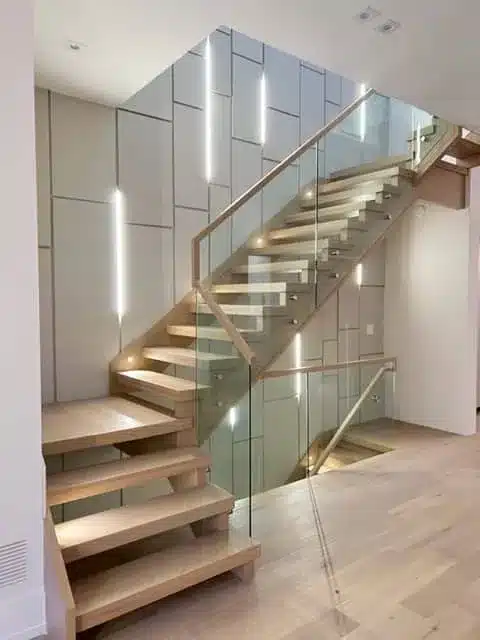
L-shaped or quarter-turn, wood treads, frameless glass $24,000
Straight run, engineered wood, steel spindle railing $14,000
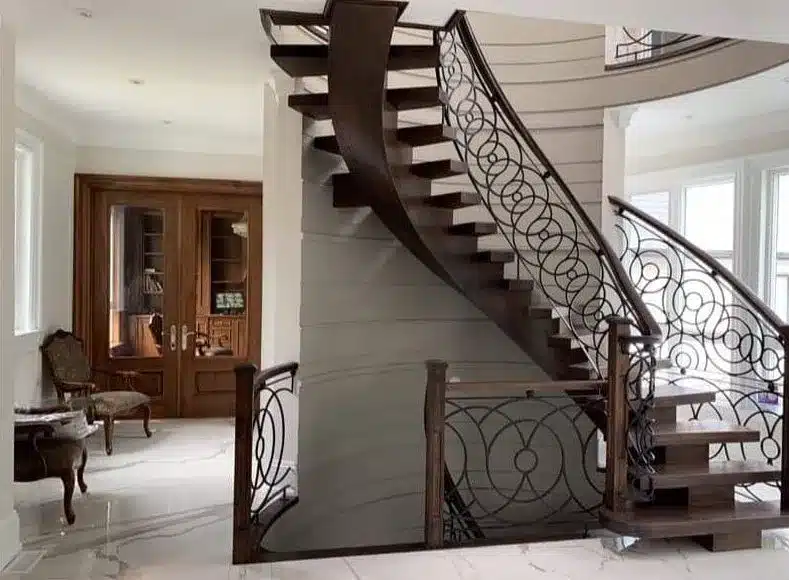
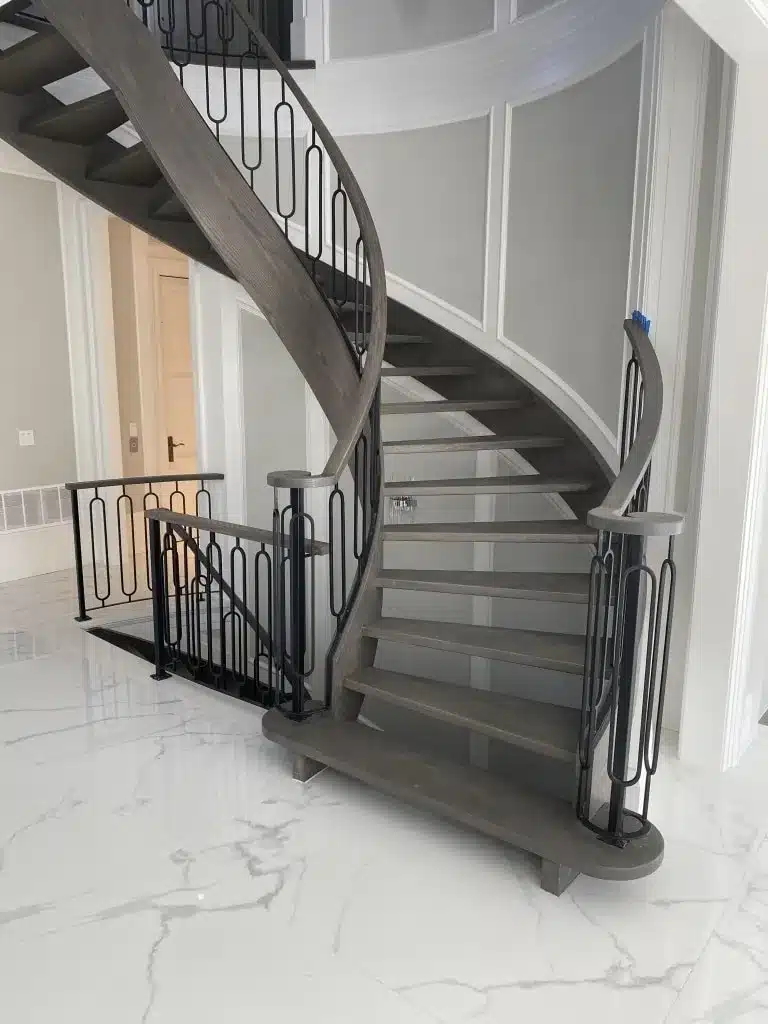
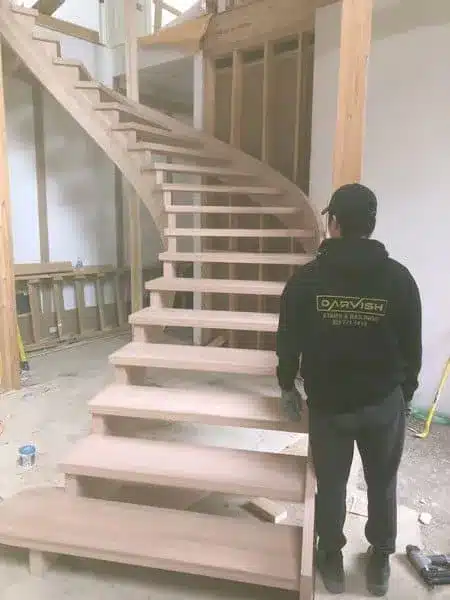
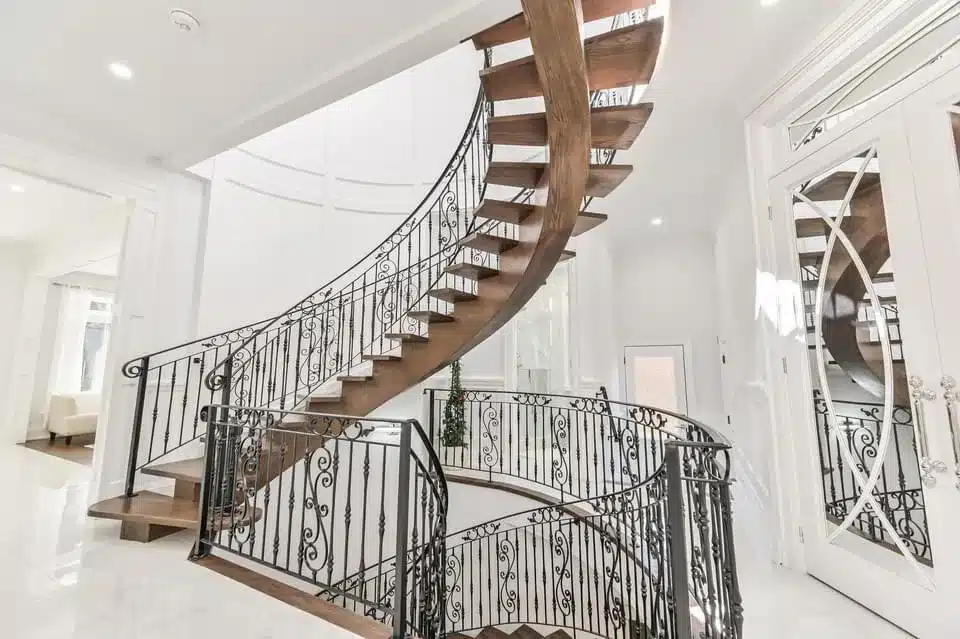
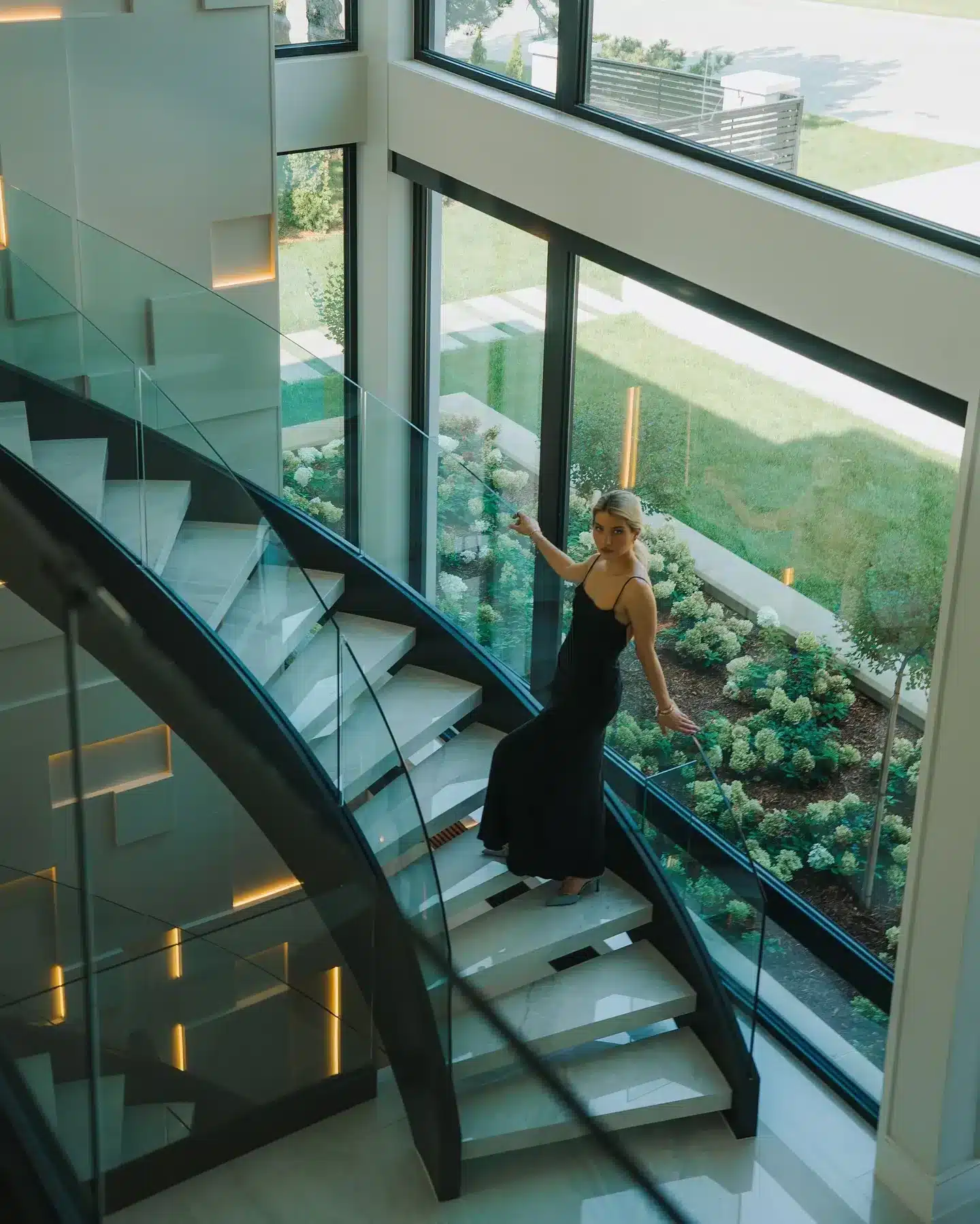
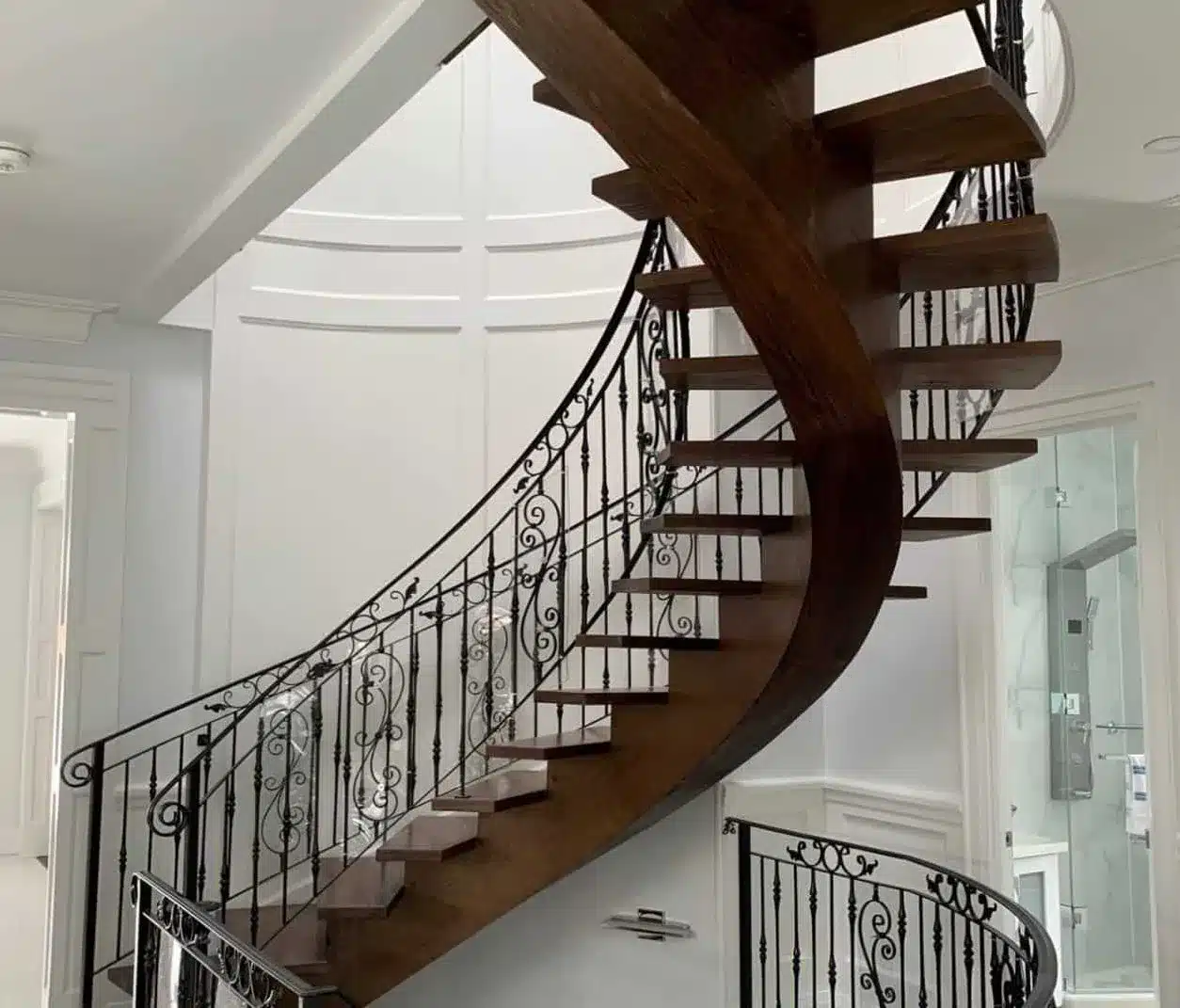
Full custom curved or spiral floating stair $40,000

What Is Included in Every Quote

Site visit, structural assessment, CAD drawings, permit coordination advisory, fabrication, delivery, installation, cleanup, and post-installation inspection.

Lead Times and Toronto Market Pricing

All figures reflect Toronto market pricing including design, fabrication, permit coordination, and installation. Custom steel fabrication currently runs 4 to 8 weeks from order confirmation.

Our Floating Staircase Projects

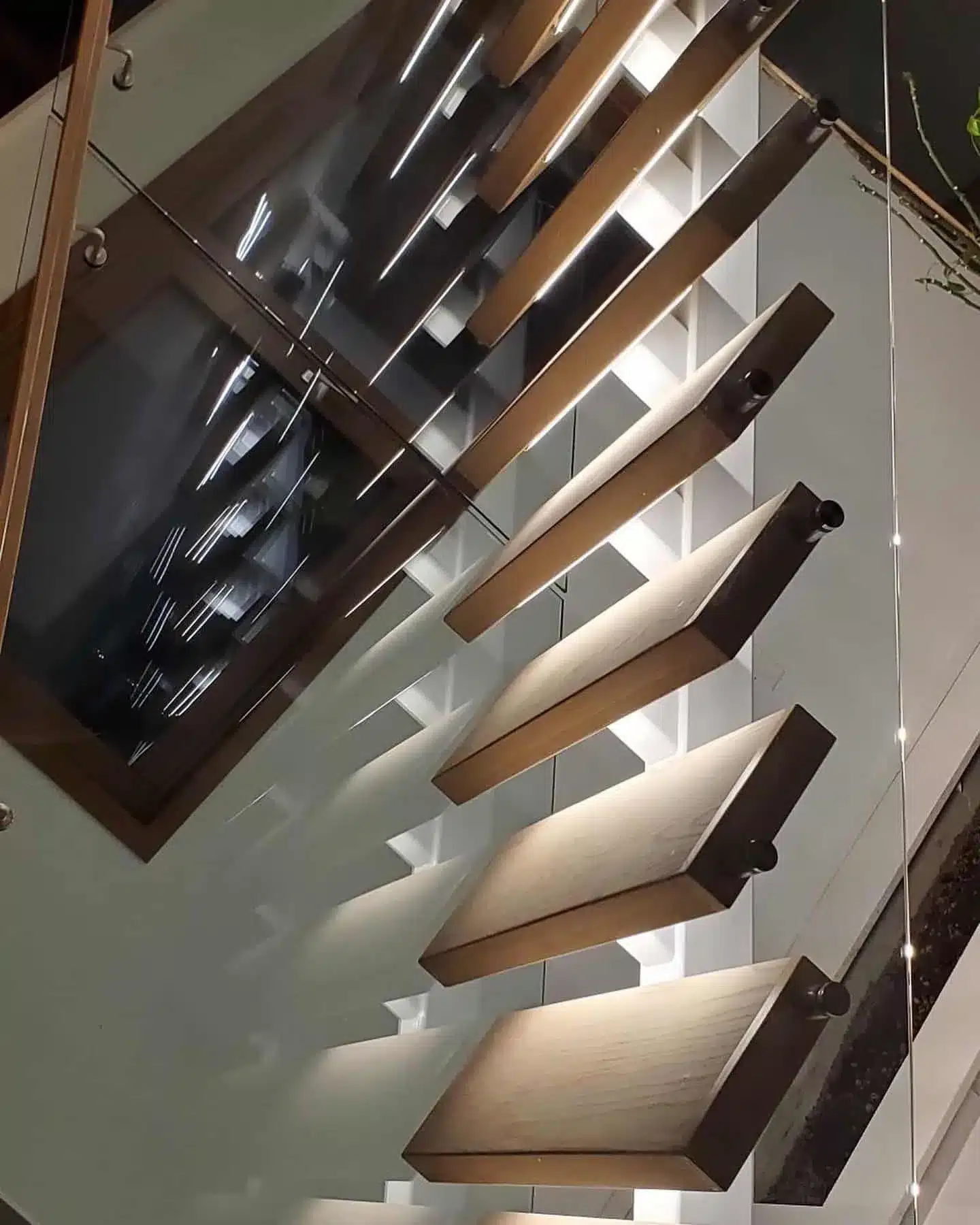
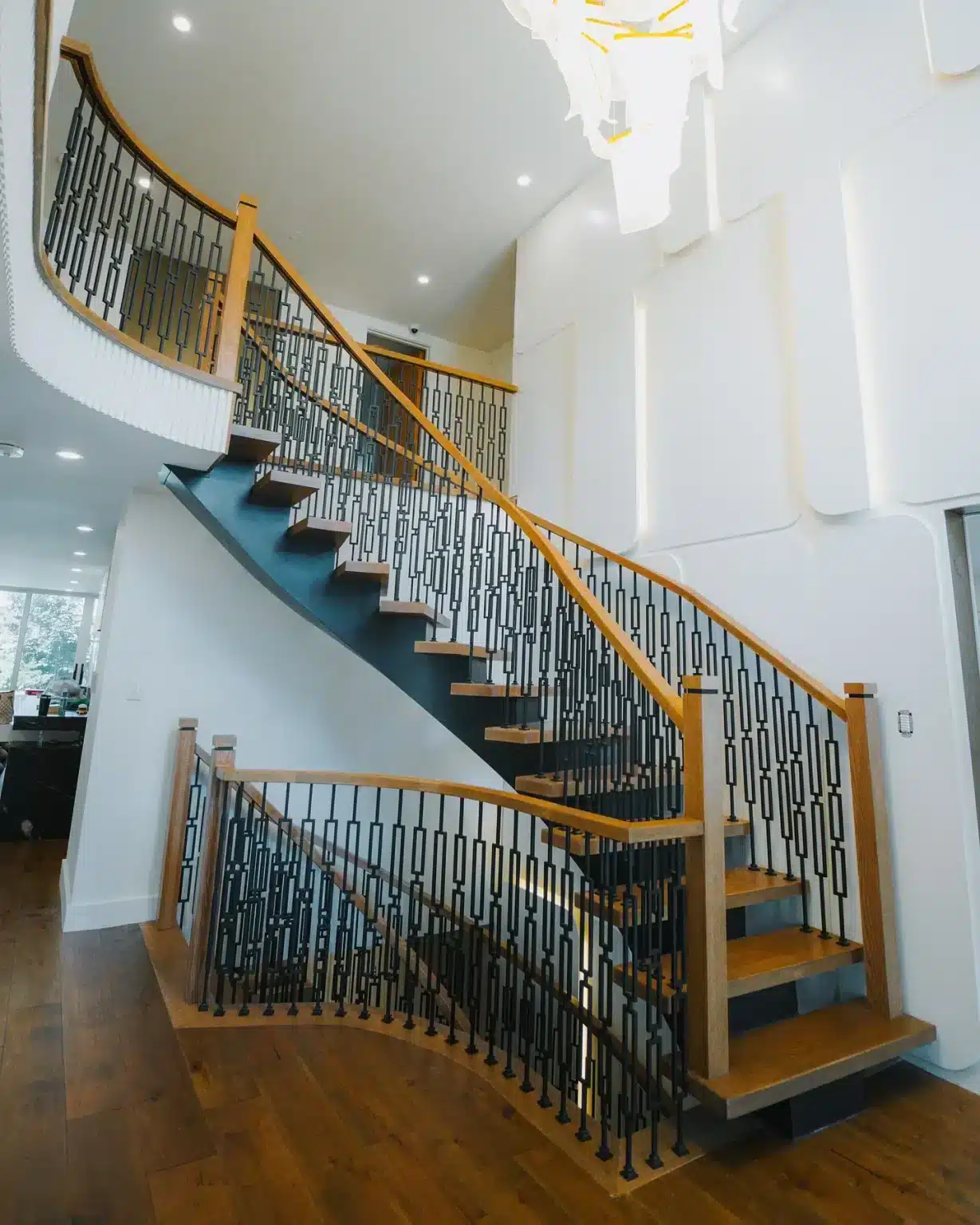
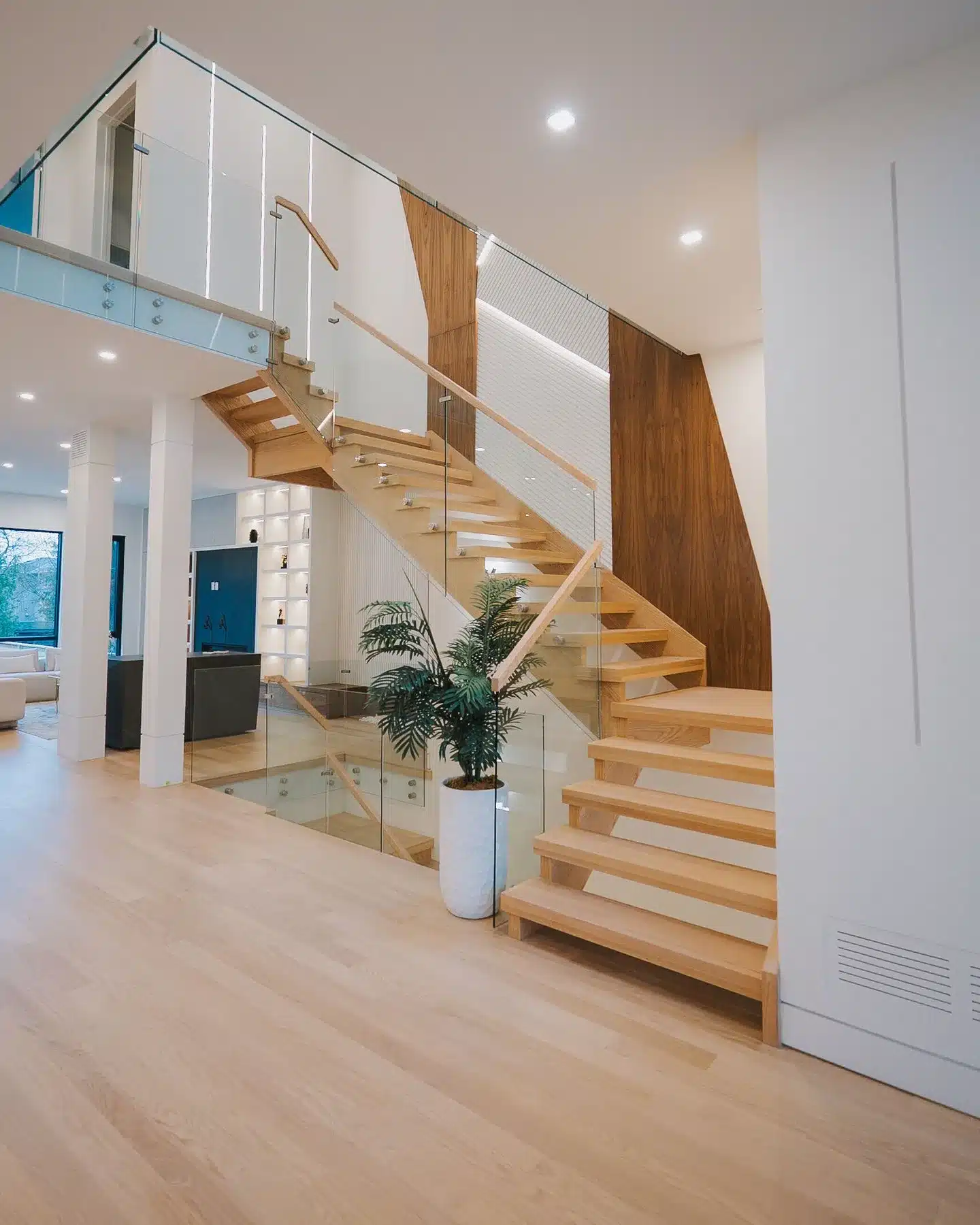
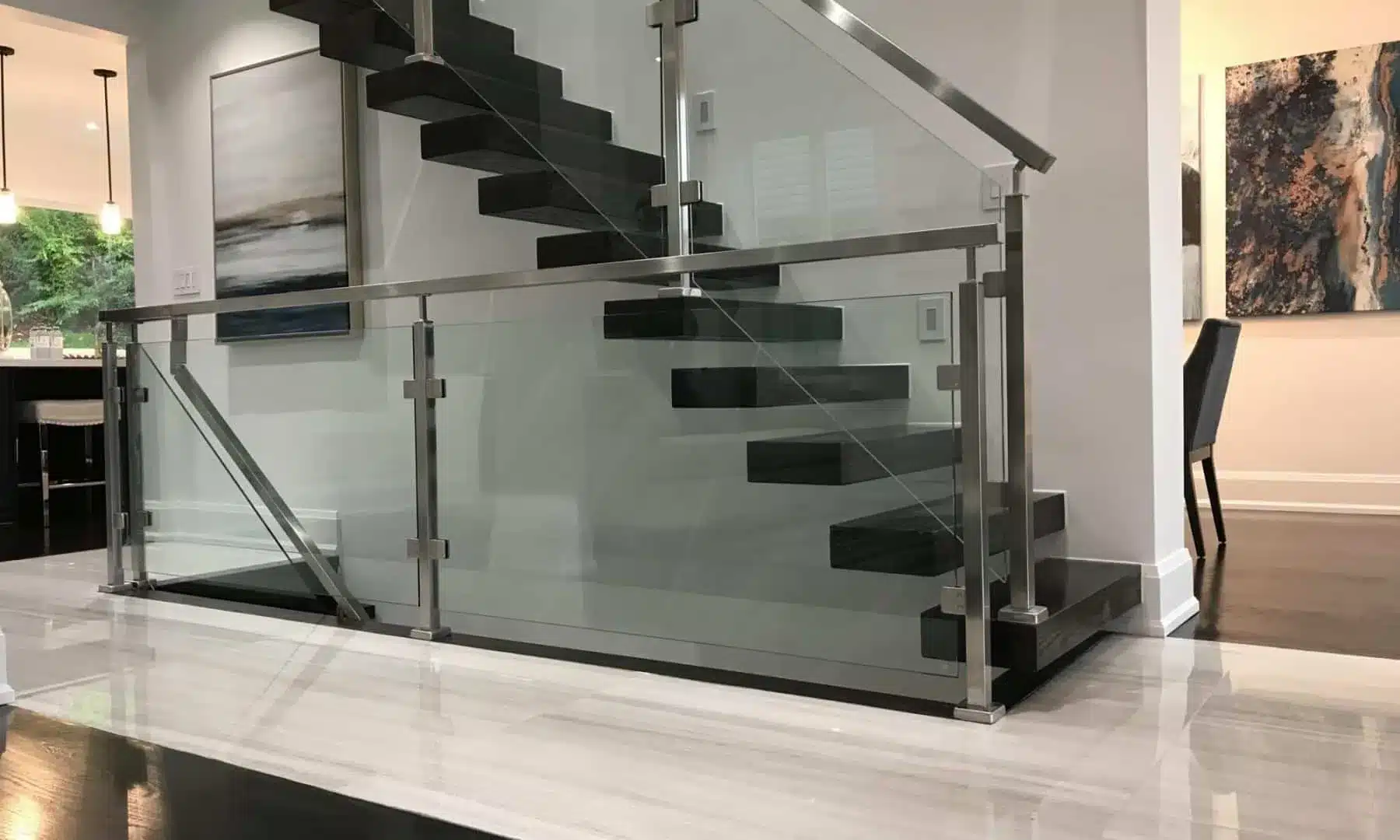
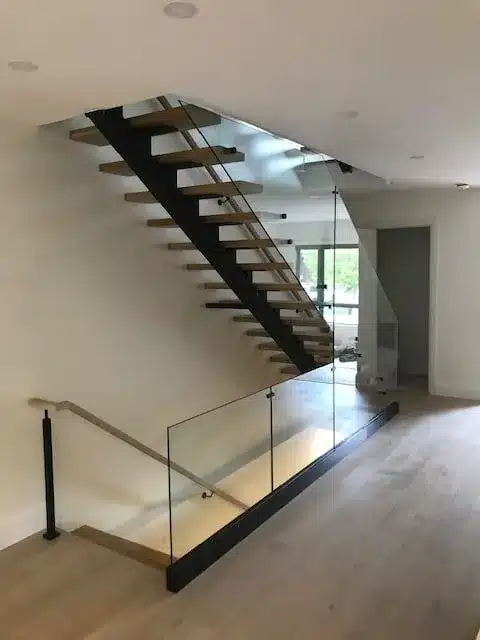
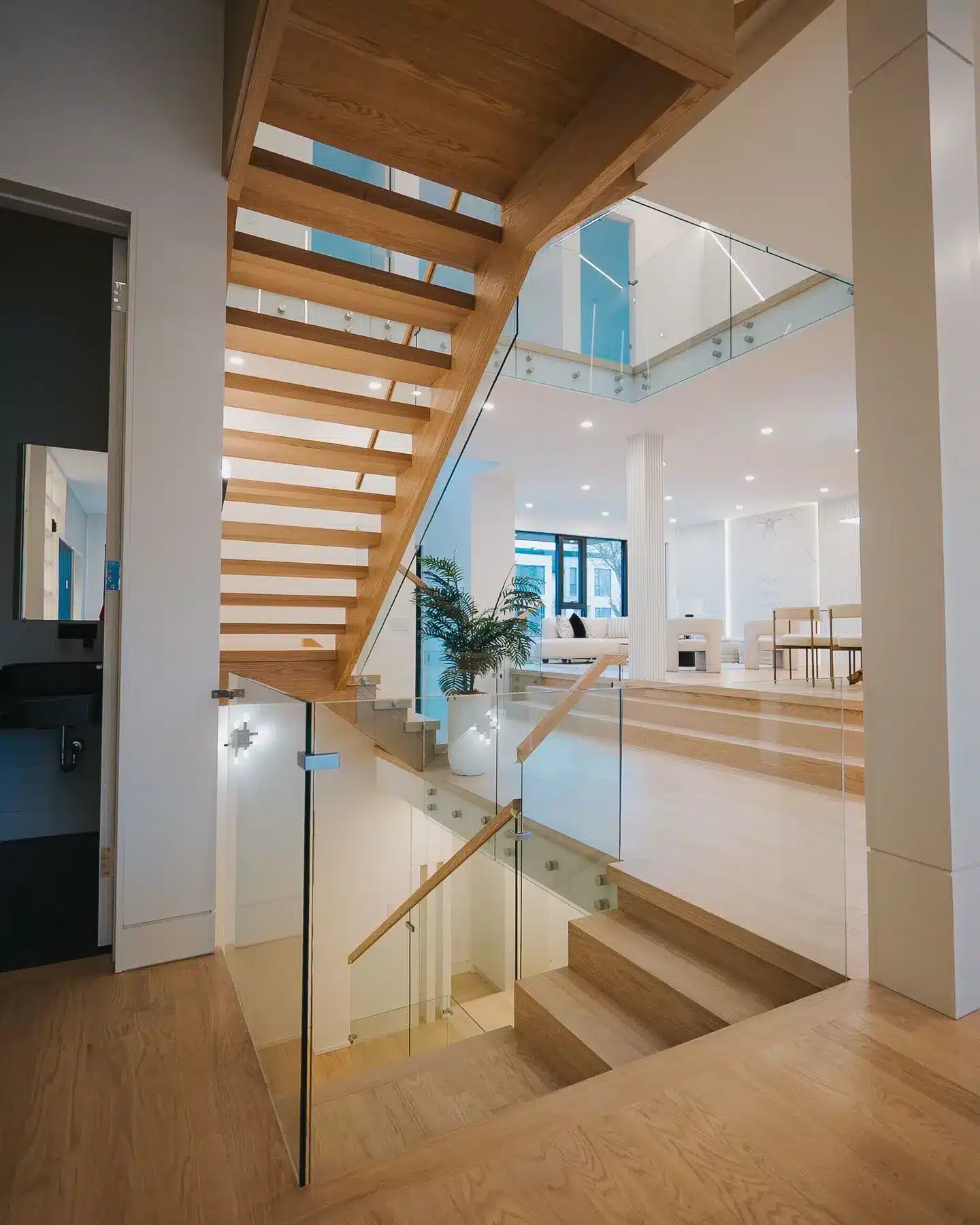
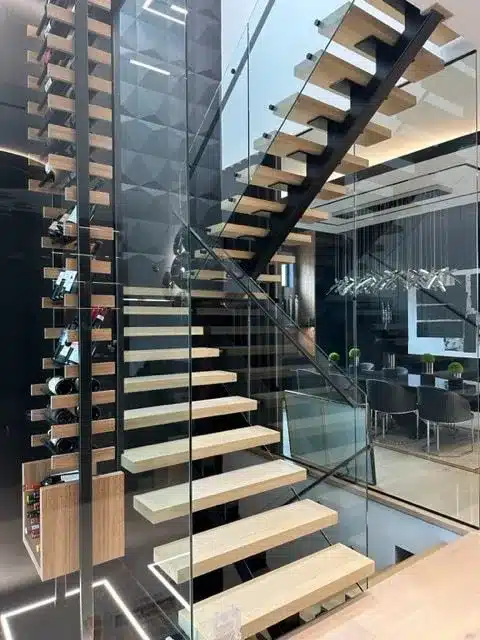
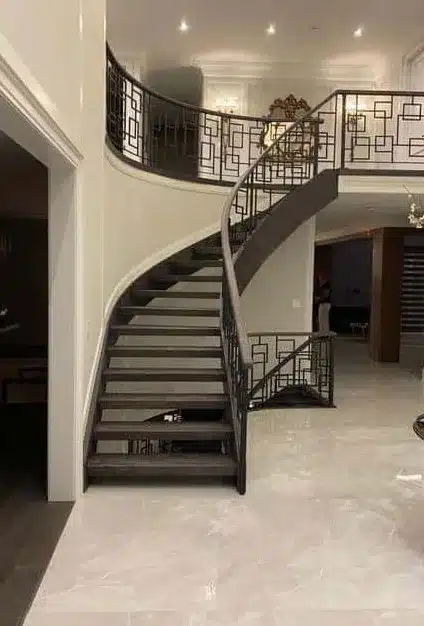
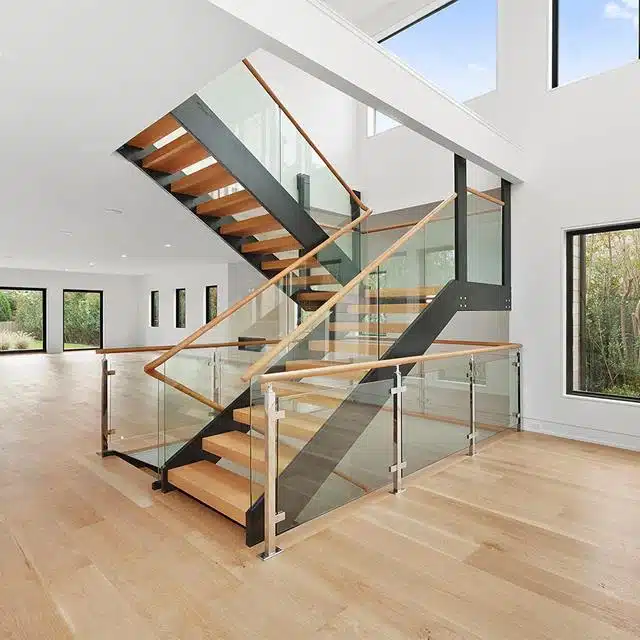
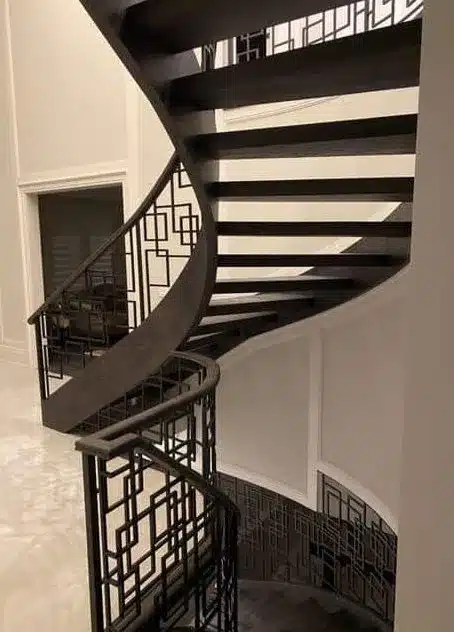
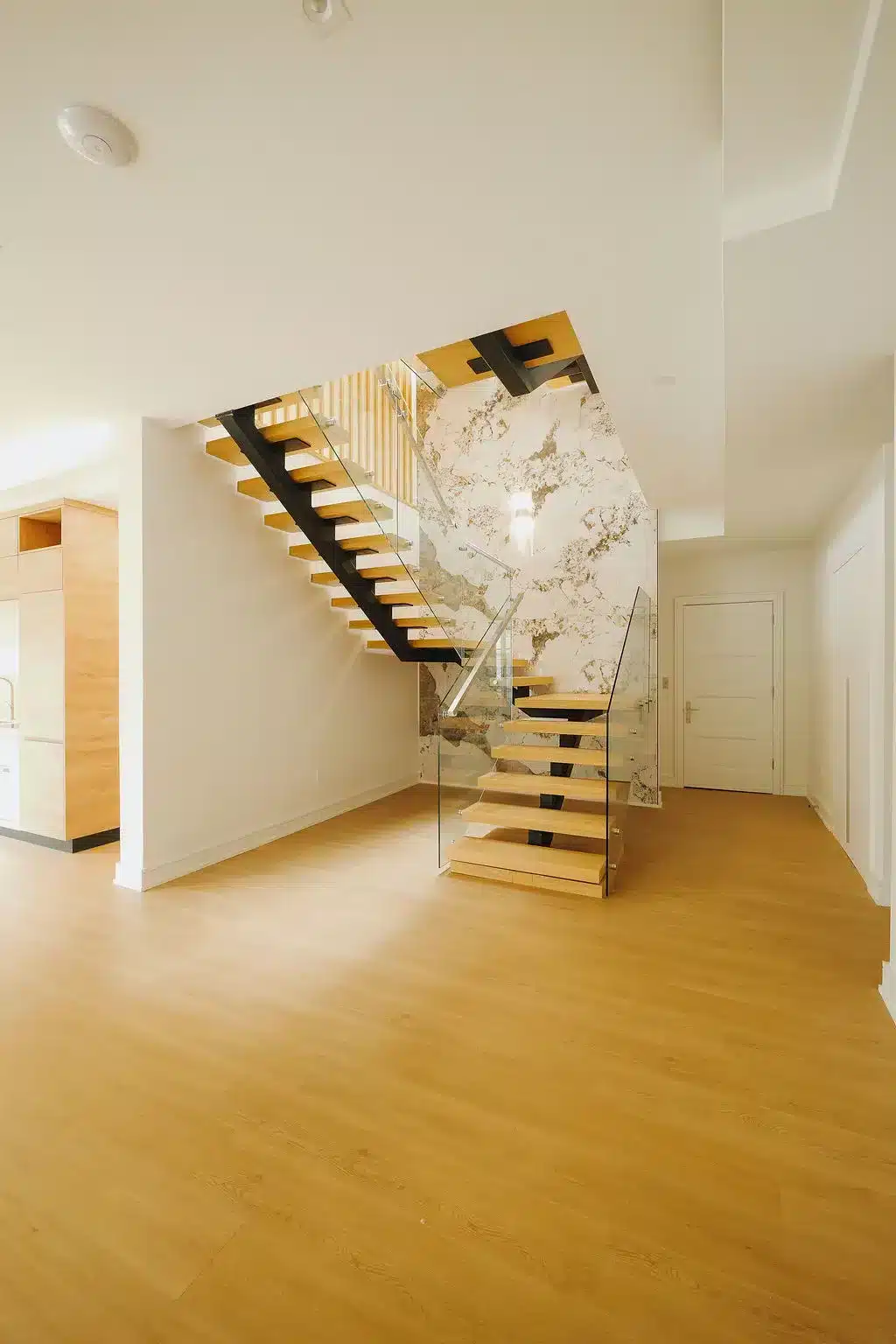
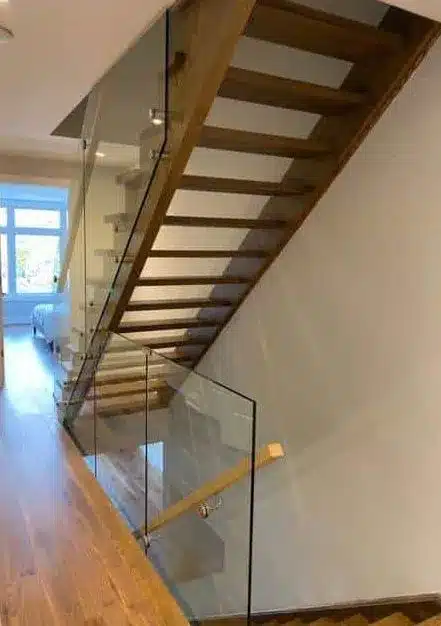
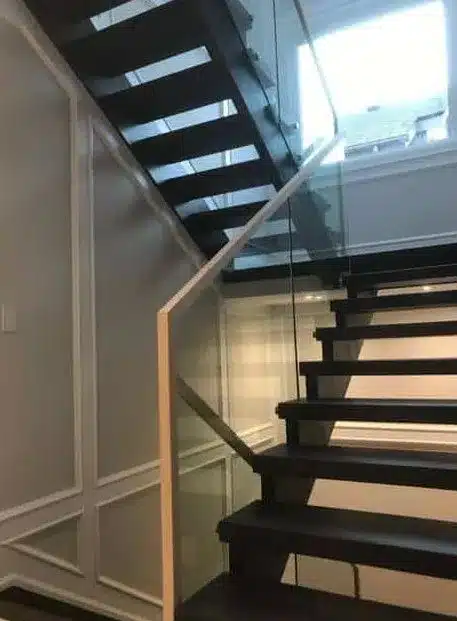
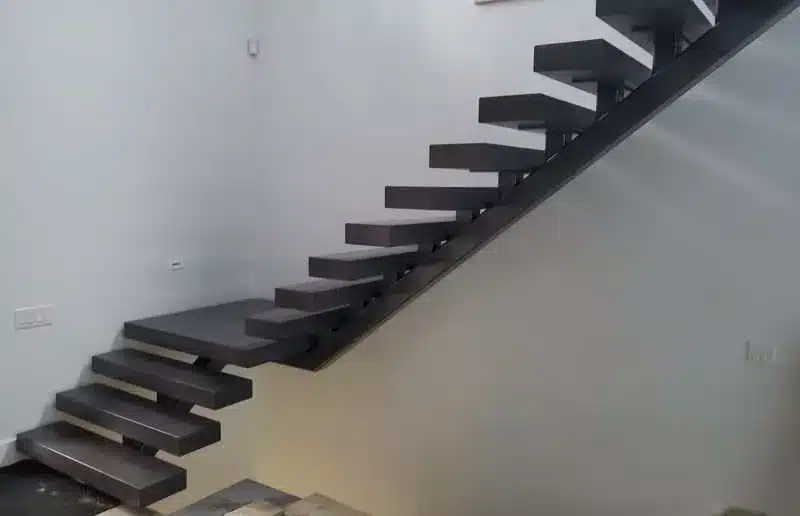
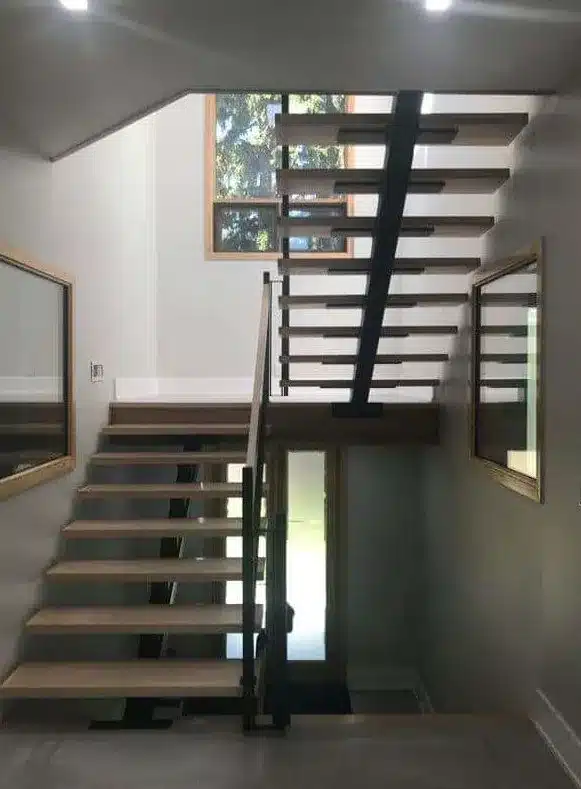
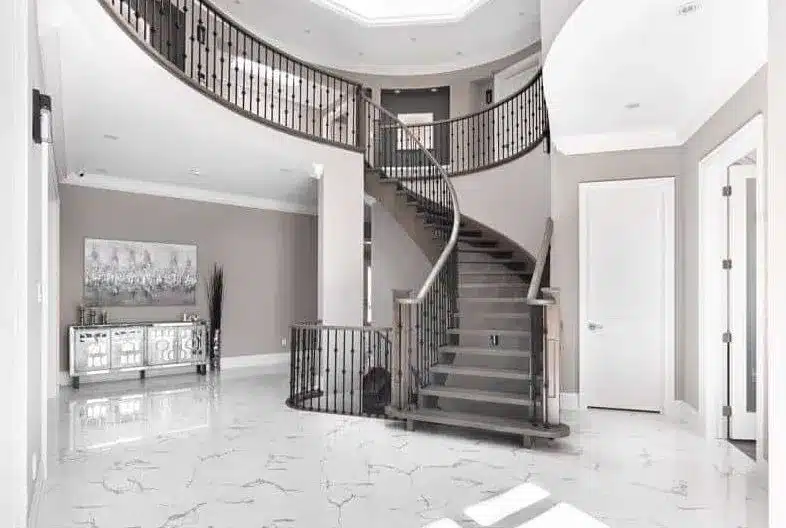
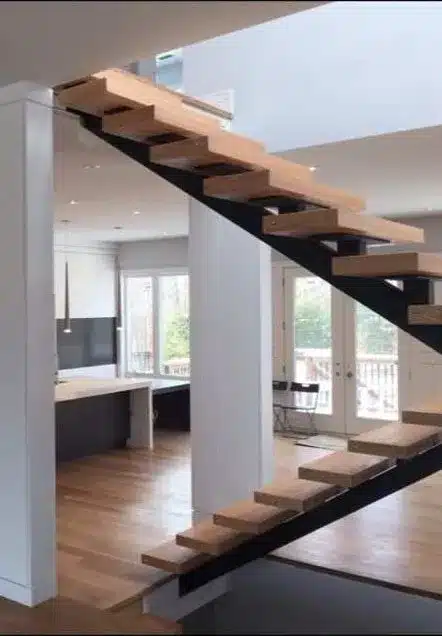
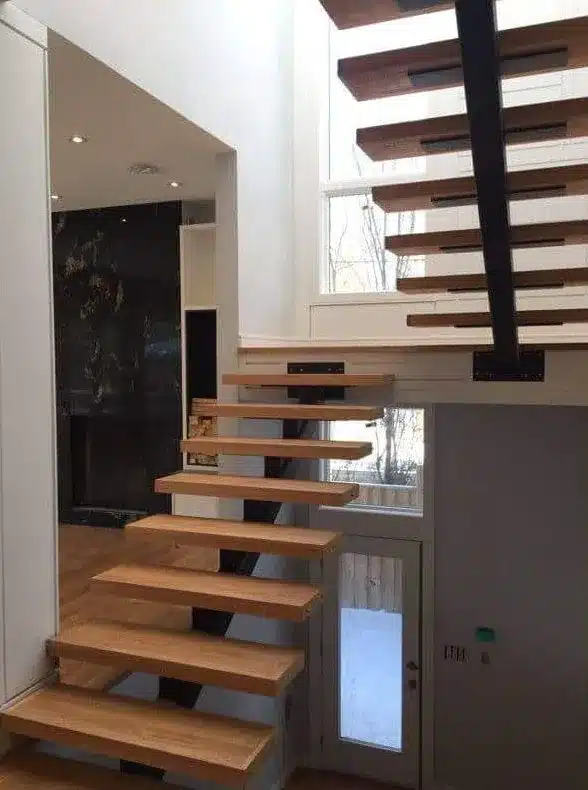
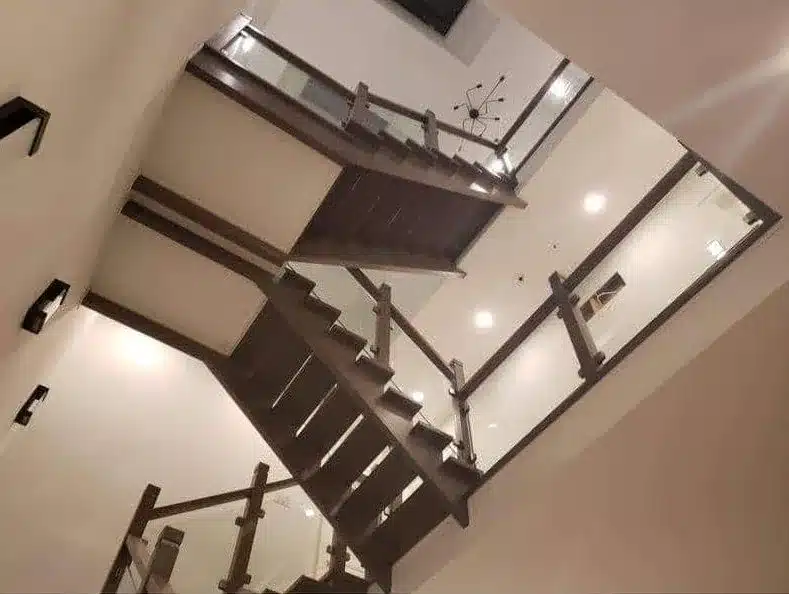
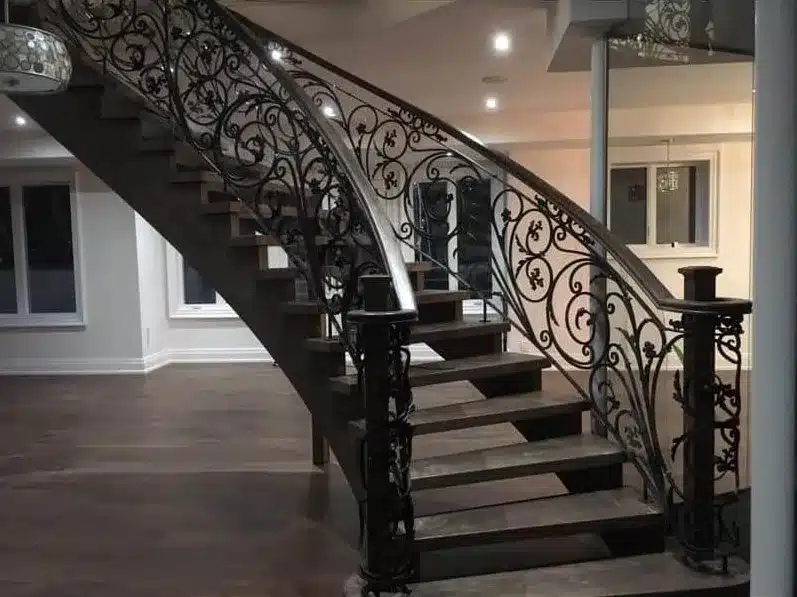
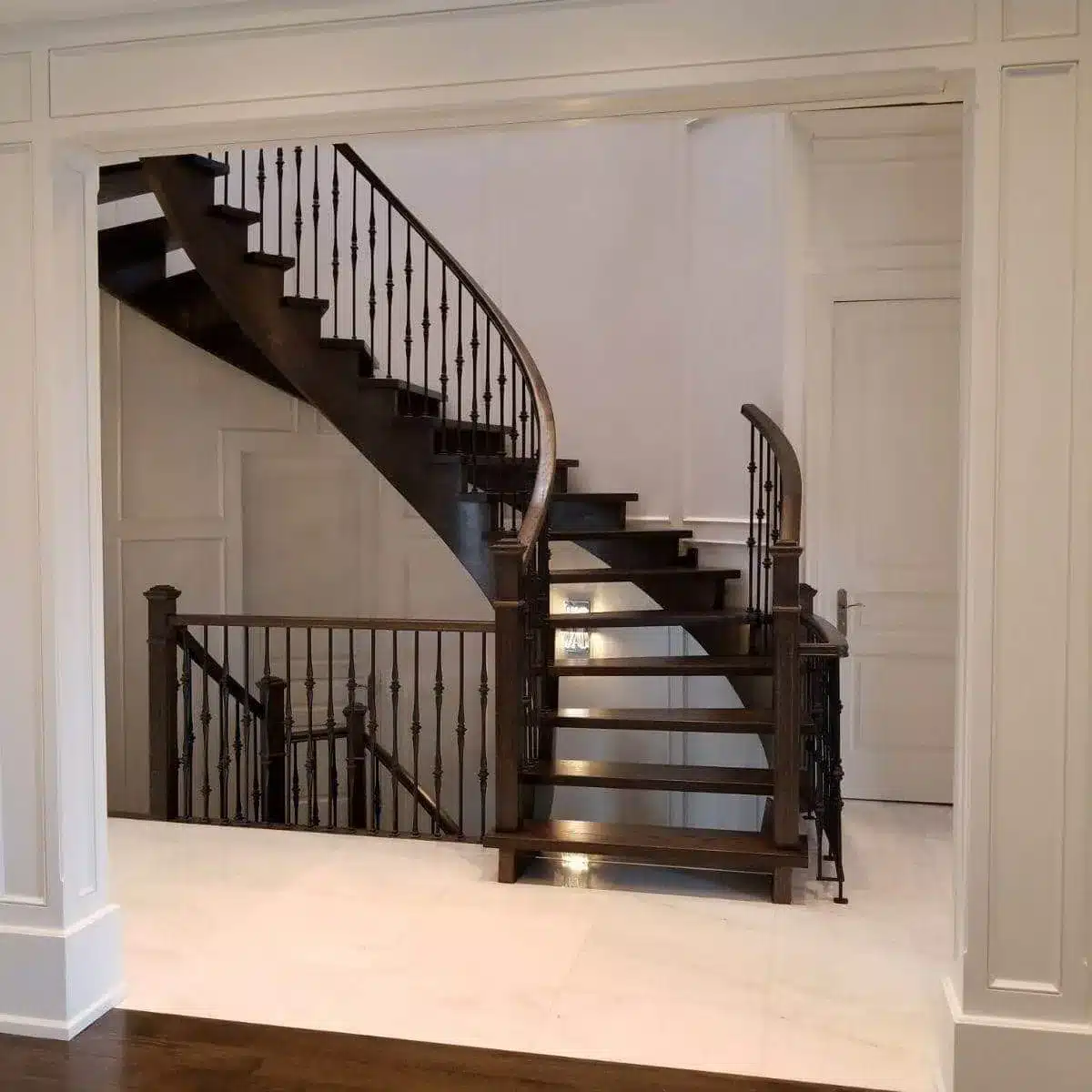
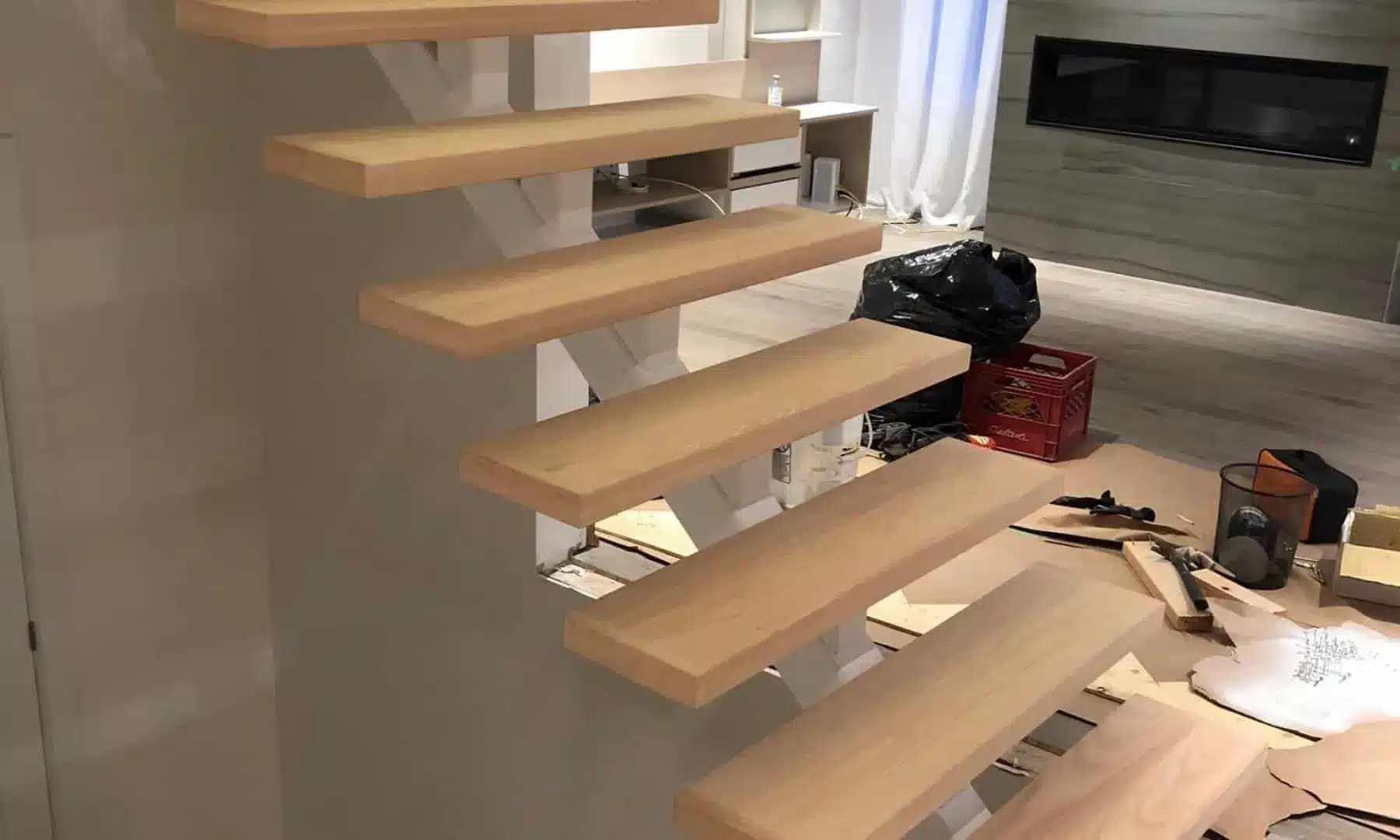
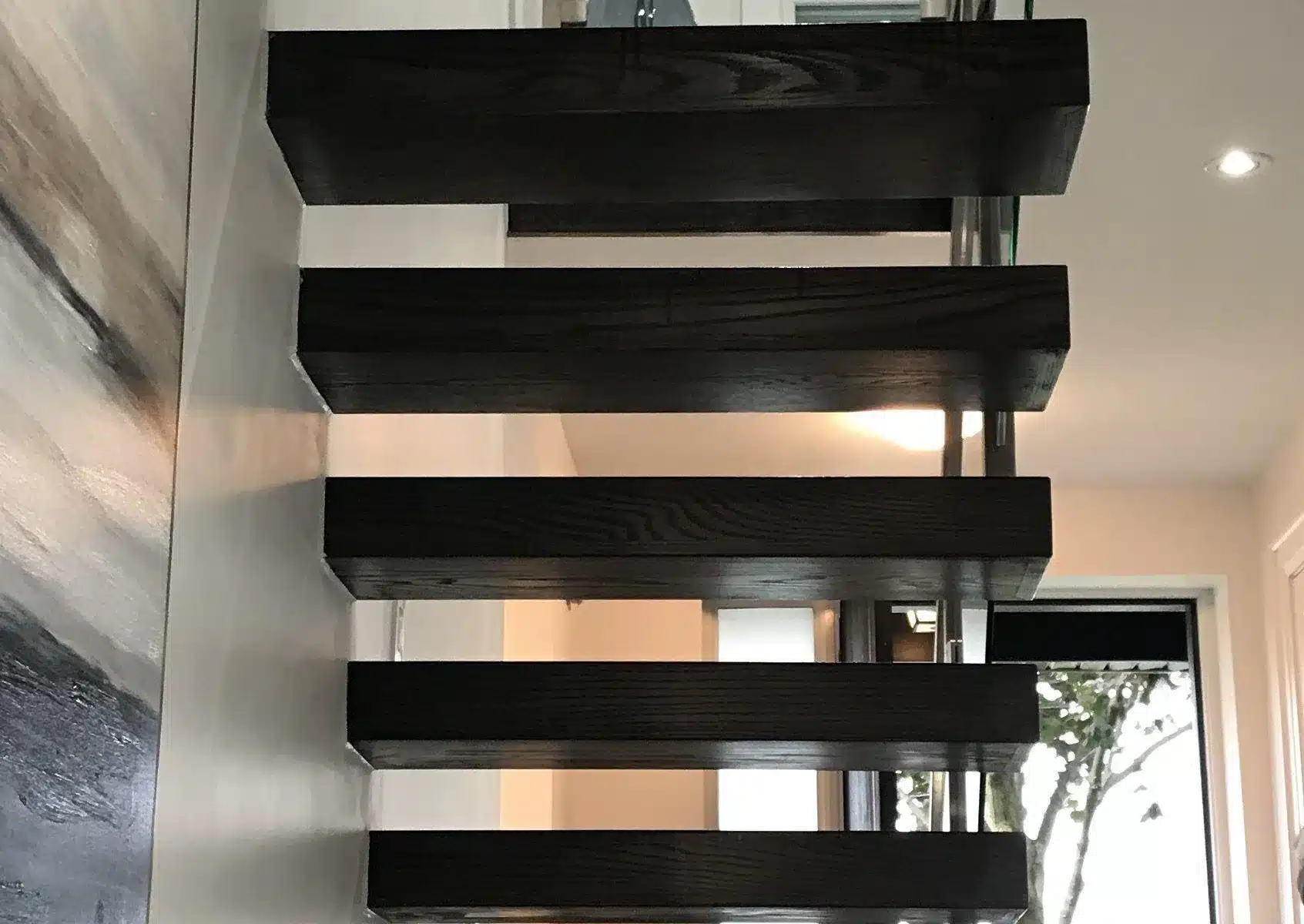
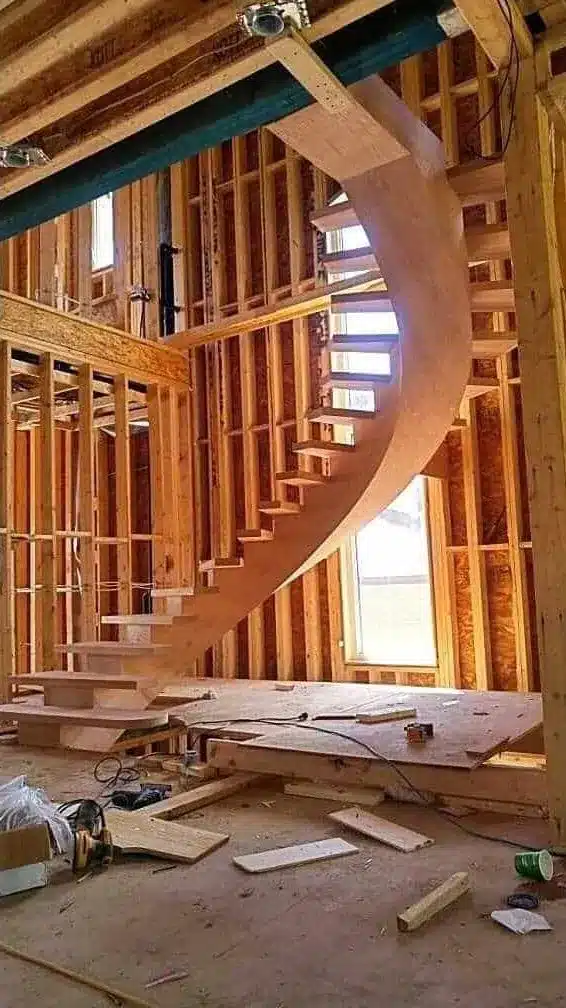
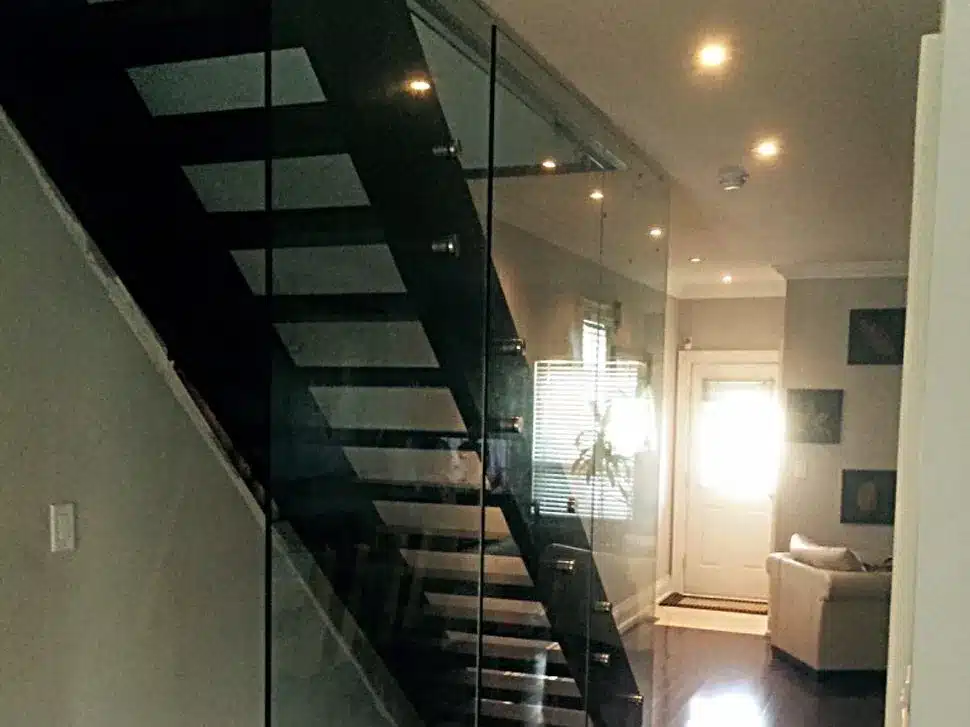
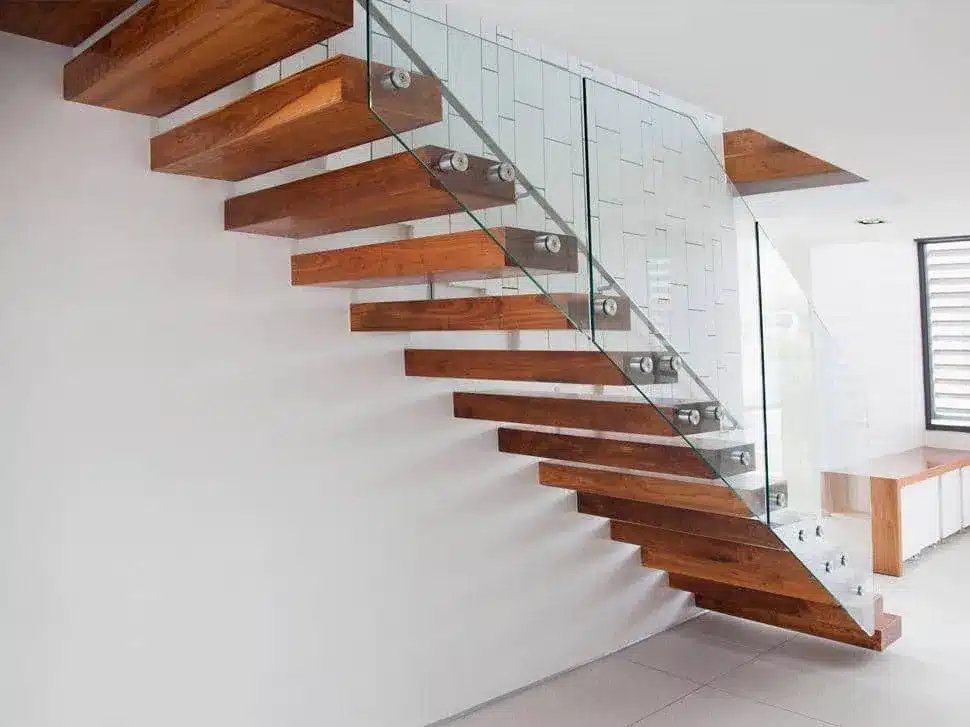
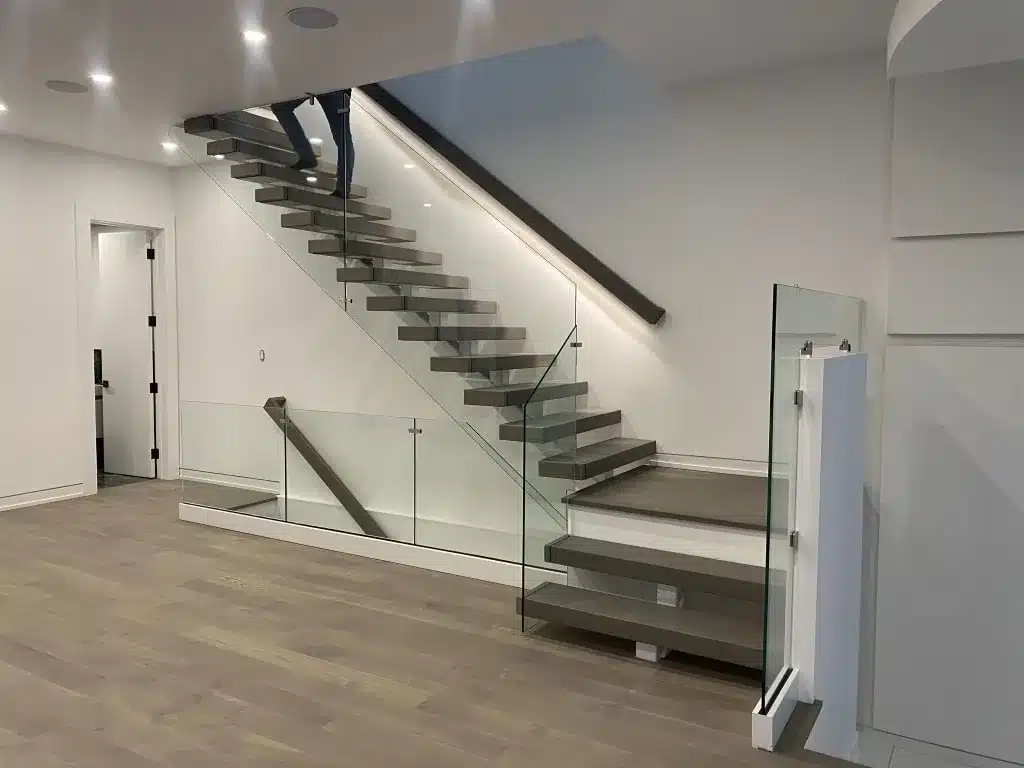
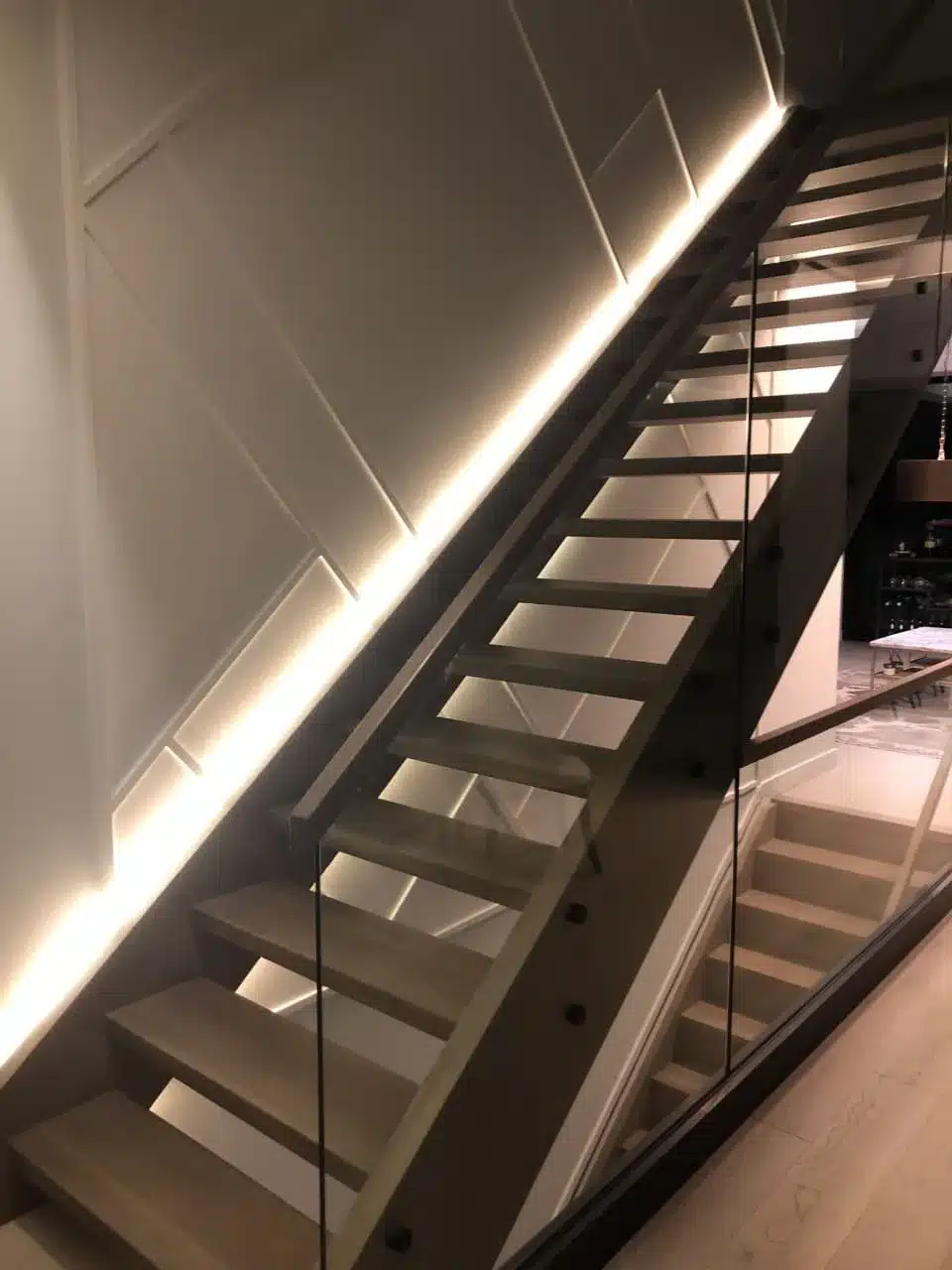
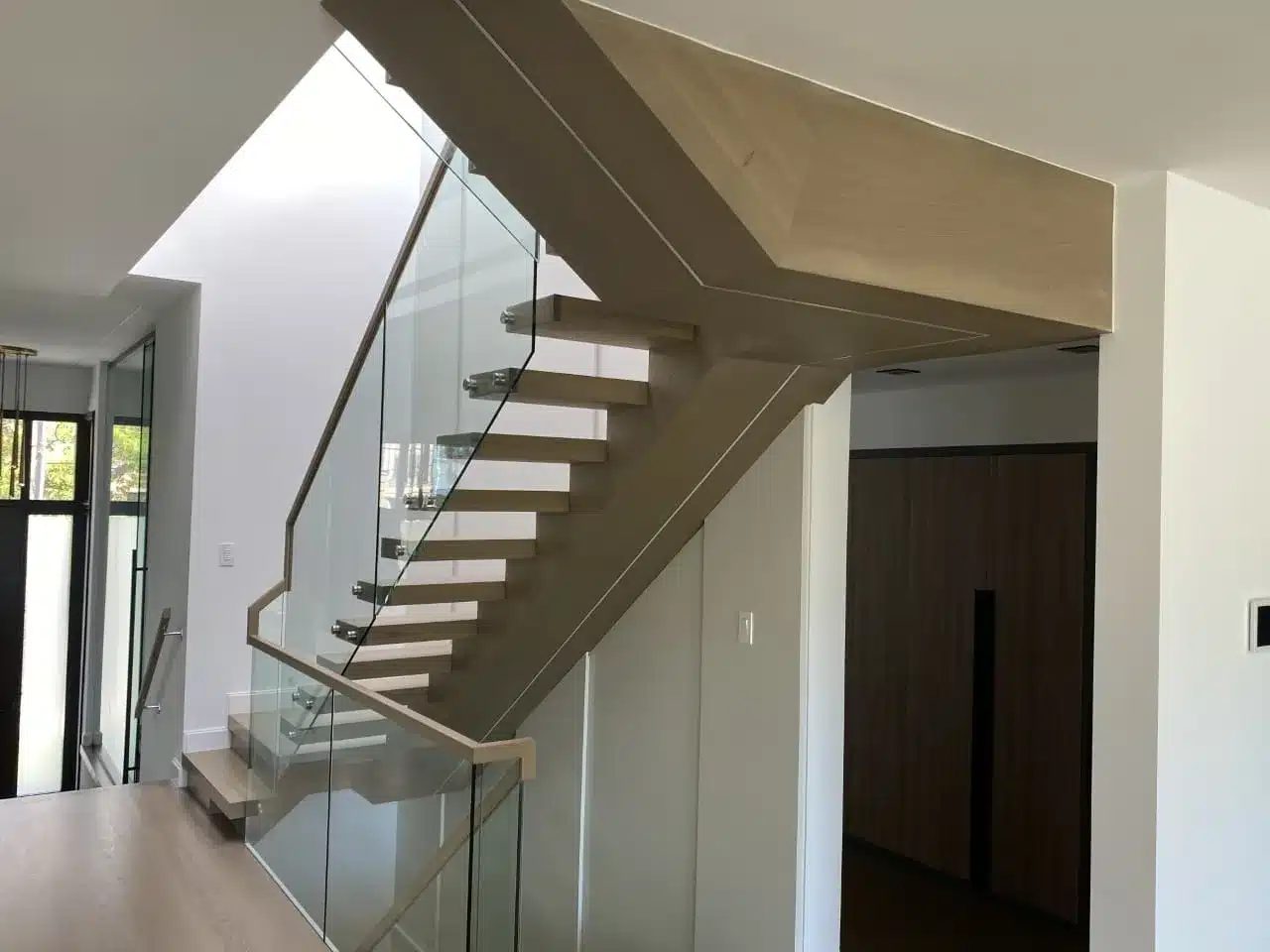
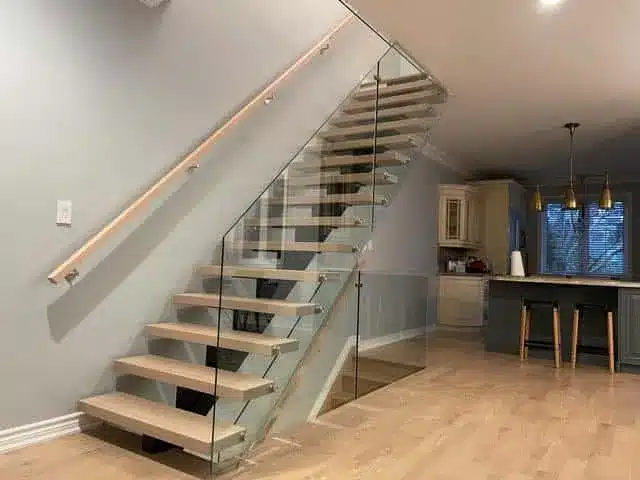
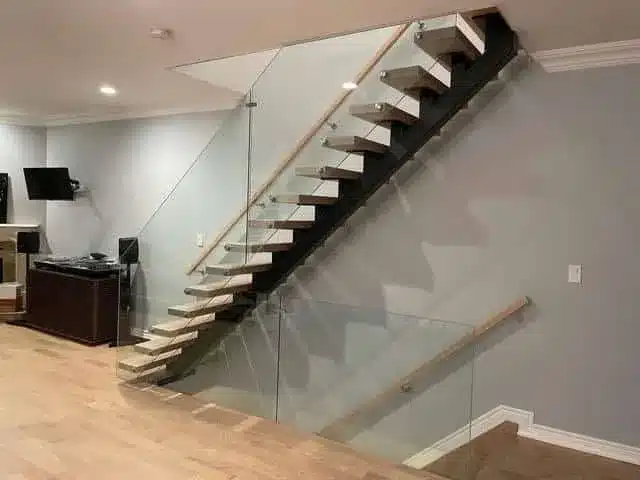
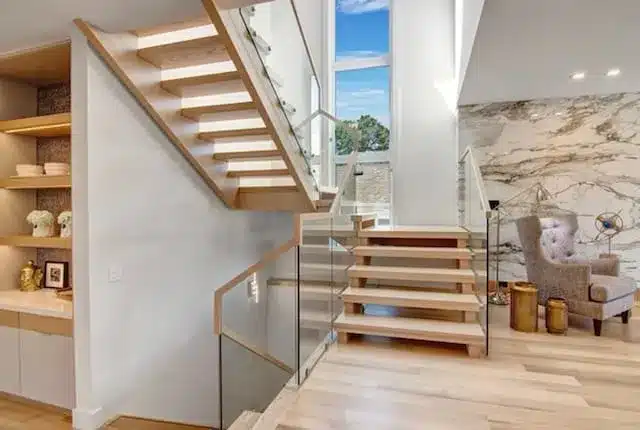
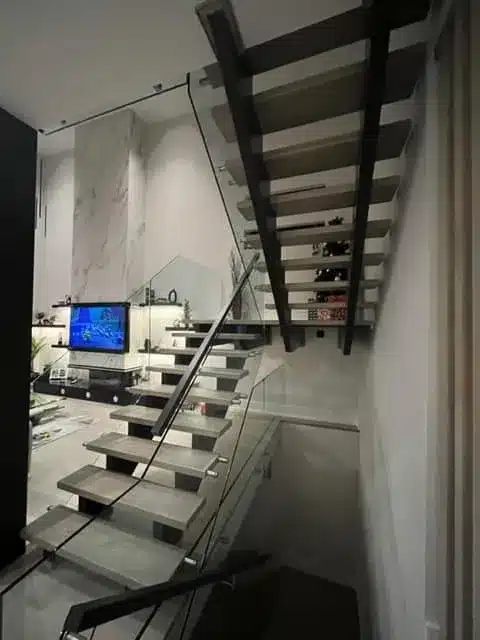
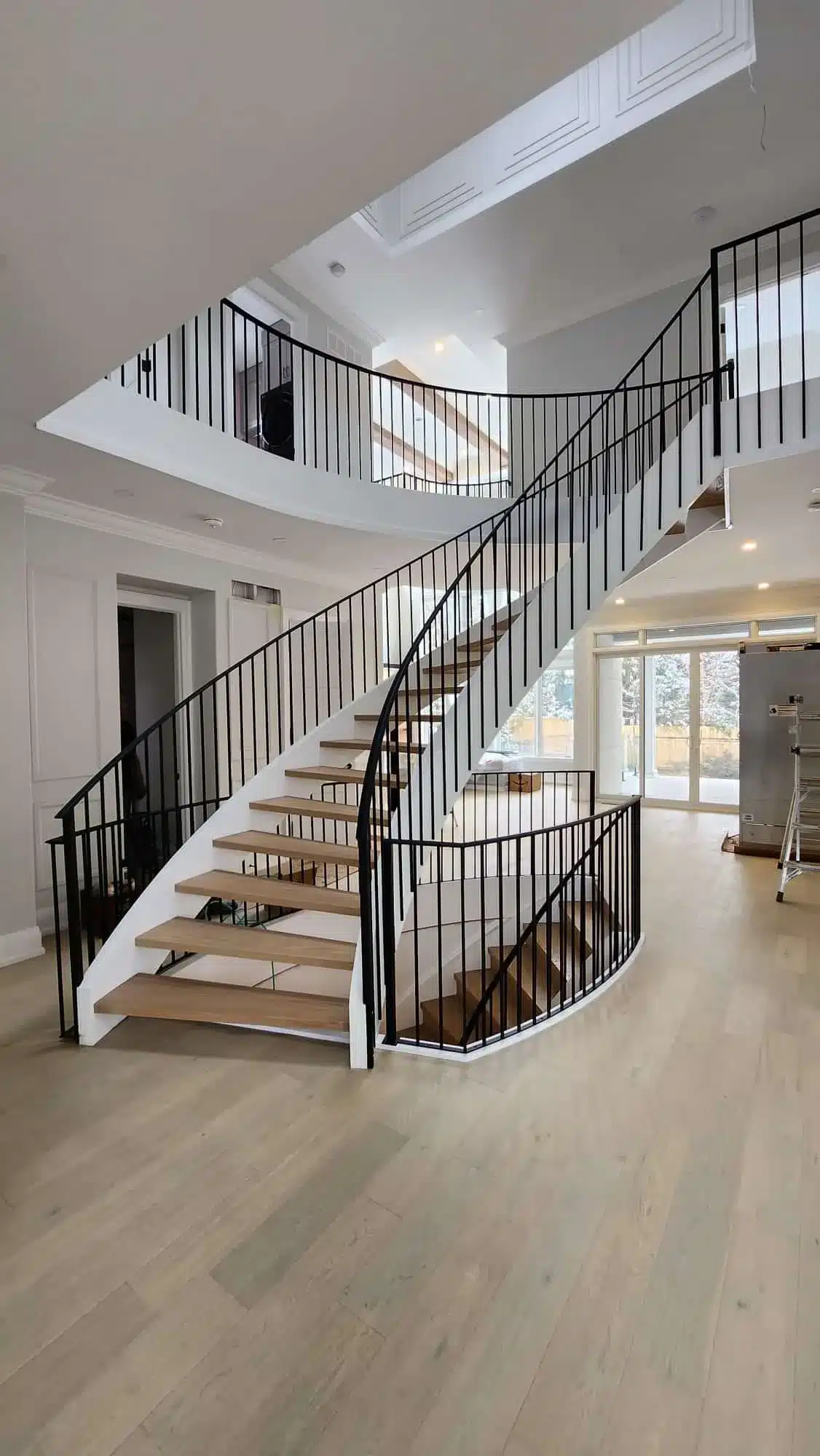
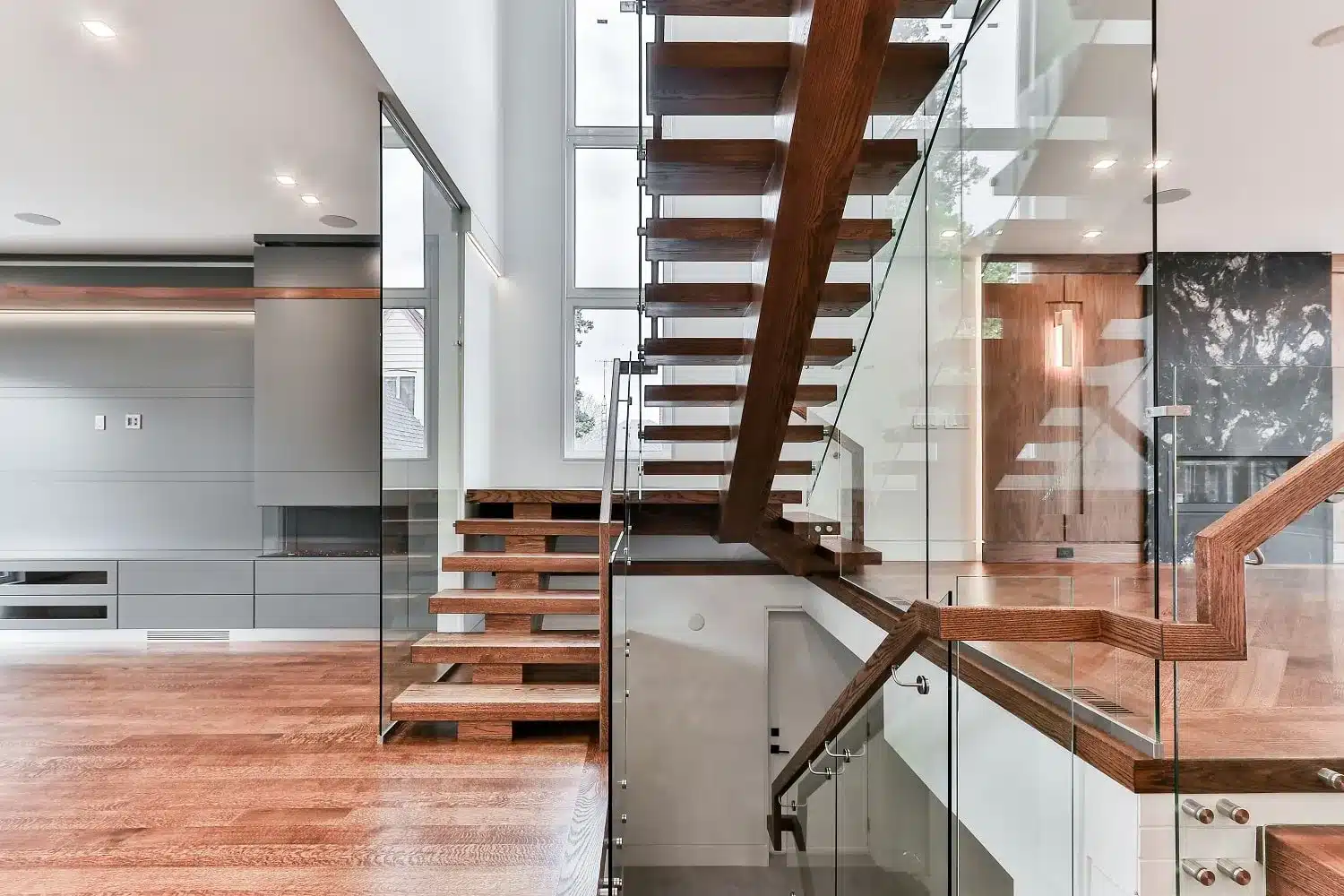
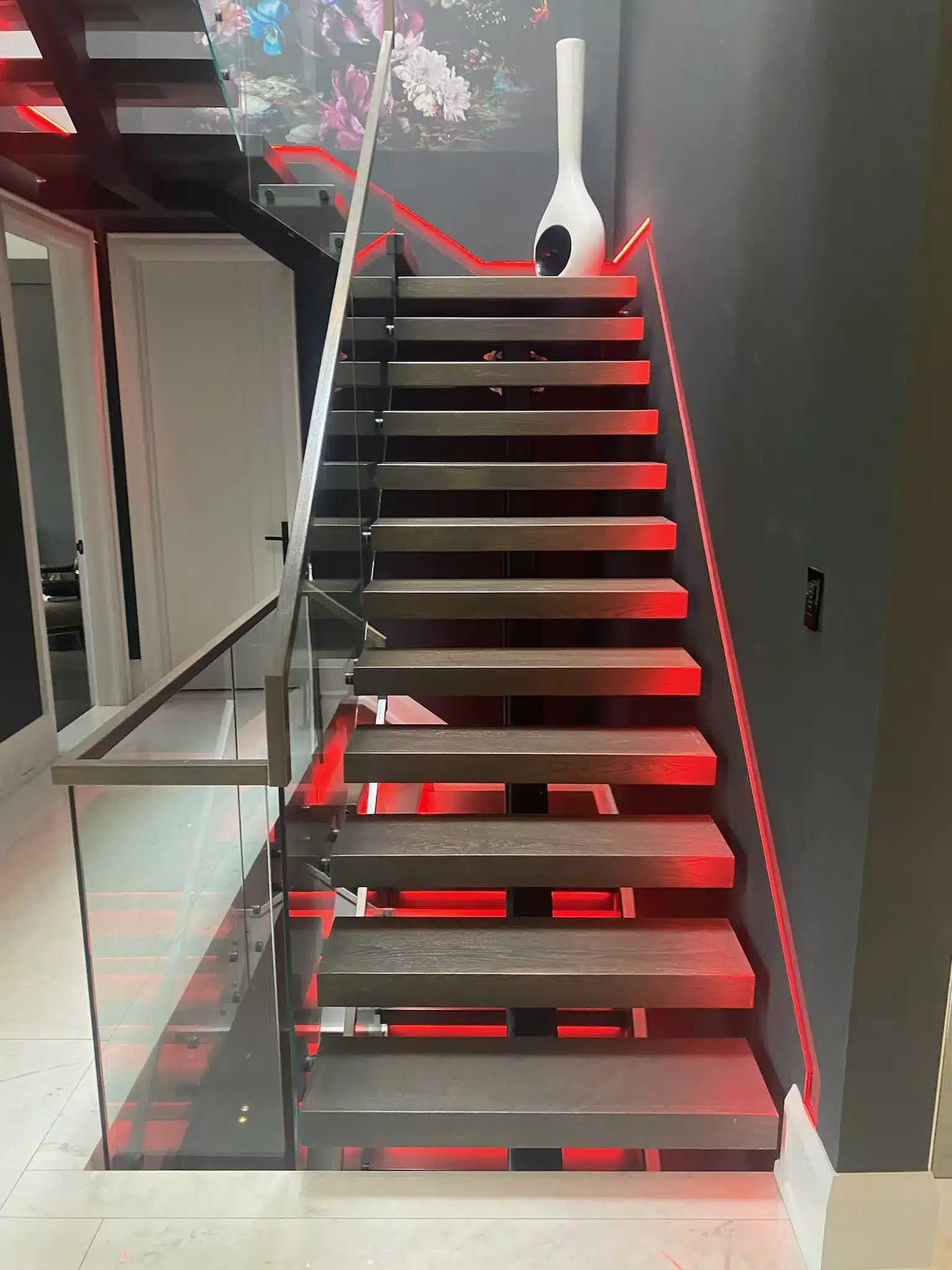
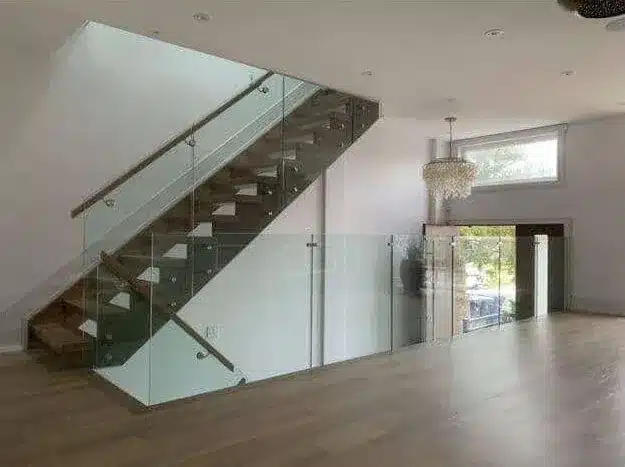
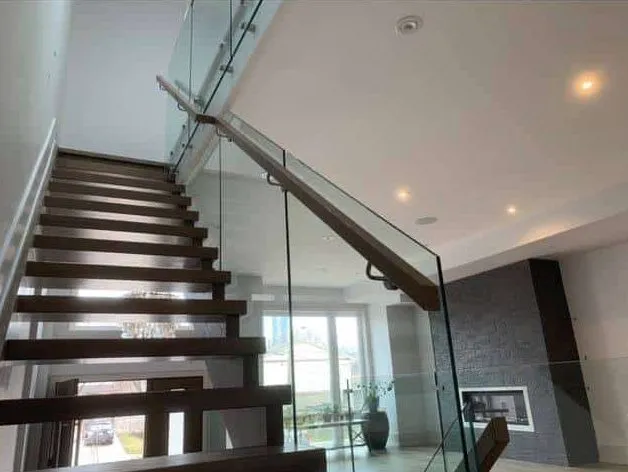
Explore our portfolio of floating staircases installed in Toronto and North York. From sleek, modern designs to rustic wooden floating stair treads, our work showcases the diversity and beauty of floating stairs. See how we’ve transformed spaces with stunning floating stair designs that match each client’s unique vision.
Why Choose Floating Stairs?

Floating stairs are a highly functional and stylish addition to any modern home or office in Toronto and North York. Some key benefits include:

Space Efficiency

With their open risers, floating stairs create a feeling of space and openness, ideal for compact homes or lofts in North York.

Modern Design

Floating stairs, including floating stair treads, have a clean, minimalistic look that fits perfectly in modern interiors in Toronto.

Increased Natural Light

These stairs allow light to pass through, brightening your space in both residential and commercial buildings.

Customization

Whether you want a wood, metal, or glass design, we offer various materials for your floating stair design.

Safety and Durability

Every staircase is designed with safety in mind, often complemented by elegant floating stair railing options, meeting the highest structural standards in North York and Toronto.

Need Help ?

Get in touch with us now for a free estimation and fast service for your home, business.

The Engineering Behind the Floating Look

The “floating” appearance comes from hiding the structural system. We use three main approaches in Toronto installations, and the right choice depends entirely on your floor plan and wall conditions.

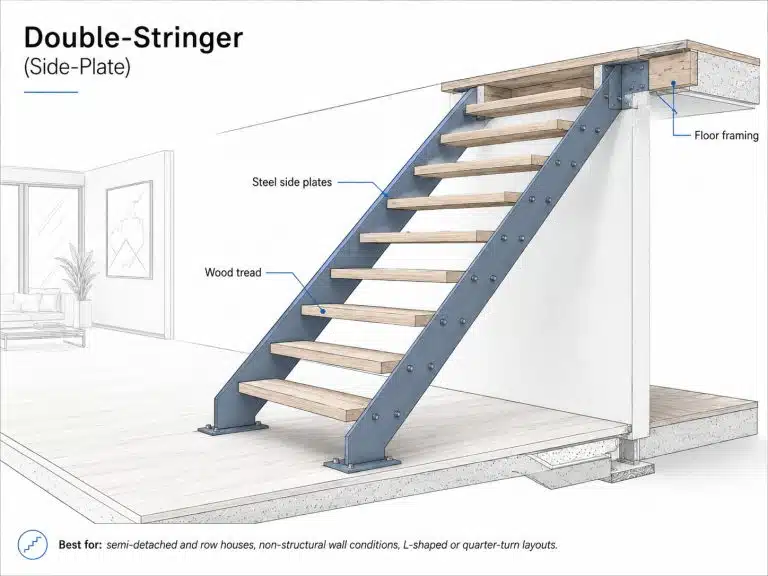
double stringer stairs

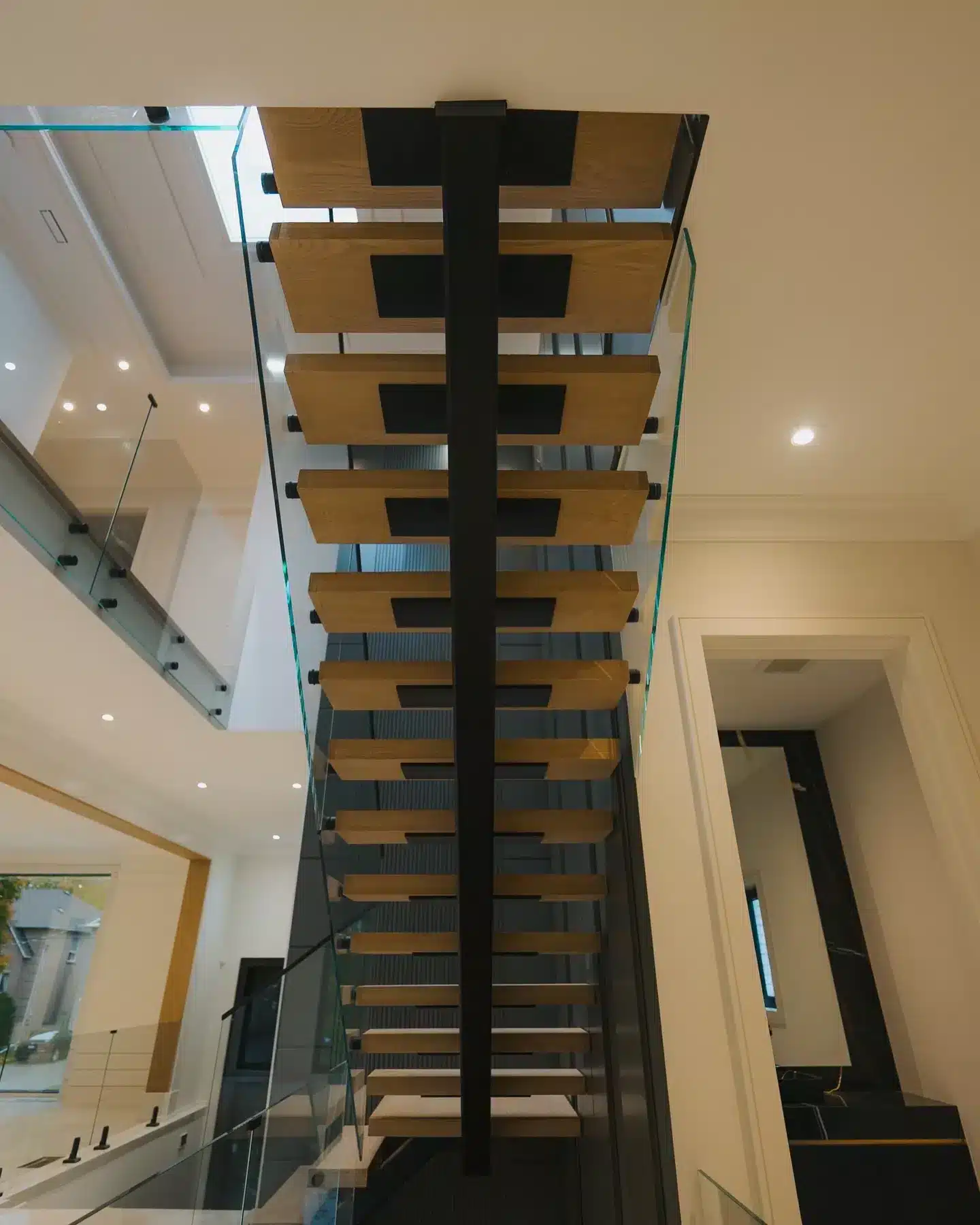
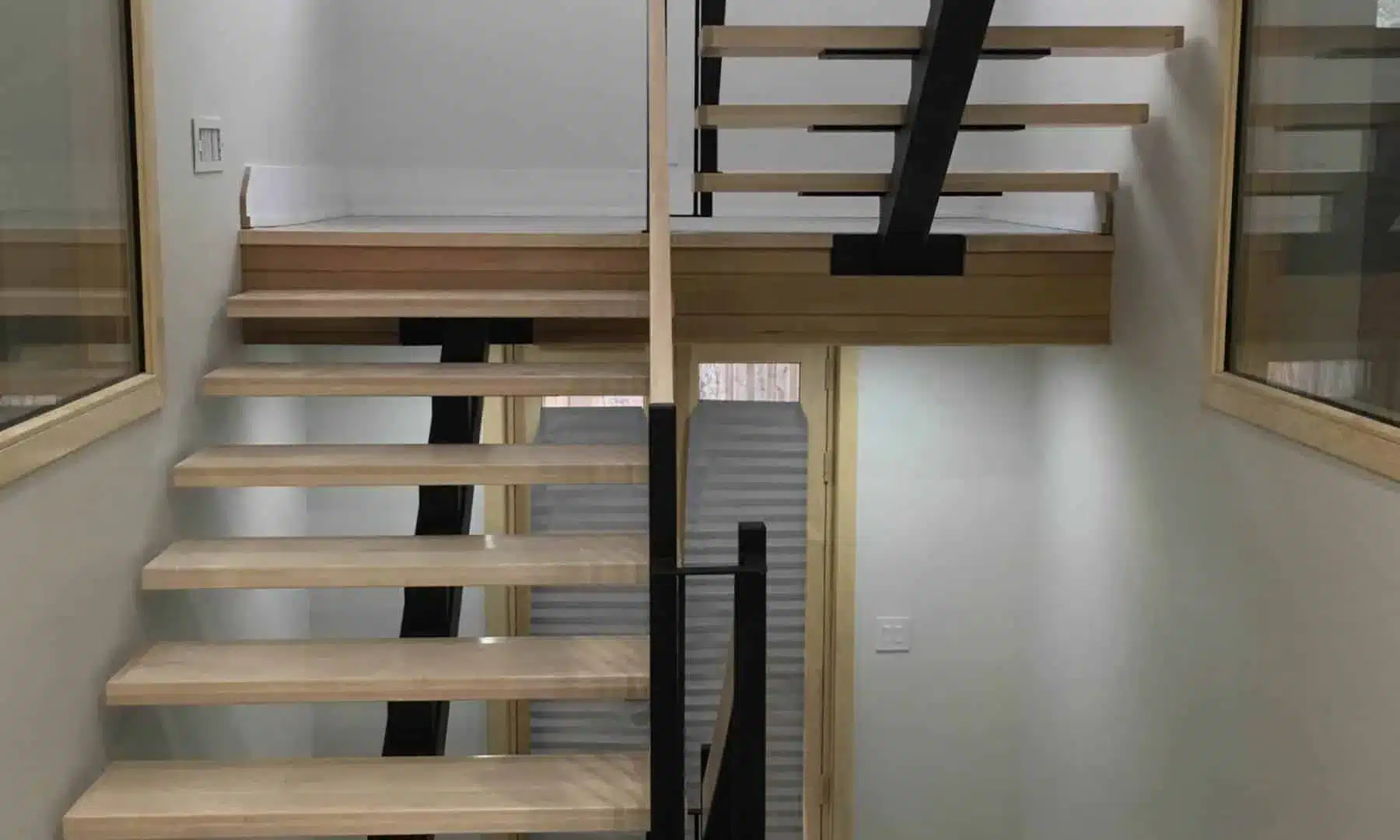
Double-Stringer (Side-Plate)

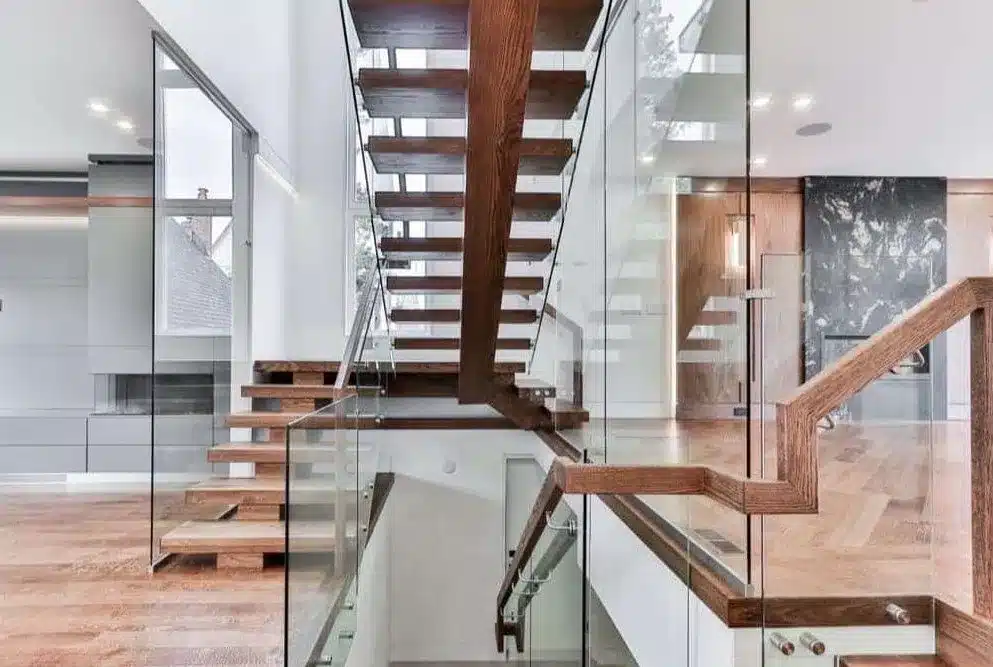
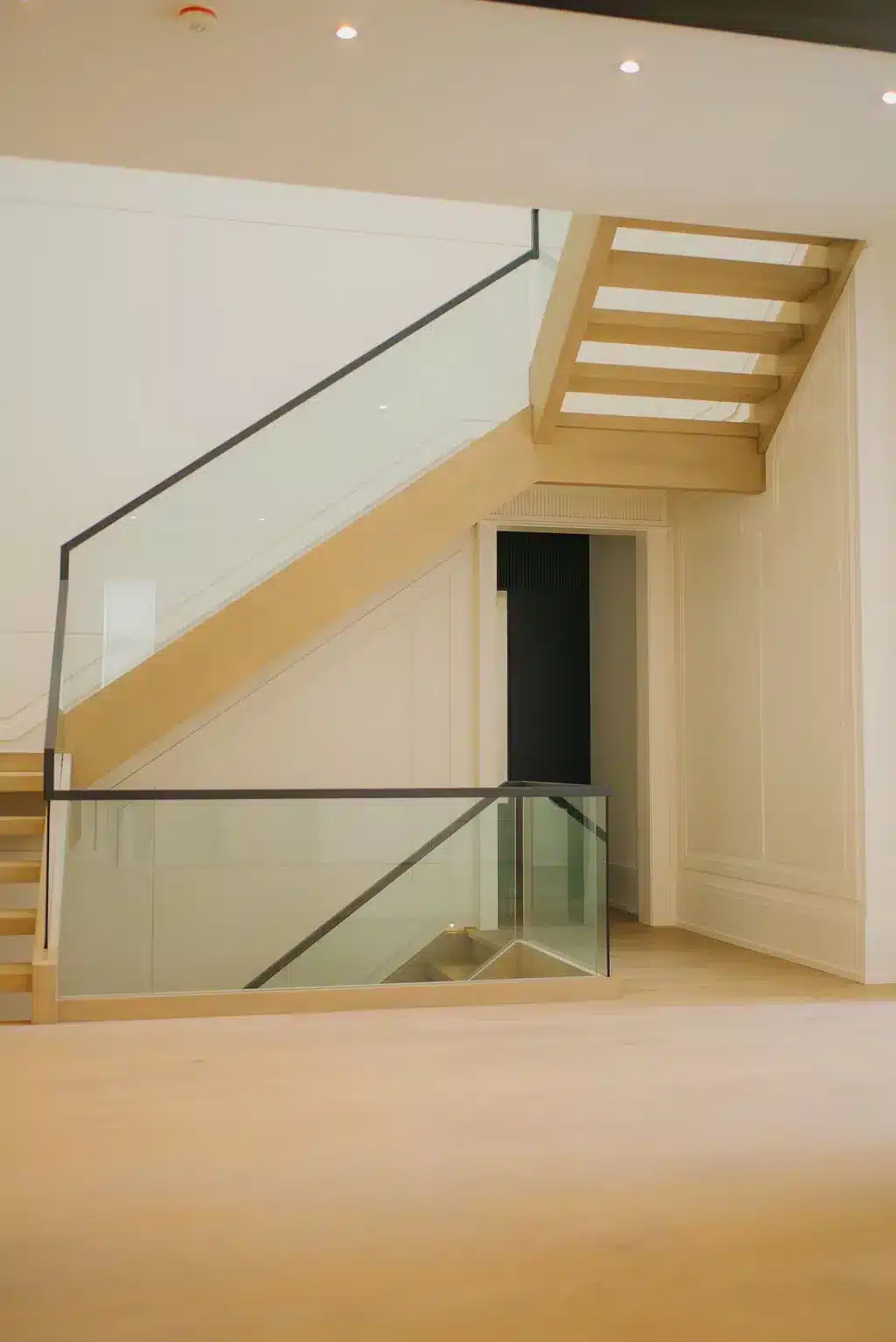
Two steel plates run along both sides of the treads, anchored to floor framing above and below. More structurally flexible and the right call for semi-detached and row houses where one wall is a party wall that cannot be touched.
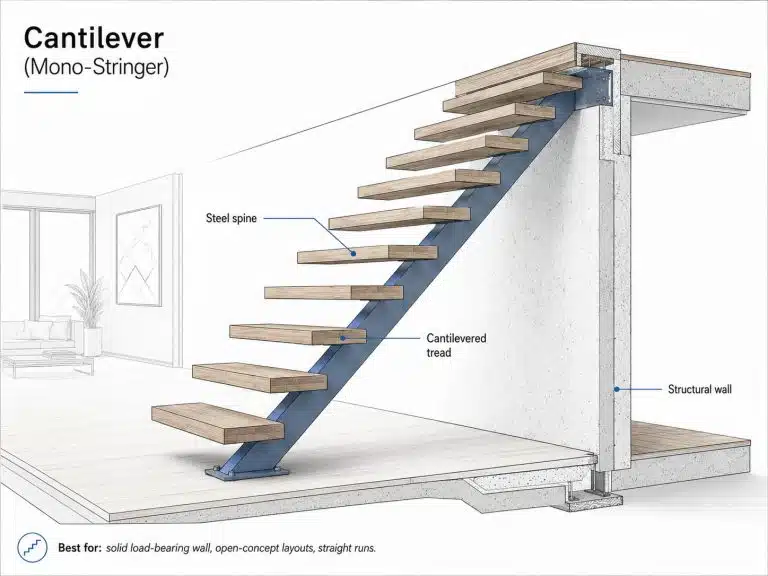
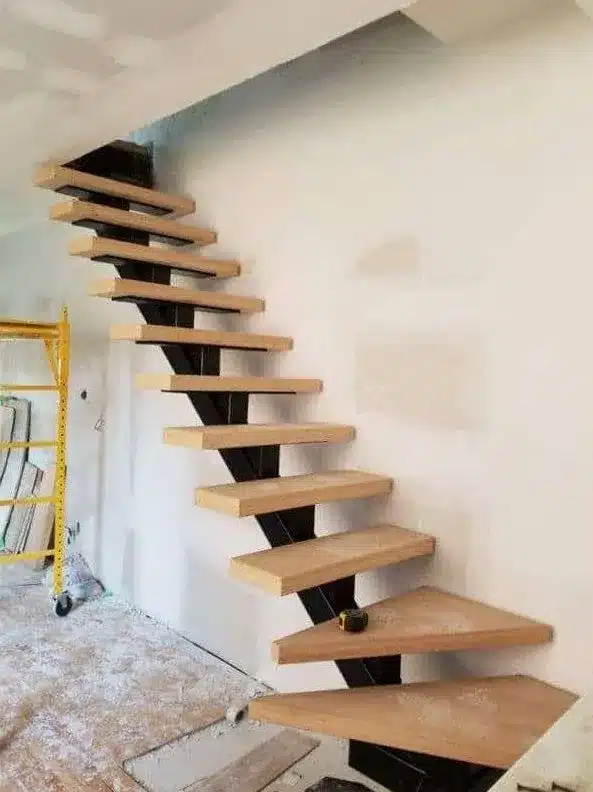
cantilever floating stairs

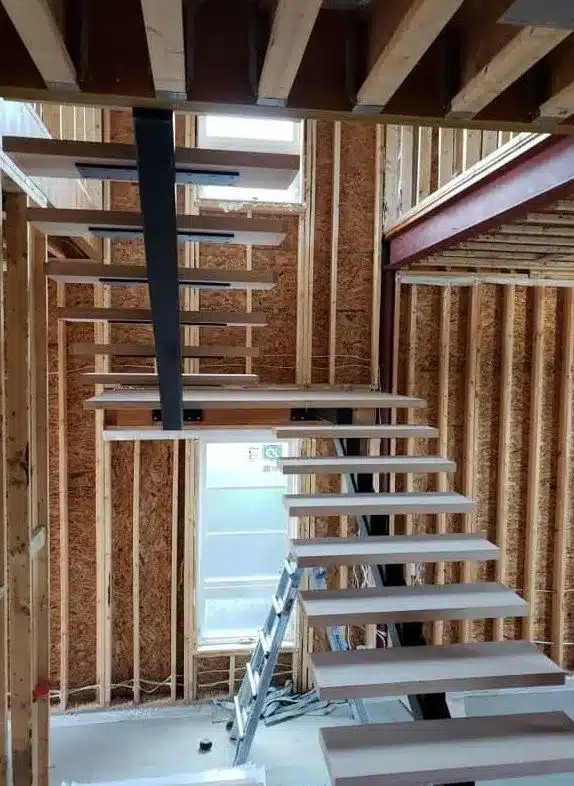
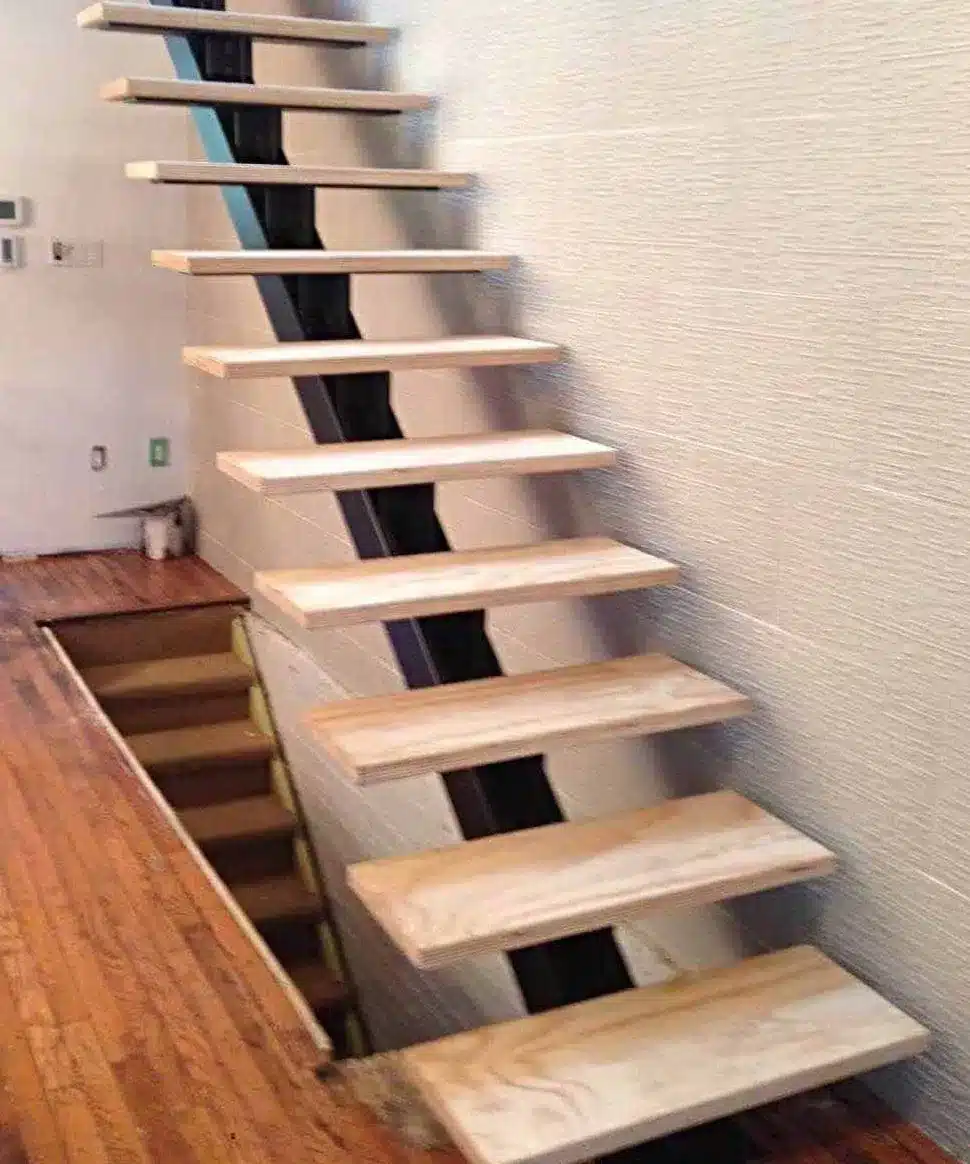
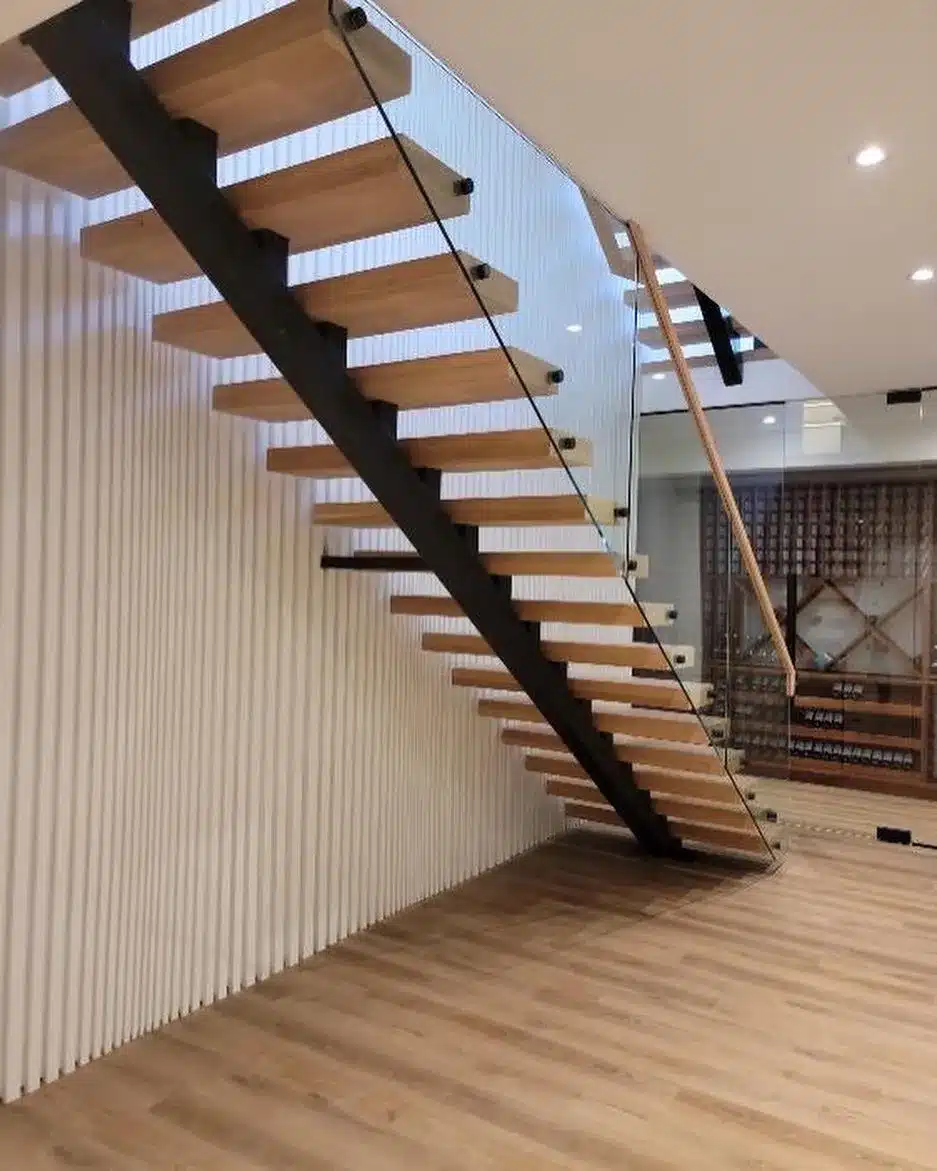
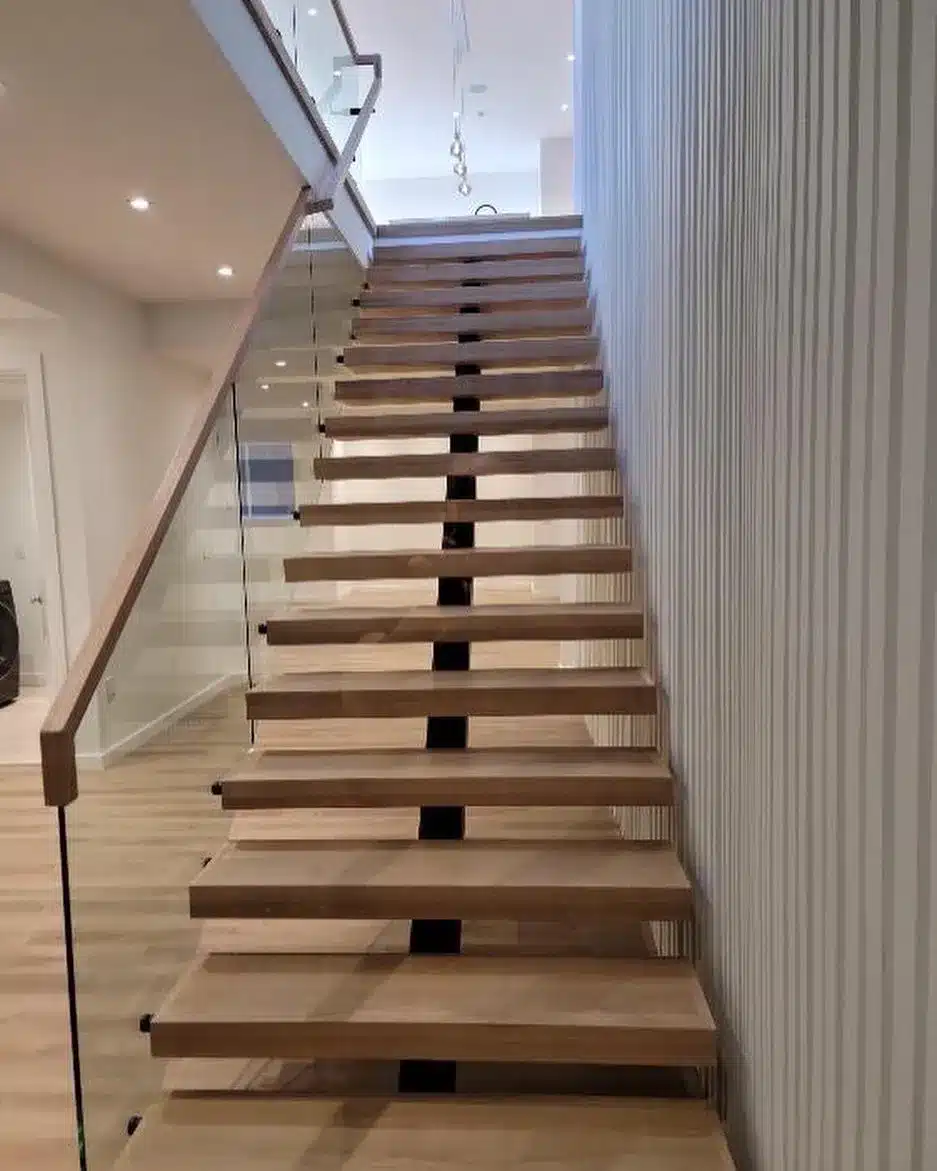
Cantilever (Mono-Stringer)

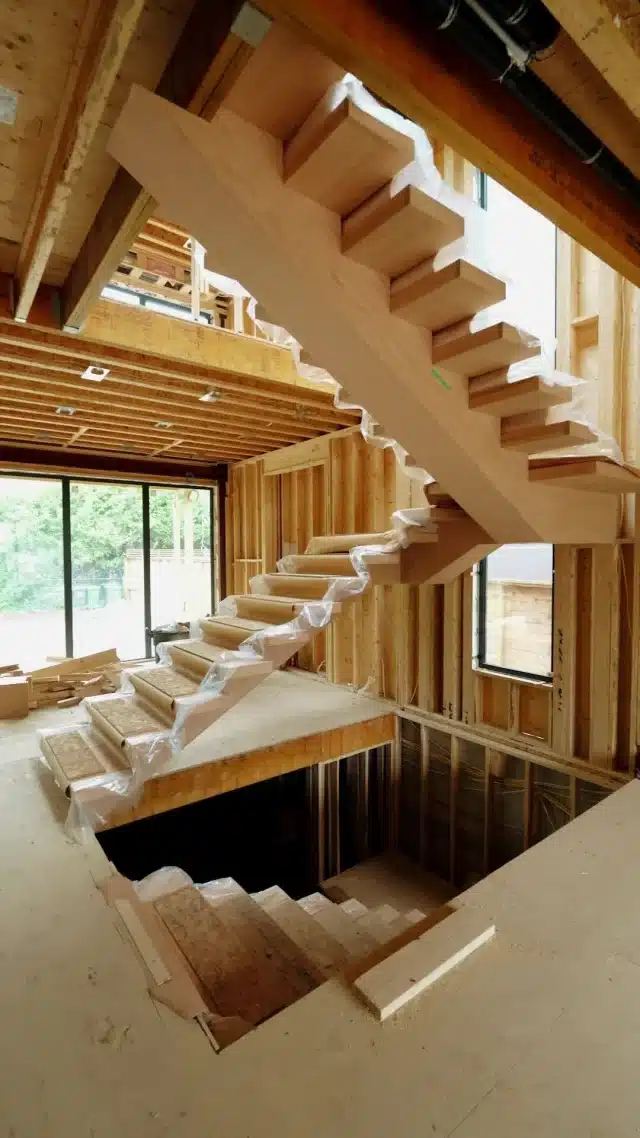
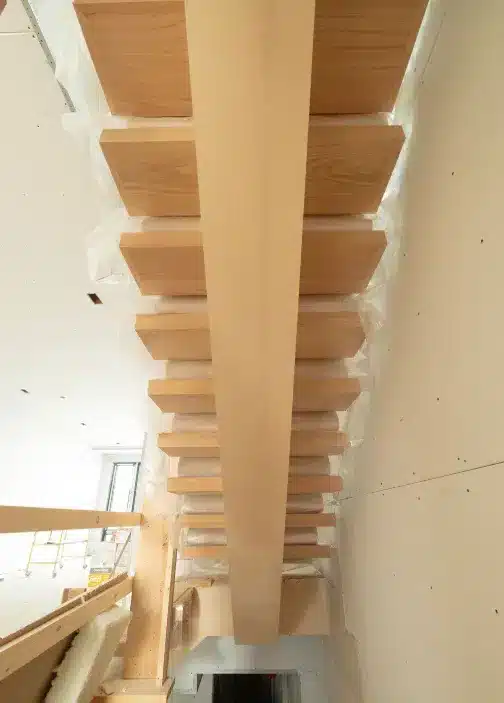
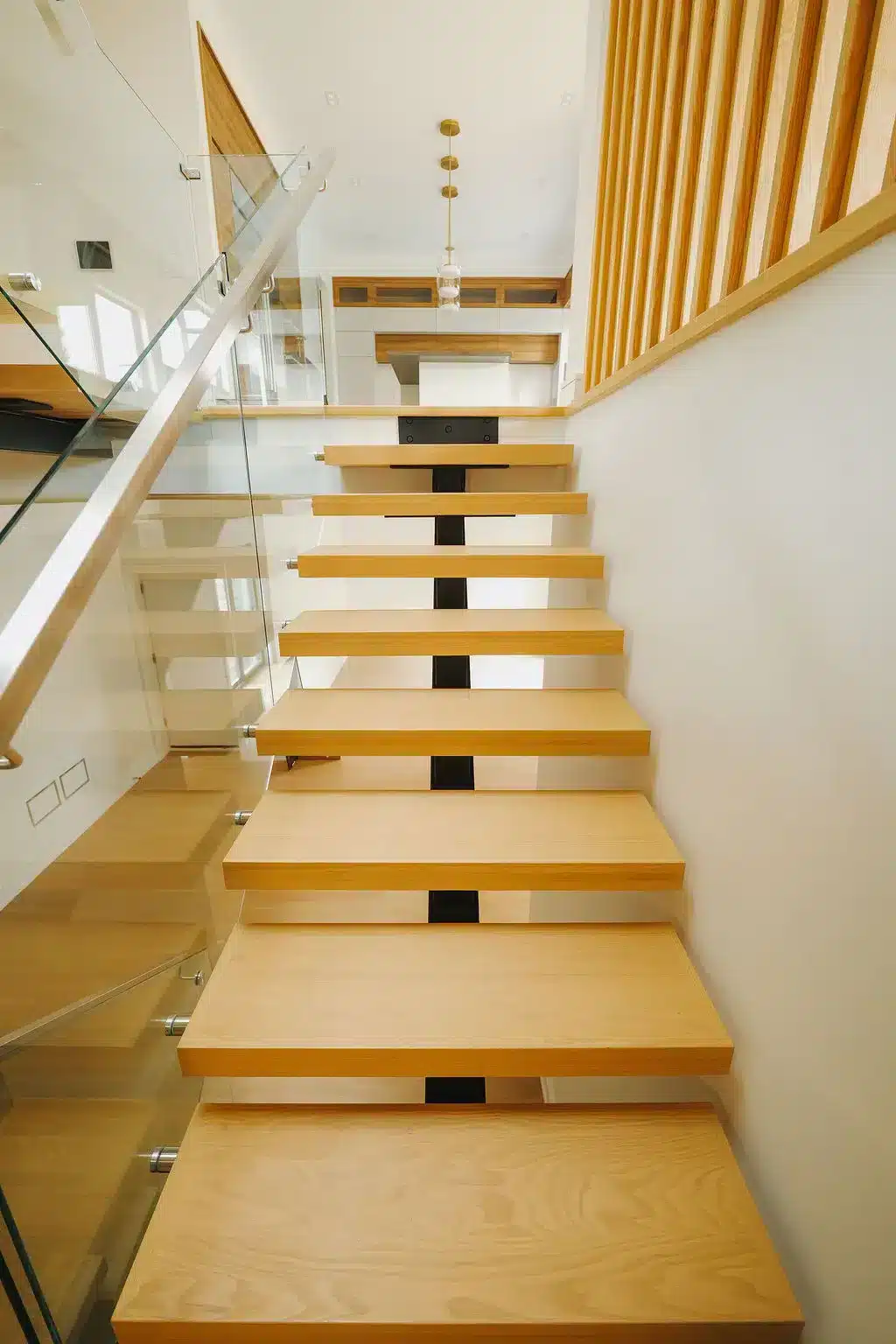
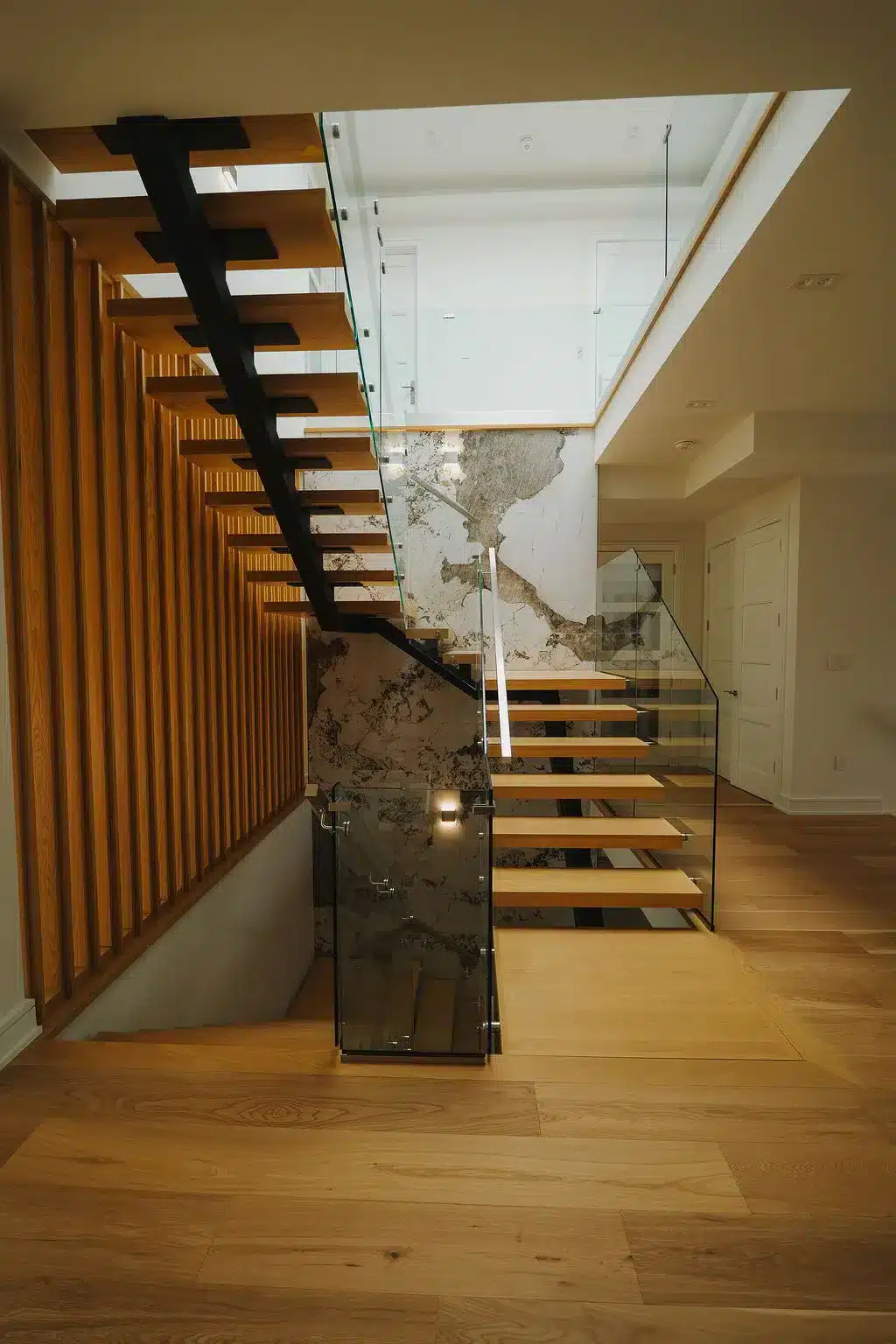
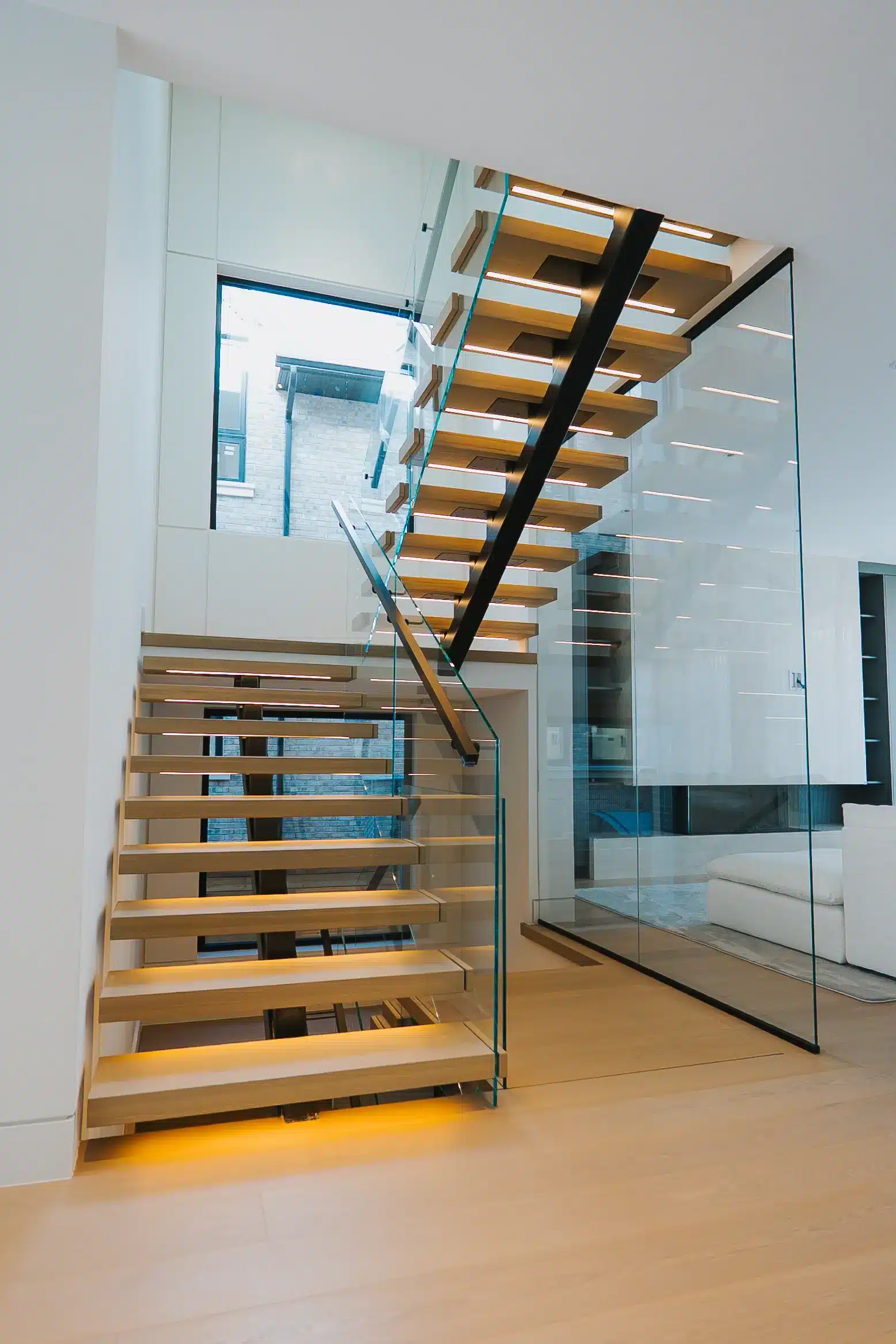
A single steel spine runs along one wall, with each tread cantilevered off it. This requires a solid load-bearing wall on one side and works best in open-concept detached homes with a structural wall adjacent to the stair run.
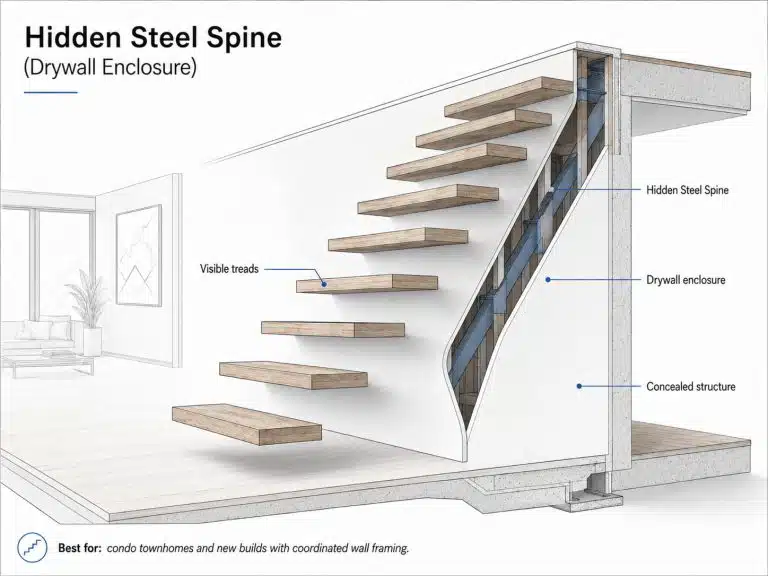
Hidden Spine with Drywall Enclosure

The steel structure is fully concealed inside a finished wall. Only the treads are visible. Common in condo townhomes and new builds where the wall framing can be designed around the stair from the start.

Floating Stairs Across the GTA

We serve homeowners throughout the Greater Toronto Area. Visit the page for your city:

Ready to Install Floating Stairs Near You?

Follow us on social media to see all our latest projects and stay up to date with the latest information regarding Darvish Inc and our services.

What Our Customers Say?

Frequently Asked Questions

Yes! When designed and installed by professionals, floating stairs, including floating stair treads, are secure and comply with safety standards. The floating stair stringer provides essential structural support, ensuring both safety and durability.

The installation process typically takes between 1 to 3 days, depending on the complexity of the design and materials chosen for the floating stair design.

Floating stairs are versatile and can be installed in most homes, provided that the structure is assessed to support the design. A floating stair case may require reinforcement depending on the design and material.

Get a Free Quote Today

Ready to bring a touch of elegance and functionality to your home in Toronto or North York with a custom floating stair case? Contact us today to schedule your free consultation and let us design the perfect floating stair design for your space!