

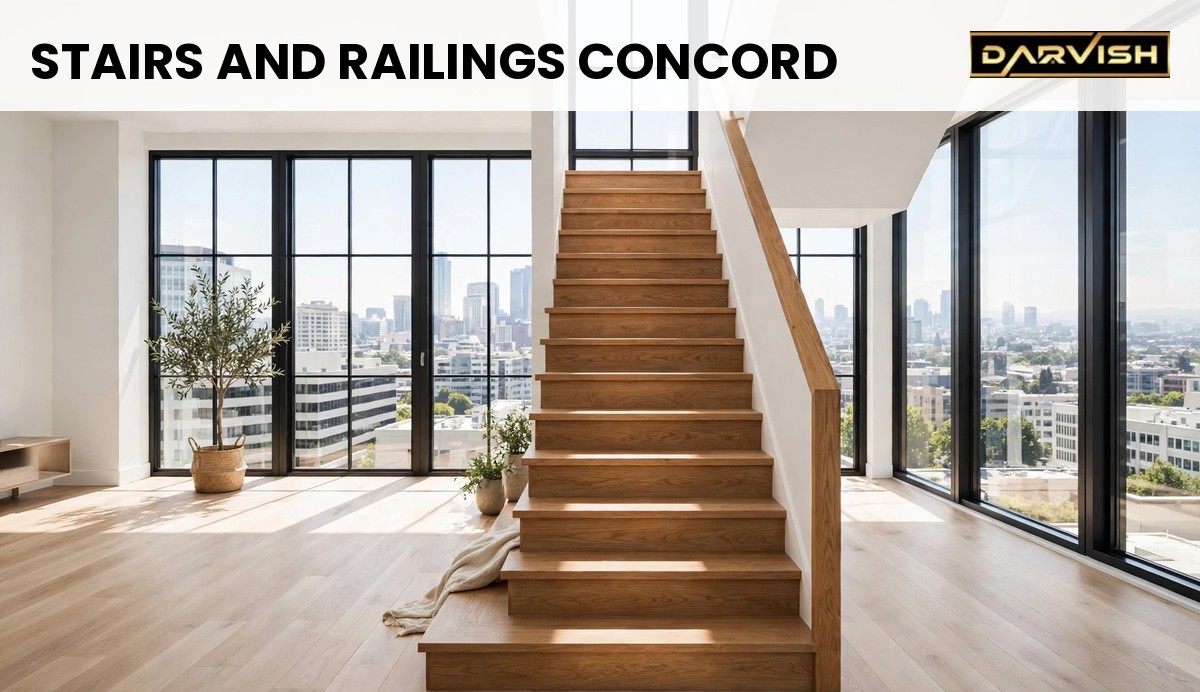
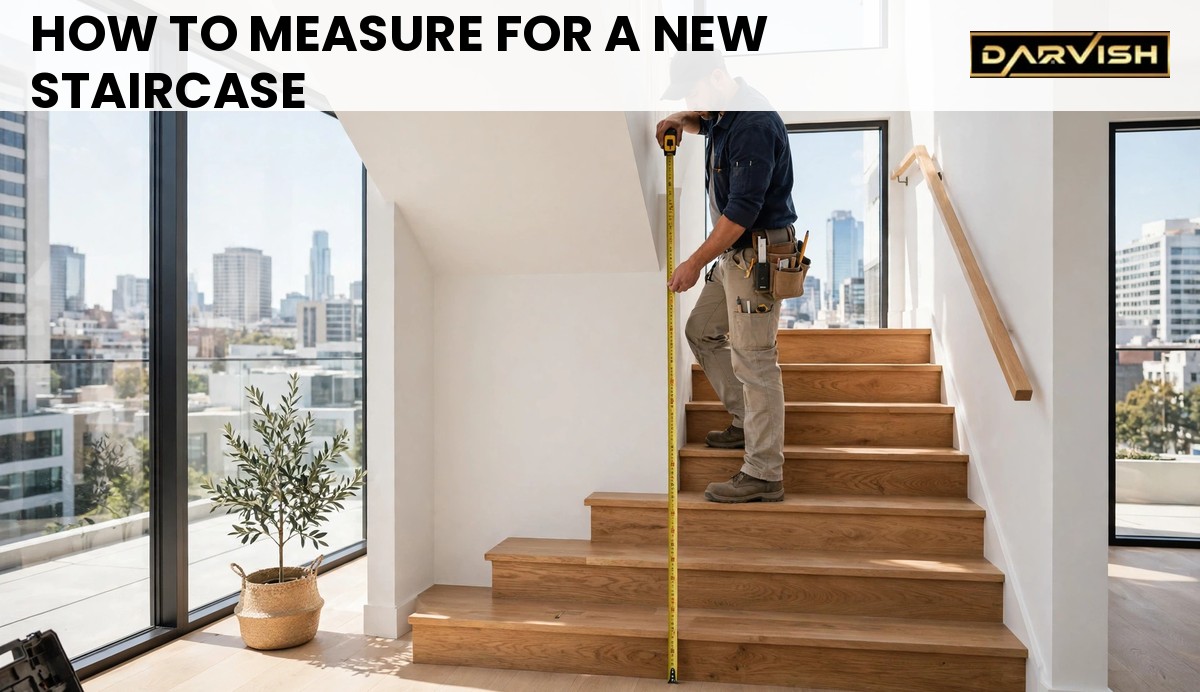
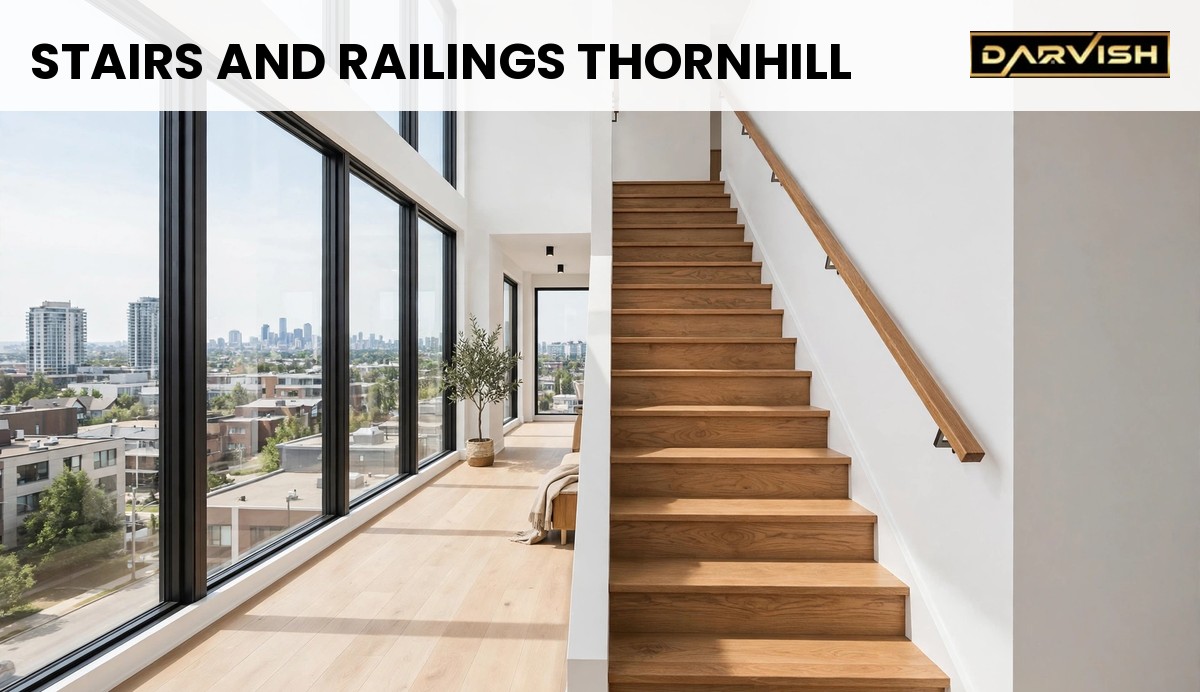


Not every staircase needs a rebuild. In many older Toronto homes the structure is still solid and only the railing has aged out of style — and that is exactly when the question comes up: can you replace railings without changing the stairs? In most cases, yes. When the treads, risers and stringers are sound, a railing replacement Toronto homeowners choose most often is a railing-only job: new balusters, a new handrail, sometimes new newel posts, all fitted to the staircase you already have. It takes a day or two instead of weeks, costs a fraction of a full rebuild, and brings the staircase up to current code at the same time. This guide walks through when a railing-only replacement works, which parts can be swapped on their own, the best materials for an existing staircase, what the building code requires, and how to decide between a railing-only job and a full rebuild — so you can make the call with confidence before you spend anything.
When You Can Replace Only the Railings
Not every staircase needs a rebuild. In many older GTA homes the structure is still solid and only the railing has aged out of style. You can usually replace railings without changing the stairs when the structure is sound and only the guard has aged out — and a railing only replacement is the right call when the staircase underneath is still doing its job properly. The five signs to look for are simple, and you can check most of them yourself before you call anyone.
- The stairs feel firm and quiet, with no flex or movement when you walk on them
- There are no cracks, rot, or separation in the treads, risers, or stringers
- The existing newel posts sit on solid anchor points
- The layout still works for your space and you only want a fresh look
- The current railing is bulky, loose, or below today’s code height
If all five are true, the staircase is a good candidate for a railing-only job. The structure stays, the guard changes, and the whole staircase reads as new for a fraction of the cost and time of a rebuild.
What the installer checks on site is more specific than the five signs above: the condition of the anchor points under each newel post, the depth and condition of the treads where the new balusters will land, and whether the existing handrail height already sits inside the code range or needs to move. A good installer measures all three before quoting, because a railing-only job that starts with a surprise — a post that cannot be re-anchored, a tread too thin to hold a new baluster — stops being a one-day job. Ask what was measured and what was assumed, and get the answer in the written quote, not in a phone call.
When Railing Replacement Alone Is Not Enough
There are cases where you cannot replace railings without changing the stairs, because installing a new railing on a weak base only hides a bigger problem. A railing is only as strong as the structure it is fixed to, and a beautiful new guard on a failing staircase is a safety problem with a fresh coat of paint. Consider a fuller upgrade when:
- The stairs feel soft, uneven, or shift and creak under load
- The newel posts cannot be securely re-anchored
- The stringers or framing show damage or movement
- You want to change the entire form of the staircase, not just the guard
In these situations a full Floating Stairs design or complete staircase rebuild is the safer investment, because a railing only replacement on a weak base only hides a bigger problem — the money should go to the structure first, and the railing second. An honest installer will tell you this before quoting, not after the railing is already ordered.
Which Railing Parts Can Be Replaced on Their Own
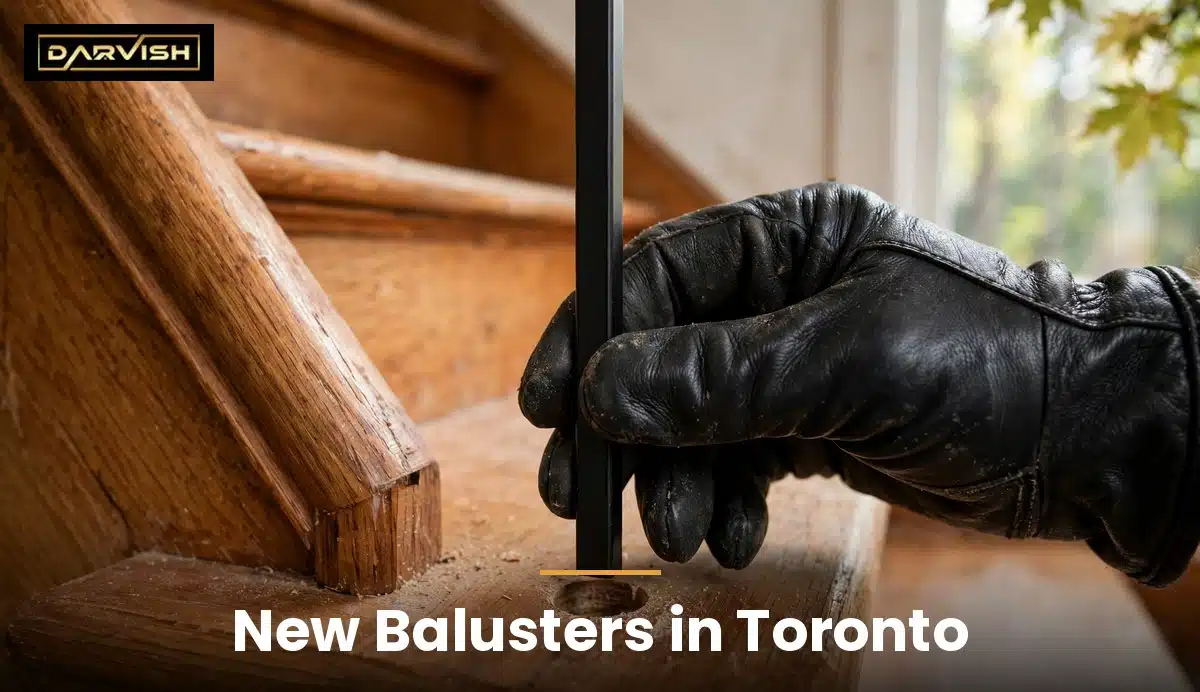
A railing is not a single piece. Understanding the parts helps you scope the right upgrade and control the budget — and it is the reason you can replace railings without changing the stairs one part at a time, instead of all at once. To replace balusters is the easiest win of all: the vertical infill between the handrail and the base is where a staircase shows its age first, and swapping it changes the whole look without touching the structure.
- Balusters and spindles: The vertical infill between the handrail and the base. Swapping tired wood or wrought iron spindles for clean metal balusters or glass panels is the most common refresh, and to replace balusters is often the least invasive change you can make.
- Handrail: The graspable top rail. It can be replaced or refinished independently when the posts are sound.
- Newel posts: The main anchor posts at the top, bottom, and turns. Because they carry the load, replacing these needs proper re-anchoring, sometimes with core drilling into the tread or floor.
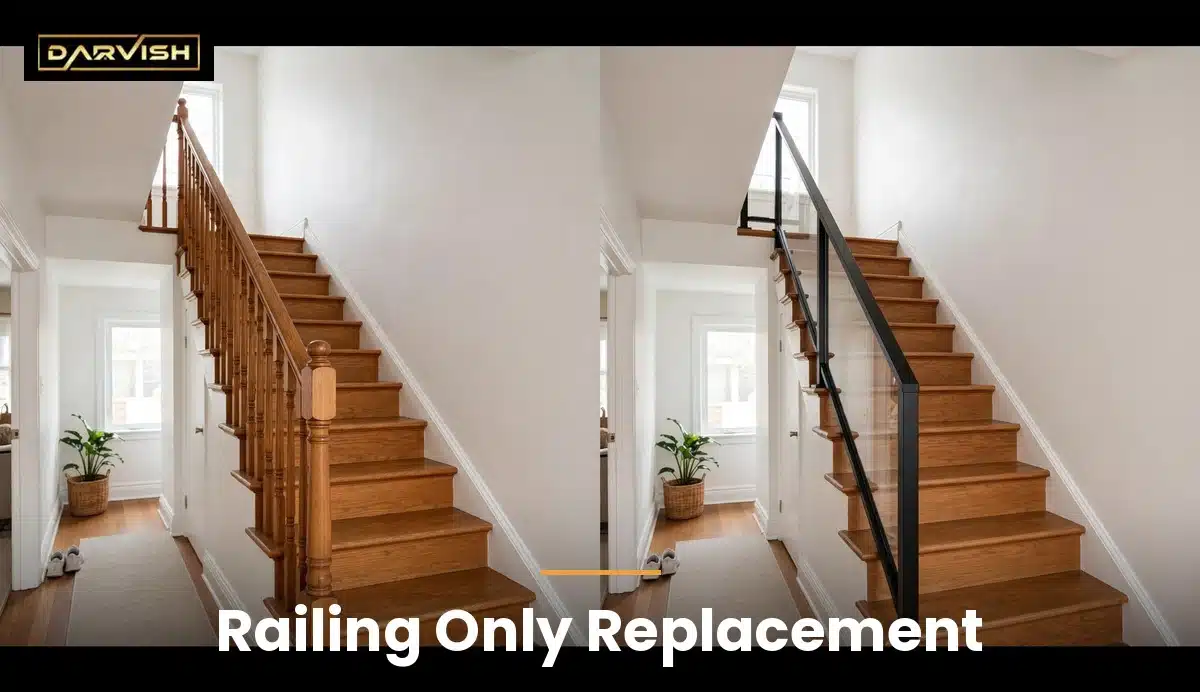
In many homes, replacing only the balusters and handrail transforms the staircase while the existing posts stay in place. That is the whole point of a parts-based upgrade: you pay for what is actually tired, and you keep what is still sound.
Matching the new parts to the old staircase is where the result is made or lost. A new handrail in a different species or a different profile from the treads will read as a repair, not a design — so bring a sample of the tread finish to the showroom, and ask the installer to show you the new parts against the old ones before anything is ordered. The same applies to the finish: a handrail that is stained to match the floor will look like it was always there, while a handrail that is close but not quite will catch your eye every time you climb the stairs.
The Reverse Case: Keeping the Railing and Refreshing the Stairs
Sometimes the railing is fine and the stairs are what feel dated. In that case the treads and risers can be refinished or resurfaced while the existing railing stays intact. This keeps the project quick and gives you an updated staircase without touching a railing you already like. If both elements feel tired, it is usually worth reviewing them together so the finished result reads as one intentional design rather than two separate updates — and you can still replace railings without changing the stairs years later, when the railing finally ages out and the stairs you refinished today are still in good shape. The order of the work matters less than the honesty of the assessment: fix what is tired, keep what is sound, and do not let a contractor sell you a rebuild when a refresh would do.
Best Railing Materials for an Existing GTA Staircase
The goal is not only to replace the railing, but to make it feel like it belongs to the staircase and the home. The easiest way to refresh the look is often to replace balusters first, then decide whether the handrail and posts need to change too — because the balusters are what your eye reads as “old” or “new” the moment you walk in.
Glass Railings
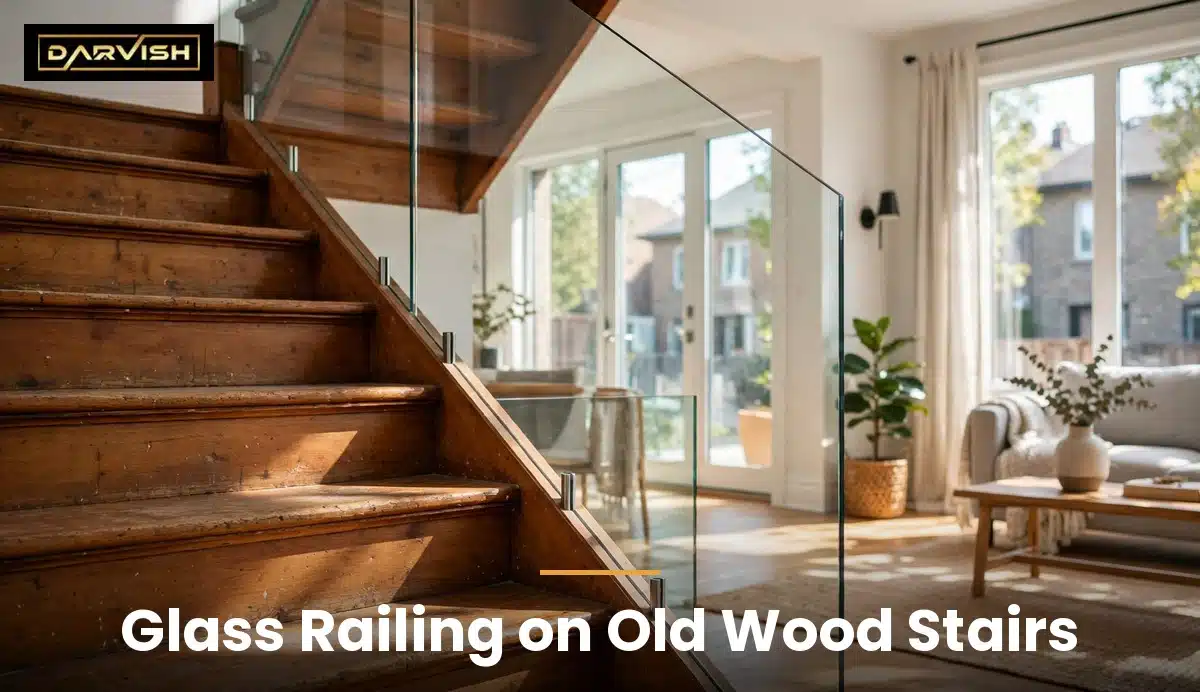
Glass railings on old wood stairs are one of the most popular upgrades we install, because tempered glass panels, held by standoffs or spigots, create an open, bright feel and are a natural match for floating stairs and open concept layouts. Explore Glass Railings for a frameless, light filled result.
Glass railings on old wood stairs work best when the treads are solid and the anchor points can carry the new system. Some preparation and adaptation is usually needed — the old handrail comes off, the new standoffs go in, and the glass is measured to the staircase as it actually is, not as the drawings say it is.
Metal Railings
Powder coated steel and wrought iron offer strength with slim sightlines, and suit both modern and classic interiors with low maintenance. See the options for Metal Railings.
Wood Railings
Wood brings warmth and a timeless feel, and pairs cleanly with wood treads and flooring. Browse Wood Railings for a classic finish. Not sure which suits your home best? Our guide on how to choose the right railing material walks through it in detail.
Ontario Building Code Requirements You Cannot Skip
Any new railing on an existing GTA staircase must meet the Ontario Building Code. This is where a professional install protects both your safety and your resale value — and it is true whether you replace railings without changing the stairs or rebuild the whole staircase. A railing replacement Toronto inspectors see most often is the one built to the code from the start, because the measurements are taken in the shop and the railing arrives made to fit. The key residential points to know:
- Handrail height: between 865 mm and 965 mm (34 to 38 inches), measured vertically from the stair nosing to the top of the handrail.
- Graspability: a continuous, graspable profile is required, so a flat wide cap on its own does not qualify.
- Opening spacing: no gap in the guard may allow a 100 mm sphere (about 4 inches) to pass, which controls how far apart balusters can sit.
- Guard height: interior guards are generally a minimum of 900 mm (36 inches) where there is a drop to protect against.
Municipal bylaws in the GTA can be stricter than the provincial code, so the exact figures for your project should always be confirmed with your local building department or your installer before work begins. A railing that fails inspection in November is a railing you cannot use all winter — and the rework always costs more than measuring twice in the first place.
Permits are the part homeowners most often get wrong, because the rule is not “permits for big jobs, no permits for small ones” — it is about whether the work touches a life safety element. A guard, a handrail and the spacing between balusters are all life safety elements, so a change to any of them can need a permit even when the job itself takes a day. Your installer should be able to tell you whether your job needs one before the work starts, and if they cannot, that is itself the answer: get a second opinion before anyone picks up a tool.
Railing Only vs Full Staircase Rebuild
A quick comparison to help you decide which path fits your home — and the first question the table answers is whether you can replace railings without changing the stairs at all. The clearest example of the difference is glass railings on old wood stairs: the railing changes, the stairs do not, and the whole staircase reads as new.
| Factor | Railing Only | Full Staircase Rebuild |
|---|---|---|
| Typical timeline | One to two working days | Often one to several weeks |
| Disruption at home | Minimal, stairs stay usable | Significant, stairs out of use |
| Relative cost | Starting from a fraction of a rebuild | Higher, full structure and finish |
| Best when | Structure is sound, look is dated | Structure is failing or layout changes |
| Code compliance | New railing must meet current code | Full code review of the whole staircase |
Read the table from the bottom up and the story is simple: a railing only replacement changes the guard and leaves the structure alone, while the rebuild changes everything. Neither path is wrong on its own — the wrong choice is the one that does not match the condition of the staircase underneath.
How Long It Takes and What It Costs
When the stairs need no structural work, you can replace railings without changing the stairs in one to two days, which is why it appeals to homeowners who do not want a drawn out renovation. A railing only replacement is often completed in one to two days, because the work is fitting, not building: the old guard comes off, the new parts go on, and the staircase is usable again the same evening. Cost depends on the material, the number of posts, and whether any re-anchoring or core drilling is needed. A railing replacement Toronto homeowners budget for usually starts from a fraction of the cost of a full rebuild, and we scope every project on site before quoting — the only honest number is the one in a written quote for your staircase. For a wider view of scheduling, our article on how long stair installation takes sets realistic expectations.
What slows a one-day job down is almost never the installation itself — it is the lead time on the parts. Custom glass panels are measured, cut and tempered to order, and a wrought iron railing is fabricated to exact measurements in a shop, so the calendar between the site measure and the install day is usually longer than the install day itself. A straight baluster swap with stock parts can happen within days; a custom glass or iron job needs weeks of lead time. Ask for both dates when you get the quote — the measure date and the install date — so the schedule you plan around is the real one.
Final Thoughts
You do not always need to rebuild an entire staircase to transform your home. When the structure is sound, you can replace railings without changing the stairs and get the whole transformation in a day or two rather than weeks. The simplest version of the job is often to replace balusters and the handrail and leave everything else alone — and that small change is usually the one visitors notice first. Glass railings on old wood stairs are the clearest example of how much a railing-only job can change: the stairs are the same ones you have always had, and the staircase looks like it belongs in a different house. The key is an honest assessment of your stairs and a railing system that fits both your space and current code. For a railing replacement Toronto homeowners can trust, the assessment matters more than the material — and you can also see recent work and reviews on Darvish Inc on Google.
Frequently Asked Questions
▾Do I need a permit to replace stair railings in Ontario?
Purely cosmetic railing swaps often do not require a permit, but anything affecting a life safety element such as a guard or handrail does — and a railing only replacement that changes the guard height or the baluster spacing is a life safety change, so it needs a permit and an inspection. Check with your local building department before work begins, because GTA municipalities can be stricter than the provincial code.
▾Can I just replace the spindles or balusters?
Yes. When the handrail and newel posts are in good shape, to replace balusters is one of the fastest and least invasive upgrades you can make — the old spindles come out, the new balusters go in, and the staircase looks different the same day. The posts and the handrail stay exactly where they are, which is why this is the most common first step in a railing refresh.
▾Can new glass railings be installed on old wood stairs?
In most cases yes. Glass railings on old wood stairs work when the treads and anchor points are solid enough to carry the new system. Some preparation and adaptation is usually needed, and the glass is measured to the staircase as it actually is — but when the structure is sound, the result is a staircase that feels ten years newer without a single tread being replaced.
▾Will a new railing meet current code?
A professionally installed railing is built to meet the code’s height, graspability, and spacing requirements — and that is true whether you replace railings without changing the stairs or rebuild the whole flight. Handrail height between 865 and 965 mm, no gap that lets a 100 mm sphere pass, and a continuous graspable profile are the figures your installer should be able to quote without looking them up.
▾Can I replace stair railings myself?
You can swap the balusters yourself on a simple straight flight, but a full railing replacement Toronto homeowners should leave to a professional when the job involves newel posts, core drilling, or anything the code inspects. A railing is a safety device, and a mistake in the anchoring is a mistake you stand on every day — so the work that looks simple from the showroom is usually the work that needs a specialist on site.