



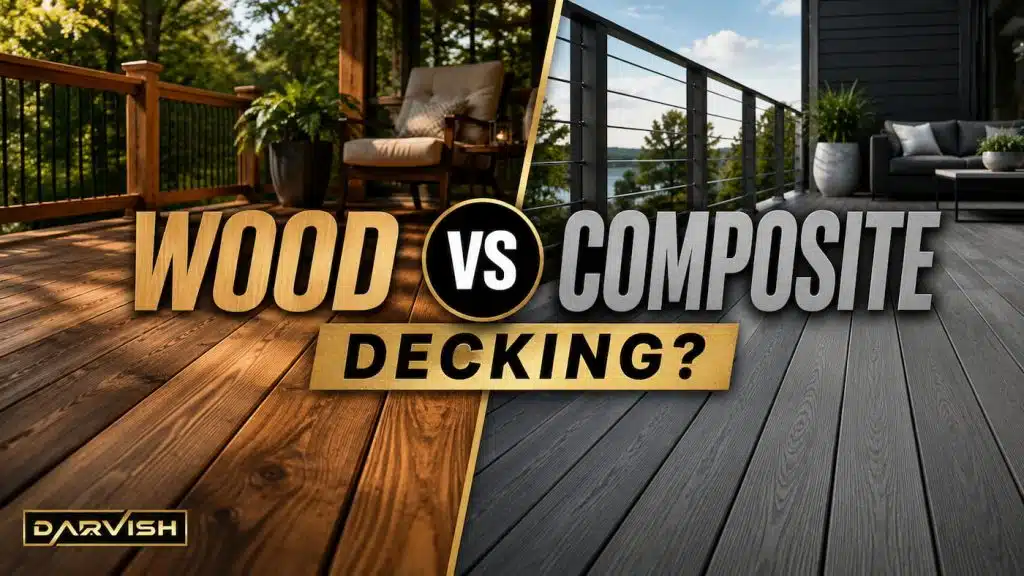
Choosing between wood or composite decking is one of the most important decisions homeowners across the GTA face when planning an outdoor renovation. Both materials promise years of outdoor enjoyment, but they perform very differently once exposed to real life: cold Ontario winters, hot summer sun, family gatherings, and daily wear. Rather than comparing the two materials in a single sweeping statement, this guide breaks the decision down using a clear, structured method that covers every factor that actually matters: composition, cost, long-term maintenance, climate durability, appearance, comfort, environmental impact, and resale value. By the end, you will see why, for the vast majority of homeowners in Toronto, North York, Markham, Richmond Hill, and Oakville, wood remains the smarter long-term choice.
What Are Wood and Composite Decking Actually Made Of?
Wood decking is exactly what it sounds like: solid lumber, most commonly pressure-treated pine, cedar, or a premium hardwood, milled into deck boards. The wood is a single, natural material from root to surface, which is why it can be sanded, stained, repaired, and refinished almost indefinitely.
Composite decking is a manufactured product, typically a blend of wood fibers and recycled plastic, pressed together and capped with a protective plastic shell. It is designed to mimic the look of wood without being wood. This single distinction, a natural material versus an engineered product, explains almost every difference described below.
Upfront Cost
Wood decking is generally the more budget-friendly option at the time of installation. Lumber costs less to produce and install than the multi-layer manufacturing process behind composite boards. Composite decking typically carries a noticeably higher price per square foot before a single screw is driven, since you are paying for the engineering that makes it low-maintenance. For homeowners working with a defined renovation budget, wood usually leaves more room to invest in better railings, lighting, or a larger deck footprint.
Long-Term Maintenance and Lifetime Cost
Composite decking is marketed heavily on low maintenance, and it is true that it does not need annual staining. However, low maintenance does not mean no cost. When a composite board cracks, fades unevenly, or gets damaged, the entire board often needs to be replaced, and matching the original color years later can be difficult since manufacturers regularly discontinue colorways.
Wood decking does need periodic cleaning and a fresh coat of stain or sealant every few years, but this maintenance is simple, inexpensive, and something most homeowners can do themselves. Repairs are also straightforward: a single damaged board can be replaced in minutes without disturbing the rest of the deck.
Durability Through GTA Winters
Ontario winters put any outdoor structure to the test, with freeze-thaw cycles, road salt, and heavy snow loads year after year. Properly treated wood flexes naturally with temperature swings and ground movement, which is one of the reasons wood-framed decks have remained the standard structural choice across Toronto, North York, Markham, and Richmond Hill for decades.
Composite boards, by contrast, can become more brittle in extreme cold, and because they are rigid, they are less forgiving of the natural shifting that occurs in frozen ground. With correct construction and seasonal care, a quality wood deck can perform reliably through harsh Canadian winters for many years.
Appearance and Customization
Wood offers something composite simply cannot replicate: real grain, real texture, and a finish that can be changed at any time. You can stain wood lighter or darker, match it to a new exterior color scheme, or let it weather naturally into a soft silver-grey patina that many homeowners love.
Composite decking comes in a fixed set of factory colors that cannot be altered once installed. If your taste changes or you want to update your home’s exterior down the road, the deck itself cannot adapt with you the way wood can.
Comfort and Safety Underfoot
On hot summer days, dark composite boards can absorb significant heat and become uncomfortably warm to walk on barefoot. Wood stays noticeably cooler in direct sunlight, which matters for families with young children or anyone who spends long afternoons outdoors. Both materials can be finished with slip-resistant textures, but wood’s natural surface generally provides reliable grip without the artificial texture coatings some composite products rely on.
Environmental Considerations
Wood sourced from responsibly managed forests is a renewable, biodegradable material with a far smaller manufacturing footprint than composite. Composite decking does reuse recycled plastic, which is a genuine benefit, but the boards themselves are difficult to recycle again at the end of their life and are ultimately a petroleum-based product. For homeowners who weigh environmental impact in their decision, sustainably sourced wood is generally the lower-impact choice.
Resale Value and Curb Appeal
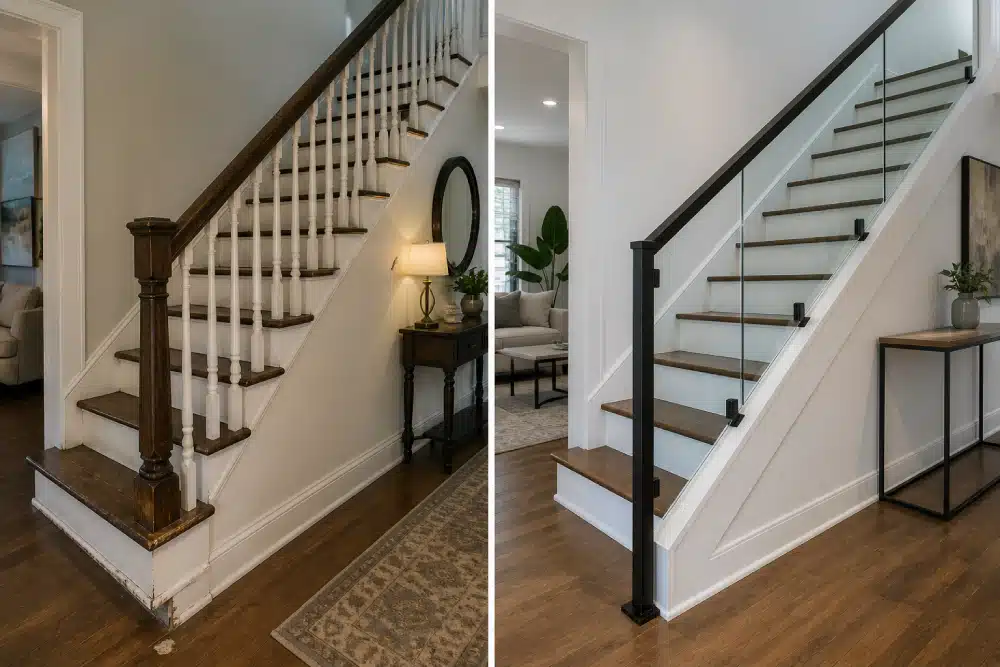
Real estate agents and buyers consistently respond well to natural materials. A well-built wood deck, especially one finished with quality railings, signals genuine craftsmanship rather than a manufactured product. Pairing a new wood deck with matching Wood Railings creates a cohesive look from the stairs to the outdoor living space, the kind of detail that stands out during a home showing. Many homeowners renovating their exterior also choose to continue the same warm, natural aesthetic indoors with matching Interior Railings on their staircase, creating one consistent design story throughout the home.
Wood vs Composite Decking at a Glance
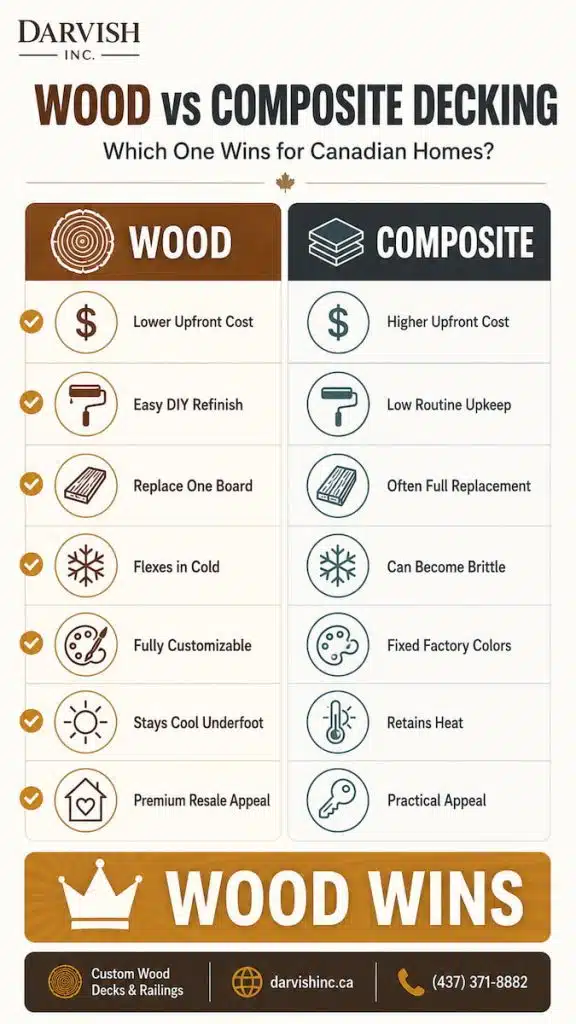
| Factor | Wood Decking | Composite Decking |
| Upfront Cost | Lower | Higher |
| Maintenance | Periodic staining, easy DIY upkeep | Low routine upkeep, costly repairs |
| Repairability | Replace a single board easily | Often needs full board replacement |
| Winter Performance (GTA) | Flexes naturally, proven long-term | Can become brittle in extreme cold |
| Customization | Fully stainable, ages naturally | Fixed factory colors only |
| Heat in Summer Sun | Stays cooler underfoot | Can retain significant heat |
| Resale Appeal | Valued as an authentic, premium material | Practical but less distinctive |
Final Verdict: Why Wood Decking Is the Better Investment
When you weigh every factor side by side, cost, repairability, climate performance, appearance, and long-term value, wood comes out ahead for most GTA homeowners. Composite decking can work well for buyers who want a single, predictable surface and are willing to pay more upfront for slightly less seasonal upkeep, but it cannot match the character, flexibility, and repairability of real wood.
If you are planning a new deck or upgrading an existing one and want a material that ages beautifully, repairs easily, and complements the rest of your home, wood decking paired with a custom wood railing system remains the most reliable choice across Toronto, North York, Markham, Richmond Hill, and Oakville.