
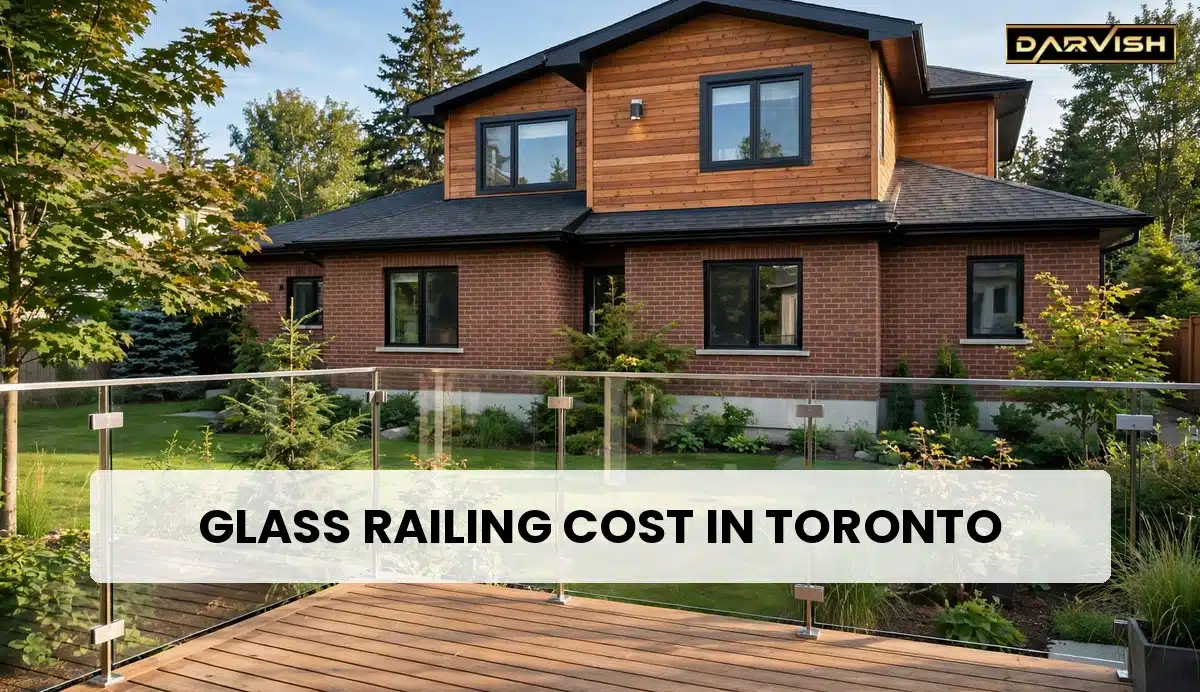
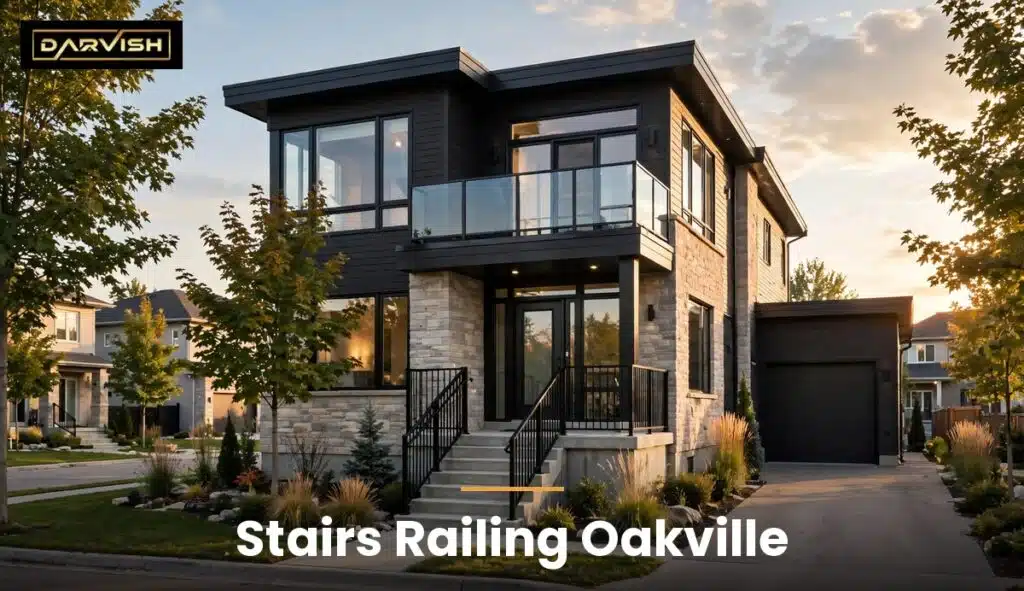
Choosing a stair railing contractor in Oakville is the decision that decides whether your new railing is safe, fits properly, and lasts — or becomes a costly fix a few months later. The right contractor measures on site, builds to fit, installs to code, and puts every detail in writing before work starts. The wrong one guesses at measurements, skips the code, and leaves you to discover the problems after the crew has gone.
This guide shows you how to tell them apart. You will learn what a written quote must show, which references to ask for, what proof of insurance to request, and how to check that the work meets the building code. You will also see how wood, iron, glass and cable compare on upkeep and cost, when a repair is enough, and which red flags mean you should walk away. By the end, you will know how to choose a stair railing contractor in Oakville with confidence — and what to ask before you sign anything.
Updated: November 15, 2026
In this guide:
- How to Vet a Stair Railing Contractor in Oakville
- Materials: Wood, Iron, Glass and Cable
- Comparing Materials Side by Side
- What Decides the Cost
- Repair or Replace: How to Decide
- Red Flags: When to Walk Away
- Before You Sign: A 5-Minute Checklist
- The Right Contractor for Your Oakville Home
- Frequently Asked Questions
How to Vet a Stair Railing Contractor in Oakville
Vetting takes less than an hour, and it protects a project worth thousands. Work through the four checks below before you sign anything — a good stair railing contractor in Oakville will welcome every one of them, because each check is also how they show their work is sound. If you want the short version first, see the Oakville stair railing services page for what Darvish Inc covers across the town. Most of the work is reading and asking, not building — and a contractor who rushes you past these checks is telling you something about how the job will go.
Ask for a Written, Itemized Quote
A verbal price is not a quote. Ask any stair railing contractor in Oakville for a written, itemized quote that names the material, the finish, the length, the hardware and the installation — and ask what happens if a weld fails or a panel loosens after the crew leaves. The answer should be in writing too, in the same document, so you can compare two quotes on the same terms instead of guessing which one leaves something out.
Compare at least two written quotes, and read them line by line. The cheapest quote is not always the cheapest railing: a low price can mean thinner glass, fewer posts, or hardware that costs more later. A clear quote also names the schedule — when fabrication starts, when installation happens, and who your contact is on site. If a quote has no dates and no names, it is not a plan; it is a guess. Ask what is not included too: disposal of the old railing, patching and painting after installation, and any permit or inspection fees the town requires.
Check References and Recent Local Work
Ask for two recent references in Oakville and one project you can see in person — a finished railing tells you more than a brochure. A stair railing contractor in Oakville with local work should be able to point you to a recent installation nearby, and the homeowners there should be willing to say whether the crew was tidy, on time, and easy to reach after the work was done.
Look at the work itself, not only the photos. Check the joints where the handrail meets the newel post, the fixings where posts meet the treads, and the finish on the underside of the handrail — the places a rushed job hides. If a contractor cannot show you any recent local work, ask why before you go further. A photo can hide a bad joint, so ask how long the work has been in place and whether the homeowner would hire the same crew again. You can see recent stair and railing projects in Toronto and Oakville on the Darvish Inc website, and judge the quality of the work for yourself before you call.
Ask for Proof of Insurance
Ask to see proof of liability insurance and ask whether the crew on your stairs is covered while they work in your home. A stair railing contractor in Oakville who carries current insurance will show it without hesitation — it protects you if a panel is damaged or a worker is hurt on site. Note the insurer, the coverage amount and the expiry date, and keep a copy with your quote.
Insurance is not paperwork for its own sake. A railing is heavy, the tools are sharp, and the work happens on the stairs your family uses every day. If a contractor brushes the question aside or says the paperwork is not ready, treat that as an answer in itself. If the work is done by a subcontractor rather than the company’s own crew, ask whose insurance covers that crew and get the answer in writing.
Confirm the Work Meets the Building Code
A railing is a safety feature first and a design feature second. Guard height, baluster spacing and anchoring all have to meet the Ontario Building Code, and the installer should be able to explain how the design meets them before work starts. Ask for the guard height, the spacing and the anchoring method in writing, and check that the quote covers site measurement — a railing measured by the installer fits; a railing measured by the homeowner often does not.
One detail deserves a direct question: horizontal cable. A guard must not facilitate climbing, so a stair railing contractor in Oakville who proposes horizontal cables should explain how the design meets the code’s climbability rule — especially on stairs used by small children. If the answer is vague, choose a different infill for that stair.
Materials: Wood, Iron, Glass and Cable
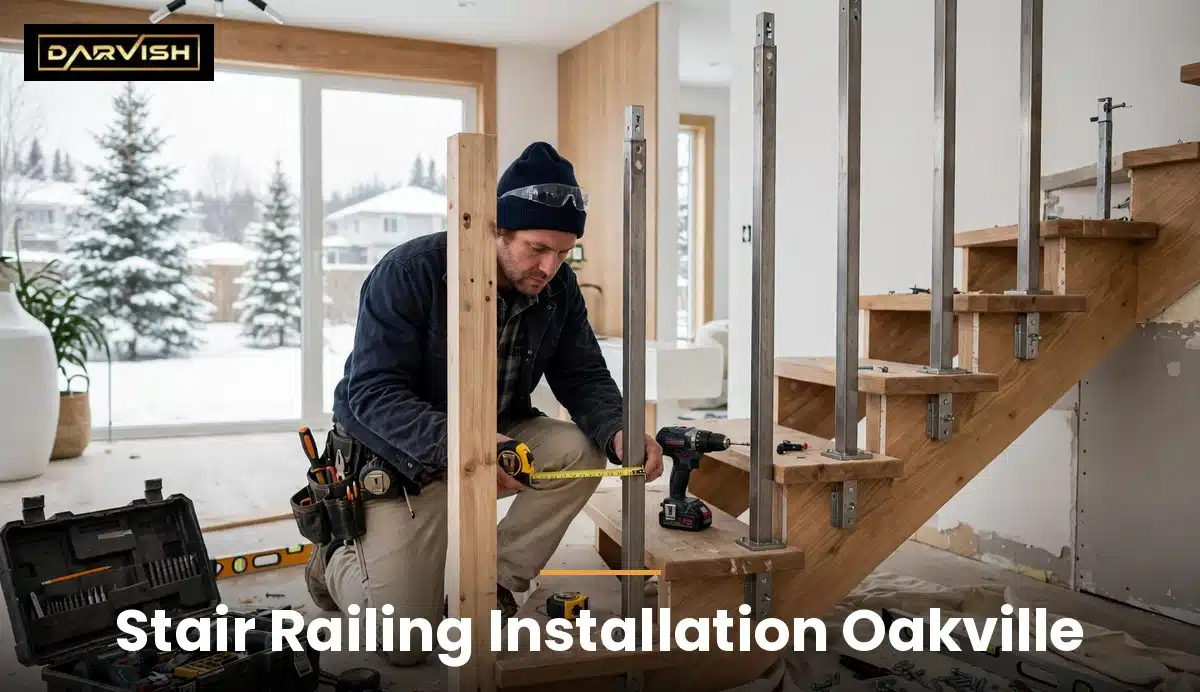
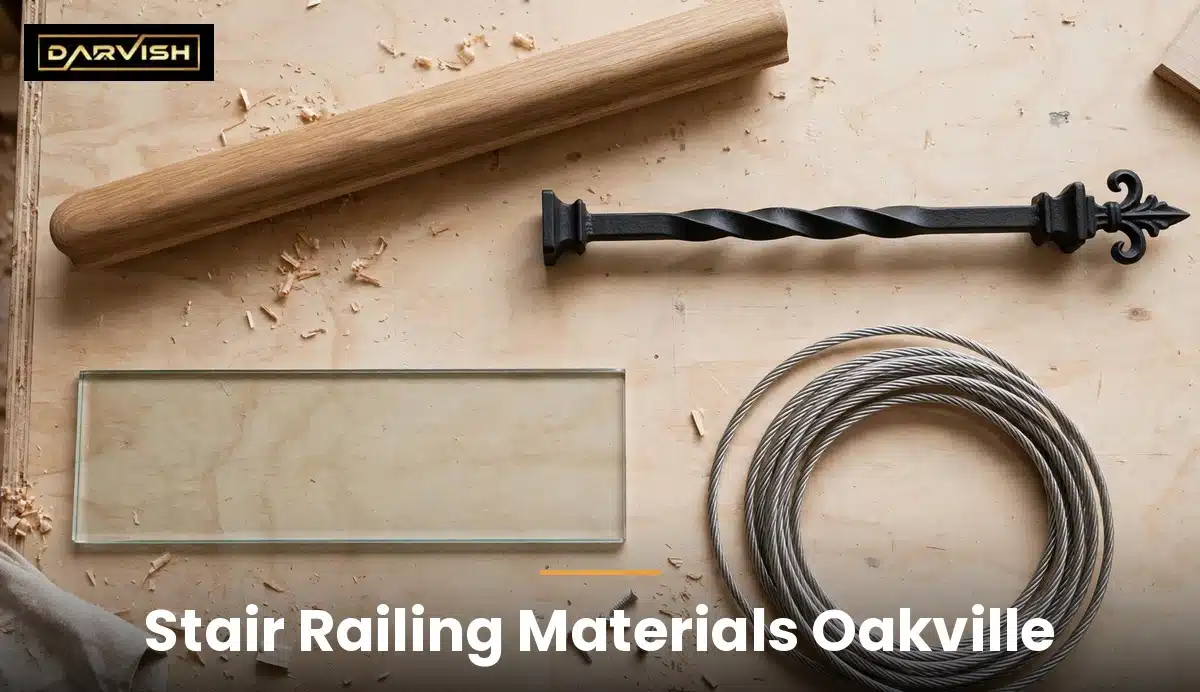
Wood, iron, glass and cable each suit a different Oakville home. Wood is warm and traditional, and it matches older homes; iron is strong and classic, with patterns no other metal copies; glass is bright and modern, and it keeps the view open; cable is minimal and contemporary, with thin lines that almost disappear. Darvish Inc installs custom railings in all four materials, so the choice is about your home, not about what one installer happens to stock. Start from the look you want and the upkeep you will actually do — a material you will not maintain is the wrong material, however good it looks on the day it is installed.
Glass is the material Oakville homeowners ask about most, and it is easy to see why: it opens up the view, suits modern homes, and makes a small staircase feel larger. Glass railings Oakville installations are usually frameless glass panels with slim metal posts, and a glass railing Oakville homeowners choose is most often paired with stainless steel hardware that holds up to salt and moisture.
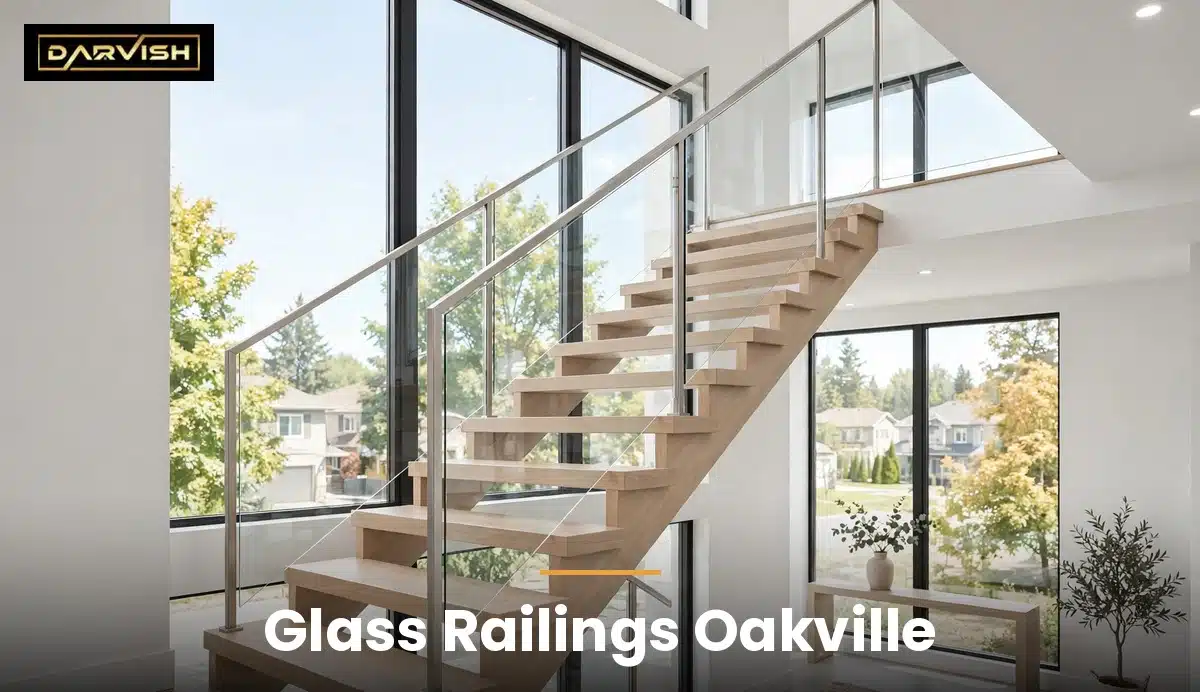
Inside, the glass changes the light more than the structure. An interior glass railing Oakville homeowners choose for a bright stairwell keeps the light moving between floors, and a slim metal top rail keeps the look clean. The interior glass railing Oakville homeowners ask for most often is a frameless panel with a slim metal top rail, and the glass must be the right thickness and tempered for safety, with posts anchored into solid structure — not into drywall or a thin tread.
Outside, the same glass behaves differently. Glass railings Oakville homeowners install on a deck or front steps need hardware that holds up to salt, snow and freeze-thaw, and the posts must be anchored into solid structure. An outdoor glass railing Oakville homeowners install on a deck needs the same tempered glass as one indoors, and a glass railing Oakville homeowner installs outside should check the hardware first — the glass is only as good as what holds it. Cable suits the same contemporary look with thinner lines, but it needs its tension checked and the climbability question above answered before it goes on a stair used by children.
Comparing Materials Side by Side
Side by side, the choice comes down to four questions: how much upkeep will you do, how much will you pay upfront, which look fits your home, and whether the material suits an interior or an outdoor stair. An outdoor glass railing Oakville buyers compare against metal should be judged on hardware and anchoring, not only on the glass — and an interior glass railing Oakville buyers compare against wood should be judged on light and privacy, not only on price.
No material wins all four questions at once, which is why the comparison matters more than any single feature. The table below puts the four materials side by side on the same four questions, with the cost ranges from the next section, so you can compare them without jumping between pages.
| Material | Best For | Upkeep | Typical Cost per Foot |
|---|---|---|---|
| Wood | Warm traditional interiors | Higher — refinish every few years | $120–$250 |
| Iron | Classic homes, front steps | Medium — check paint for rust | $180–$320 |
| Glass | Bright modern stairwells | Low — wipe clean | $200–$360 |
| Cable | Contemporary homes, decks | Low — check tension | $150–$280 |
Costs are installed prices per linear foot, plus HST, based on 2026 prices from GTA railing installers — see the floating stair railing costs for the full breakdown. Your written quote is the only figure that counts for your own stairs, so use these ranges to judge quotes, not to replace them.
A homeowner who hates maintenance should not buy wood, and a homeowner who loves the iron look should not buy cable and expect it to feel the same. Glass railings Oakville buyers choose for the view should still check the hardware, and a glass railing Oakville quote should name the glass thickness and the fixing system — not only the price per foot.
What Decides the Cost
Cost is where most people start — and where most people stop too early. A glass railing Oakville project usually costs more than the same railing in metal, because the glass, the hardware and the measuring all cost more — and the price of a new stair railing also depends on the length, the design, and how much custom work the staircase needs: a straight wood railing costs less than a curved glass one, and a simple replacement costs less than a full custom job.
The cheapest railing is not the one with the lowest quote — it is the one that costs least over twenty years, including paint, repairs and replacement. Glass railings Oakville buyers price against metal should ask for both figures in writing before they compare.
Frameless glass typically runs $200 to $360 per linear foot installed, plus HST, and metal runs $180 to $320, based on 2026 prices from GTA railing installers. Our breakdown of wood railing cost in Toronto shows the wood figures — and you should ask every stair railing contractor in Oakville for the same written breakdown, so you compare quotes on the same terms.
An interior glass railing Oakville quote should name the glass thickness and the fixing system, and an outdoor glass railing Oakville quote should name the hardware and the anchoring — if a quote names neither, it is not detailed enough to compare.
Repair or Replace: How to Decide
Not every wobbly railing needs replacing. A loose newel post, a cracked baluster or a worn handrail can often be repaired for far less than a full replacement — and a good stair railing contractor in Oakville will tell you so, because a repair keeps the railing you already like and costs less than starting over. Repair first when the structure is sound and only the finish or a single part has failed.
Replacement is the smarter call when the railing moves as a whole, when rust or rot has reached the posts, or when the spacing and height no longer meet the code. A replacement also makes sense when the style no longer suits the home: a dated wood railing can be replaced with glass or iron without touching the staircase itself.
Either way, the decision should come from an on-site look, not a phone quote — ask the installer to see the stairs before you decide. A good time to decide is during the site visit: ask the installer to show you exactly which parts would be repaired and which would be replaced, and what each option would cost in writing.
Red Flags: When to Walk Away
Most contractors are honest, but a few signs should stop you before you sign. If a stair railing contractor in Oakville shows any of the ones below, pause and get a second quote before you commit.
- A verbal price with nothing in writing, and no itemized breakdown of material, finish and installation.
- No proof of insurance, or an answer that the paperwork is not ready.
- No recent local work you can see, and no references you can call.
- Pressure to sign today for a discount that expires before you can compare quotes.
- A quote far below every other one, with no explanation of what was left out.
Before You Sign: A 5-Minute Checklist
Before you sign with a stair railing contractor in Oakville, walk through this list. Projects go smoothly when the paperwork is settled before fabrication starts — and the quote names the material, the finish and the after-care in writing.
- Guard height and baluster spacing measured against the code, not guessed.
- Material and finish named in the quote, with a sample you have seen.
- Installation dates tied to the build schedule, with a named contact on site.
- After-care in writing, covering both the material and the workmanship.
- A site visit before fabrication, so the measurements are the installer’s, not yours.
The Right Contractor for Your Oakville Home
There is no single best railing for every Oakville home — there is only the best railing for your home, your stairs and your habits. Wood asks the most upkeep, iron asks for paint checks, glass asks for an occasional wipe, and cable asks for a tension check now and then. Choose the material you will actually maintain, and choose a stair railing contractor in Oakville who measures on site, installs to code, and puts the quote in writing.
For an outdoor glass railing Oakville homeowners install on front steps, the hardware matters as much as the glass — and a glass railing Oakville installation done right will outlast the decision. The contractor who wins your job should be the one whose quote you understand best, not the one whose price is lowest — a clear quote is the first sign of clear work.
When you are ready, ask Darvish Inc for a free estimate and a written quote for your stairs, and compare it with one more quote before you decide. You can also find Darvish Inc on Google to read what Oakville homeowners say about the work — and when you request the quote, ask for the material, the finish and the after-care named in writing.
Frequently Asked Questions
▾
Who is the best stair railing contractor in Oakville?
The right one measures on site, builds to fit, installs to code, and puts the quote, the schedule and the after-care in writing. Ask for a site visit and a written quote before you decide — and look at past projects and reviews you can verify. A contractor who avoids the site visit, the written quote or the code question is not saving you time — they are saving themselves the trouble of proving the work is sound.
▾
Do you install glass railings in Oakville?
Yes. Darvish Inc installs glass railings in Oakville, and the glass railings Oakville homeowners ask for most are frameless panels and glass with slim metal posts. An interior glass railing Oakville homeowners ask for most often is a frameless panel with a slim metal top rail. An outdoor glass railing Oakville homeowners install on a deck needs the same tempered glass and solid anchoring. The glass is tempered for safety, and every panel is measured on site before fabrication.
▾
How much does a stair railing cost in Oakville?
The cost depends on the material, the length, the design and how much custom work the staircase needs. As a guide, frameless glass typically runs $200 to $360 per linear foot installed, plus HST, and metal runs $180 to $320, based on 2026 prices from GTA railing installers. The only fair figure for your stairs is a written quote after an on-site measurement.
▾
Do stair railings need a permit in Oakville?
A permit is not always needed for a like-for-like replacement, but new guards and structural changes must meet the building code — check with the Town of Oakville before you order, and ask your installer to confirm what applies.
▾
How long does a stair railing installation take?
Most straightforward installations take a day or two once the railing is fabricated, while custom work takes longer because the fabrication happens first. The installer should give you a schedule before work starts, tied to the other trades on site.