Choosing the right metal for your outdoor railings is one of those decisions that looks simple until the first Toronto winter tests it. Salt, freeze-thaw cycles, and lake air punish the wrong choice fast, while the right one holds its finish for decades. That is why homeowners here rarely choose a metal railing on looks alone — durability, upkeep, and cost matter just as much as style, and the best metal for outdoor railings is the one that fits your home, your climate, and your budget at the same time.
This guide compares the three metals Toronto homeowners actually install — stainless steel, aluminum, and wrought iron — and explains how to weigh them against each other. You will learn what each metal handles well, where each one struggles, what upkeep each one really needs, and how to judge cost beyond the first quote. By the end, you will know the outdoor railing your home should have, and which questions to ask before you sign.
LAST UPDATED: November 16, 2026
In this guide:
- Location and Climate: Toronto Winters Decide First
- Stainless Steel Railings: The Low Maintenance Workhorse
- Aluminum Railings: Light, Rust Resistant, Easy to Install
- Wrought Iron Railings: Classic, Elegant, and Worth the Upkeep
- Comparing the Three Metals Side by Side
- Durability, Rust and Maintenance
- Cost: Upfront Price vs Long Term Value
- Installation and Safety: Meeting the Code
- Before You Sign: A 5-Minute Checklist
- Ready to Choose Your Metal Railing?
- Frequently Asked Questions
Location and Climate: Toronto Winters Decide First
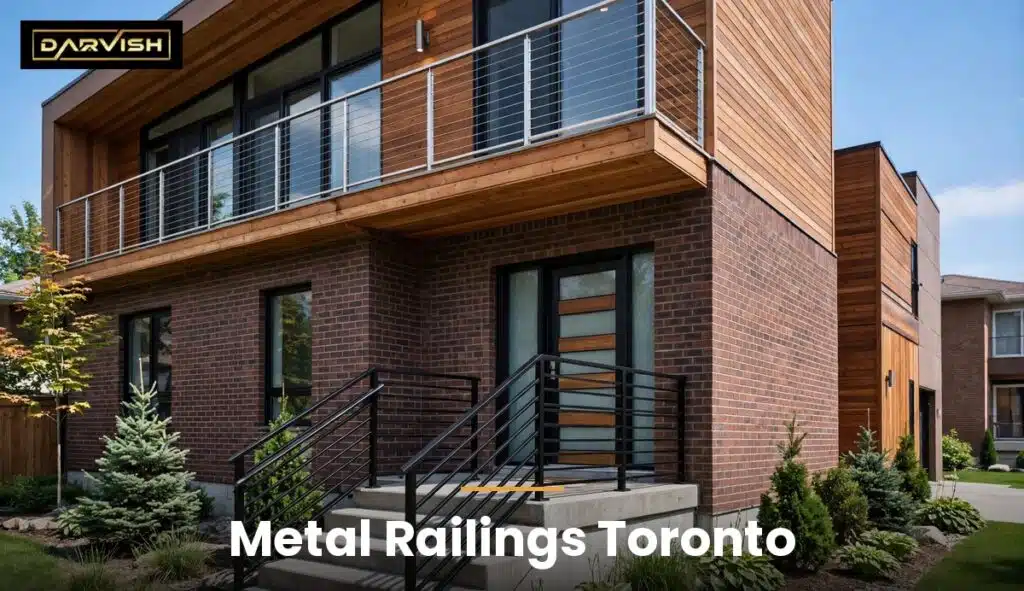
Toronto winters are the first test any outdoor railing has to pass. Freeze-thaw cycles open tiny gaps in paint and coatings, road salt speeds up corrosion on bare steel, and lake air keeps moisture in the air long after the rain stops. A railing that looks perfect on a showroom floor can start spotting early if the metal was not chosen for this climate. That is why the metal railings homeowners install here
are chosen for rust resistance first and looks second — the outdoor railings Toronto homes need are built from metals that hold up to salt and freeze-thaw, not just metals that photograph well.
Before you compare metals, look at where the railing will live. A sheltered porch in North York faces less salt spray than a front step on a busy Toronto street, and a lakeside deck faces more moisture than a backyard stair. The best metal for outdoor railings on a sheltered porch is not always the best one for an exposed front entrance — and a good installer will ask about exposure before recommending anything.
Stainless Steel Railings: The Low Maintenance Workhorse
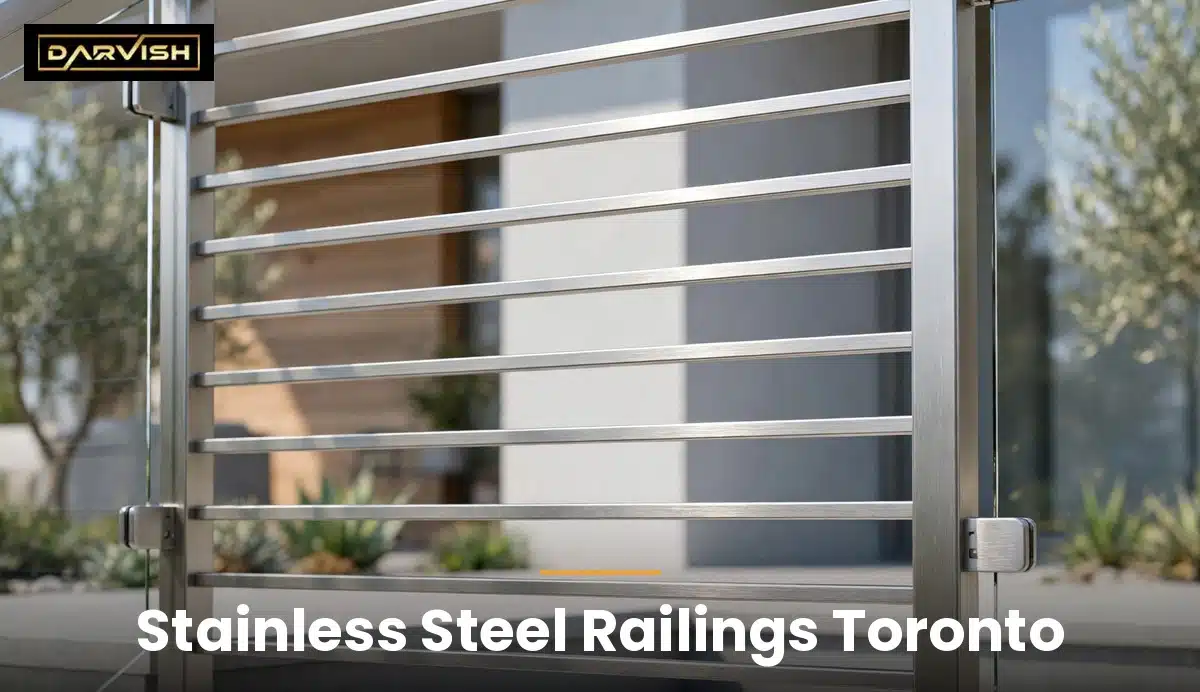
Stainless steel is the reliable workhorse of outdoor metals. It resists rust and corrosion, holds its shape in freeze-thaw cycles, and needs little more than an occasional wash to keep looking new. For a busy household that does not want weekend maintenance, stainless steel is often the easiest yes. That is why stainless is so often the metal on front steps and decks — the best outdoor railings are the ones you never have to think about.
Stainless steel suits modern homes best, where its clean lines and bright finish match glass, concrete, and dark wood. It costs more upfront than aluminum, and it can show fingerprints and water spots on polished finishes — a brushed finish hides both. For outdoor railings in Toronto, grade 316 is the safer choice: grade 304 can stain and pit where road salt and d-icing salt reach it, while 316 resists salt far better. If the look fits your home, stainless steel is the lowest-effort metal you can buy.
Aluminum Railings: Light, Rust Resistant, Easy to Install
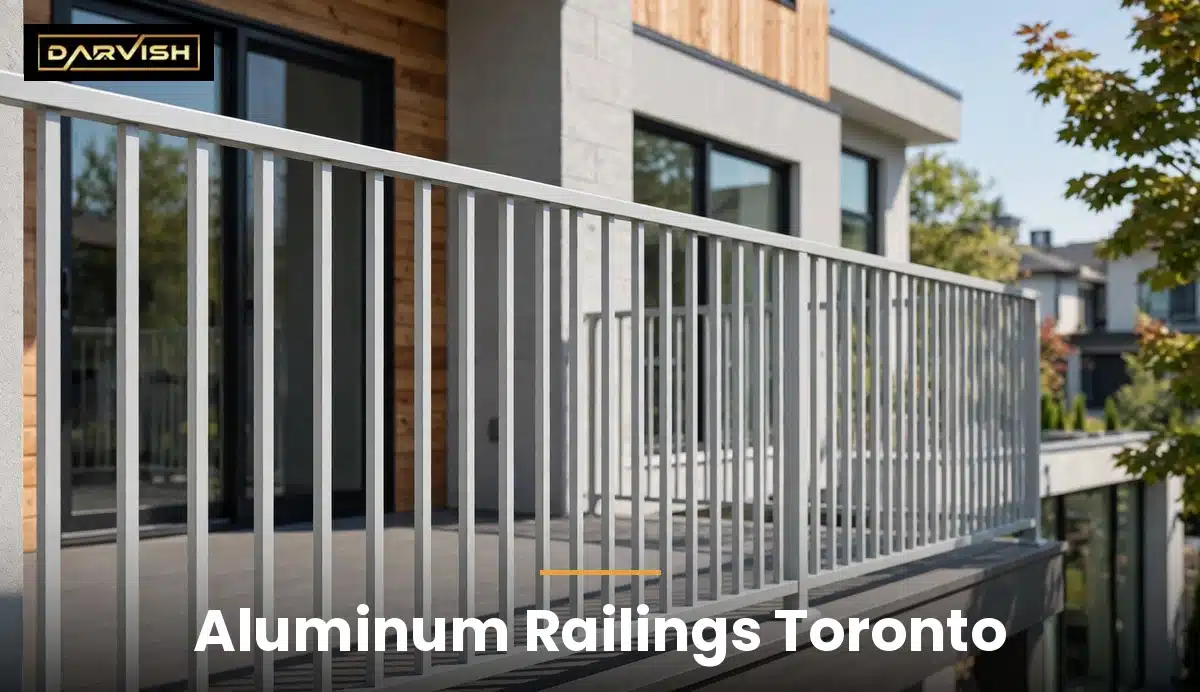
Aluminum is the lightweight champion of outdoor railings. It won’t rust, and a powder-coated finish protects it from salt and weather. It is easy to carry and install, and it comes in a wide range of finishes — so it can look like iron without behaving like it. For balconies, porches, and decks, aluminum railings are often the best balance of price, weight, and upkeep, and builders install aluminum on multi-unit projects for the same reason.
Aluminum is softer than steel, so it dents more easily and cannot span the same distances without support — a good installer spaces the posts closer together. It also expands and contracts more with temperature, which is why the fixings and brackets matter as much as the rails themselves. Chosen well and installed properly, aluminum railings will last decades with almost no maintenance.
Wrought Iron Railings: Classic, Elegant, and Worth the Upkeep
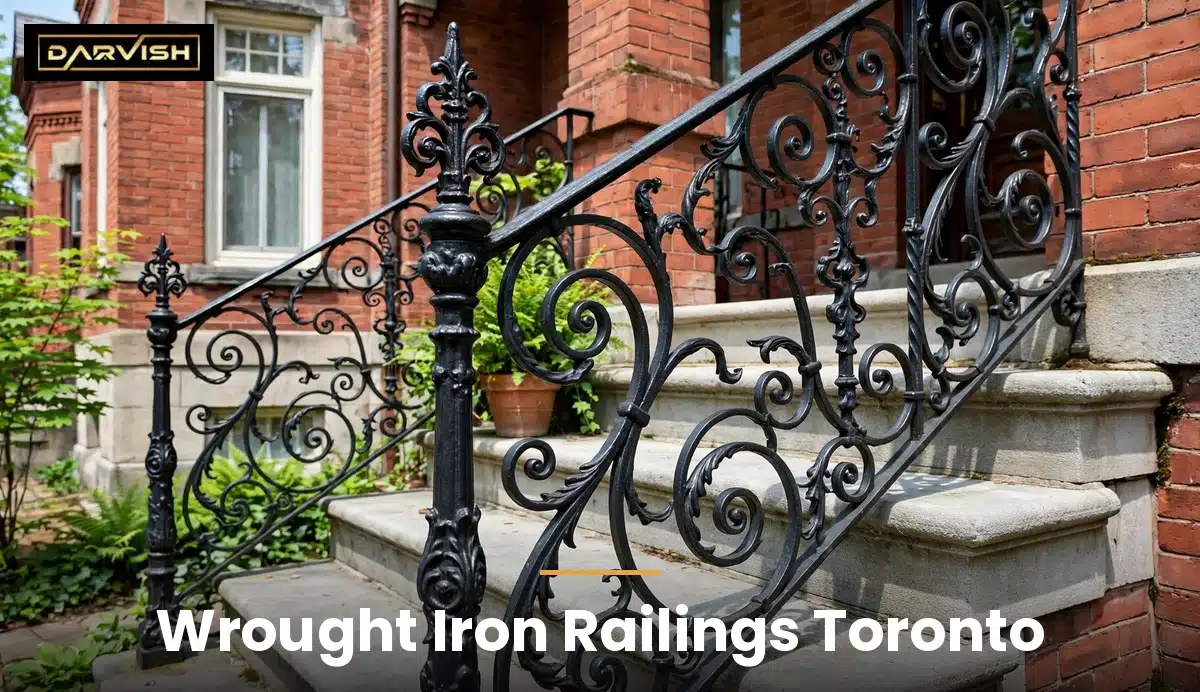
Wrought iron is the classic of outdoor railings — elegant, sturdy, and timeless, with intricate designs no other metal copies convincingly. It suits heritage homes, front steps, and porches where the railing is part of the architecture, not just a safety feature. For that look, wrought iron railings are still the first choice, and heritage homes usually wear iron, finished in black. One honest note: almost no railing sold today is true wrought iron — most are mild steel, shaped and finished to look the part.
Iron asks more of its owner than stainless or aluminum. It needs paint or a protective coating, and any chip that exposes bare metal should be touched up before rust takes hold. That upkeep is the price of the look — and for many homeowners, it is worth paying. A well-kept wrought iron installation ages with character rather than decay.
Comparing the Three Metals Side by Side
Side by side, the choice comes down to three questions: how much upkeep will you do, how much will you pay upfront, and which look fits your home. The best metal for outdoor railings is the one that answers all three honestly. Stainless steel wins on low maintenance, aluminum wins on weight and price, and wrought iron railings win on character — while aluminum railings win on speed of installation.
| Metal | Best For | Upkeep | Look | Relative cost |
|---|---|---|---|---|
| Stainless steel | Modern homes, decks and stairs | Low — rinse and wipe | Clean, bright, modern | Mid-range |
| Aluminum | Balconies, porches and stairs | Low — rinse and wipe | Light, clean, many finishes | Budget |
| Wrought iron | Classic homes, front steps | Higher — paint and check for rust | Ornate, timeless, solid | Premium |
No metal wins all three questions at once, which is why the comparison matters more than any single feature. A homeowner who hates maintenance should not buy iron, and a homeowner who loves the iron look should not buy aluminum and expect it to feel the same. When you compare this way — upkeep, price, look, in that order — the right choice usually picks itself. If you are weighing metal against glass, our glass railing cost in Toronto breaks down the other side of the choice.
Durability, Rust and Maintenance
Durability is not just about strength — it is about how the metal ages. Stainless steel and aluminum resist rust by their nature, while iron resists it only as long as its coating holds. That is the single most important difference between them, and it is why the outdoor railings Toronto winters are hardest on are almost always iron that was left unpainted. For a metal railing that lasts decades, the maintenance habit matters as much as the metal itself. Hot-dip galvanizing, usually with a powder-coated finish on top, is the standard way to protect a steel railing outdoors in Toronto: the zinc layer keeps guarding the steel even where the coating is chipped.
Cleaning is simple for all three: a wash with mild soap and water, a rinse, and a check for chips or loose fixings, once a year. Aluminum railings stay bright with almost no effort beyond that yearly wash, while iron needs its paint checked at the same time, and any bare spot touched up the same week. The metal that lasts longest is usually the one whose owner actually does the small jobs on time.
Cost: Upfront Price vs Long Term Value
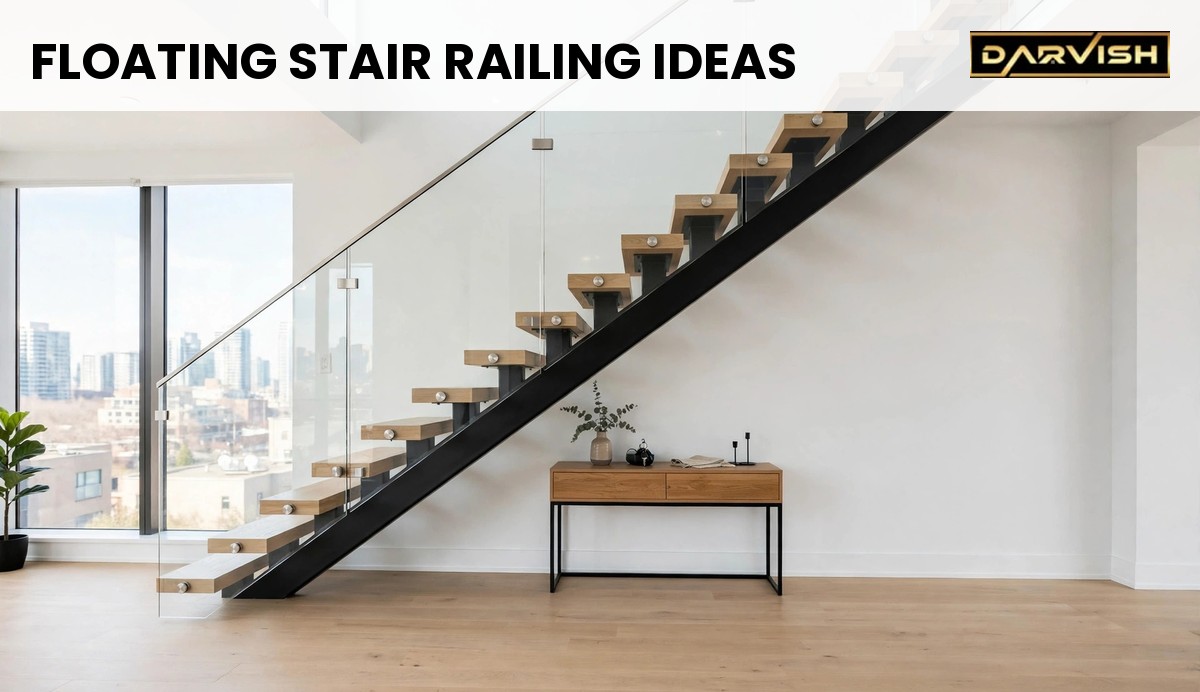
Cost is where most people start — and where most people stop too early. Aluminum is usually the lowest upfront cost, stainless steel sits in the middle, and wrought iron is often the highest, especially with custom designs. But the cheapest railing is not the one with the lowest quote: it is the one that costs least over its lifetime, including paint, repairs, and replacement. Judged that way, the best metal for outdoor railings is often the one that looks expensive on day one and cheap over the long run, and railings homeowners buy twice are always the ones that were chosen on price alone. For a per-foot sense of the numbers, a metal railing for floating stairs usually costs $180 to $320 per linear foot installed — see our floating stair railing ideas for the full comparison.
Maintenance cost is part of the price too. Iron needs paint and rust checks at the yearly inspection, which cost time or money; stainless and aluminum need almost nothing beyond cleaning. Before you compare quotes, ask what each one includes — measurement, fabrication, delivery, installation, and the finish — and what the warranty covers. For homeowners comparing quotes, the quote that names the material, the finish, and the warranty in writing is the one worth signing. A wrought iron railing with a proper paint system costs more upfront and less over time than a cheap iron job that rusts in three winters.
Installation and Safety: Meeting the Code
A railing is a safety feature first and a design feature second. Guard height, baluster spacing, and anchoring all have to meet the code, and a railing that fails inspection costs far more than one that was installed right the first time. That is why the outdoor railings Toronto inspectors pass without a second visit are the ones measured and installed by people who do this every day — not by a general contractor guessing at the numbers.
Every metal railing must meet strict standards under the Ontario Building Code, and the installer should be able to explain how the design meets them before work starts. Ask for the guard height, the spacing, and the anchoring method in writing, and check that the quote covers site measurement — a railing measured by the installer fits; a railing measured by the homeowner often does not.
For outdoor railings that inspectors will see, that measurement step is the difference between passing first time and paying twice. A good installer measures twice, fabricates once, and installs on the day the site is ready — not a week later.
Before You Sign: A 5-Minute Checklist
Before you sign a railing contract, walk through this list. Confirm the installation is scheduled around the other trades, not against them — and that the quote names the material, the finish, and the warranty in writing.
- Guard height and baluster spacing measured against the code, not guessed.
- Metal and finish named in the quote, with a sample you have seen.
- Installation dates tied to the build schedule, with a named contact on site.
- Warranty in writing, covering both the material and the workmanship.
- A site visit before fabrication, so the measurements are the installer’s, not yours.
Ready to Choose Your Metal Railing?
There is no single best metal for every home — there is only the best metal for your home, your climate, and your habits. Stainless steel asks the least of you, aluminum asks the least of your budget, and wrought iron asks the most of your upkeep and gives the most character back. Choose the metal you will actually maintain, and buy it from a team whose metal railings homeowners recommend — the railing will outlast the decision.
Darvish Inc installs custom metal railings across Toronto and nearby cities, from stainless steel stairs to wrought iron front steps, and every project starts with a free quote. Tell us about your project and we will show you the metal railings homeowners choose when they want the job done right the first time.You can also find Darvish Inc on Google to read what Toronto homeowners say about our work.
When you are ready, Contact Darvish Inc. today for a free consultation and elevate your outdoor space.
Frequently Asked Questions
What is the best metal for an outdoor railing in Toronto?
There is no single best metal for outdoor railings — the right choice depends on your home’s style, your budget, and how much upkeep you will do. Stainless steel is the easiest to live with, aluminum is the lightest on price, and wrought iron suits classic homes best.
Is aluminum a good choice for a balcony railing?
Yes. Aluminum railings installed on balconies are light, won’t rust, and available in many finishes, and they need almost no maintenance beyond an occasional wash. The installer should space the posts closer together than for steel, since aluminum is softer.
Does wrought iron rust in Toronto winters?
It can, if the paint or coating is damaged and bare metal is left exposed to salt and moisture. Wrought iron railings kept in good shape are repainted or touched up when chips appear, and that small habit is what keeps them rust free for decades.
Do outdoor railings need a permit in Toronto?
Most railing replacements do not need a permit, but new guards and structural changes must meet the provincial building code, and your installer should confirm what applies before work starts. When in doubt, ask the installer — or the city — before you order.
How long do metal railings last outdoors?
With the right metal and a proper installation, a quality railing lasts decades. Stainless steel and aluminum need the least attention, while wrought iron lasts just as long when its paint is kept up. The metal matters, but the installation and the upkeep matter just as much.