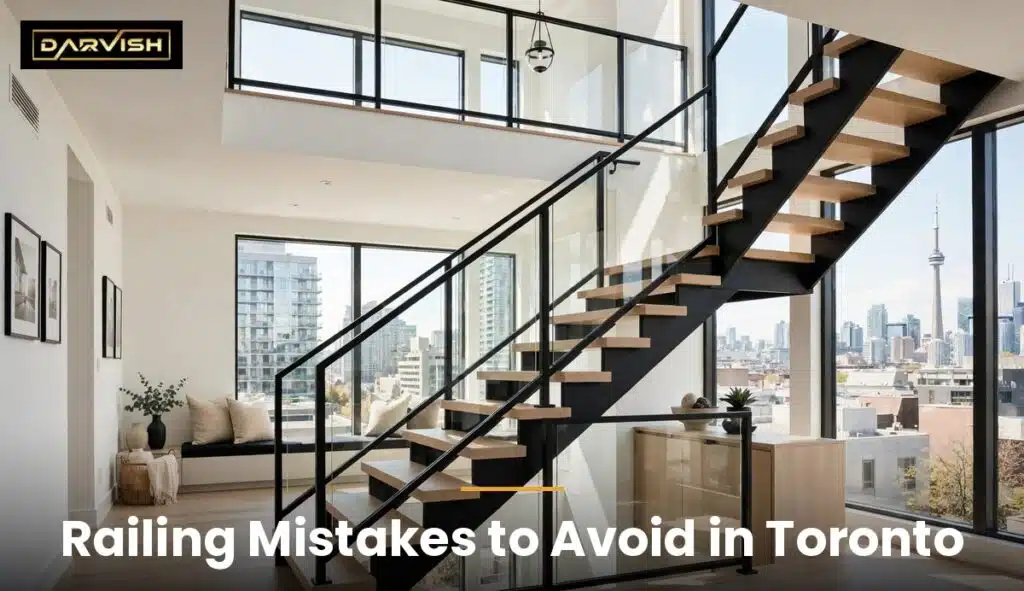
Choosing railings for your home in Toronto should feel exciting — a chance to improve safety, elevate your interior, and boost long term property value. But many homeowners unintentionally make decisions that lead to safety issues, code violations, unnecessary expenses, or designs that simply don’t last.
To help you avoid the most common railing mistakes, this guide breaks down the railing mistakes to avoid — the 7 mistakes Toronto homeowners make, explains why they happen, and offers smarter alternatives that protect both your family and your investment.
This is not a guide about spending more. The cheapest railing is usually the one you buy once — measured and anchored properly, installed by someone who has done it before. The seven mistakes below follow the order homeowners usually meet them: first the code, then the look, then the installer, then daily use. Read them in order, or jump to the one that matches your situation — the checklist near the end pulls the guide into five minutes.
Quick Overview: 7 Common Railing Mistakes & Smarter Alternatives
Here is a summary of the 7 railing mistakes toronto homeowners report most often, the problem each one causes, and the smarter alternative — so you can spot the railing mistakes to avoid before you sign anything.
| Common Mistake | Why It’s a Problem | Better Alternative |
|---|---|---|
| Ignoring Building Code Requirements | Risk of costly rework, safety issues, failed inspections | Work with a professional contractor to ensure code compliance |
| Choosing Aesthetics Over Safety | Wobbly or unstable railings, weak materials, poor load performance | Use tempered/laminated glass, solid hardwood, or high grade metal |
| Not Matching the Railing to Your Home’s Architecture | Visually mismatched railings that reduce property appeal | Select a style that complements your home’s design |
| Using Low Quality Hardware or Budget Installers | Loose railings, early rust, short lifespan | Hire specialized fabricators and installers for durability |
| Not Considering Long Term Maintenance | High upkeep, rust, scratches, and poor performance over time | Choose materials suited to your lifestyle and maintenance expectations |
| Forgetting About Child, Senior, or Pet Safety | Climbable bars, wide gaps, sharp edges, hard to grip rails | Opt for anti climb designs, proper spacing, comfort grip, and safe glass |
| Trying to Install Railings DIY | Uneven posts, loose clamps, incorrect measurements, unsafe mounting | Hire a professional installer for precision and code compliance |
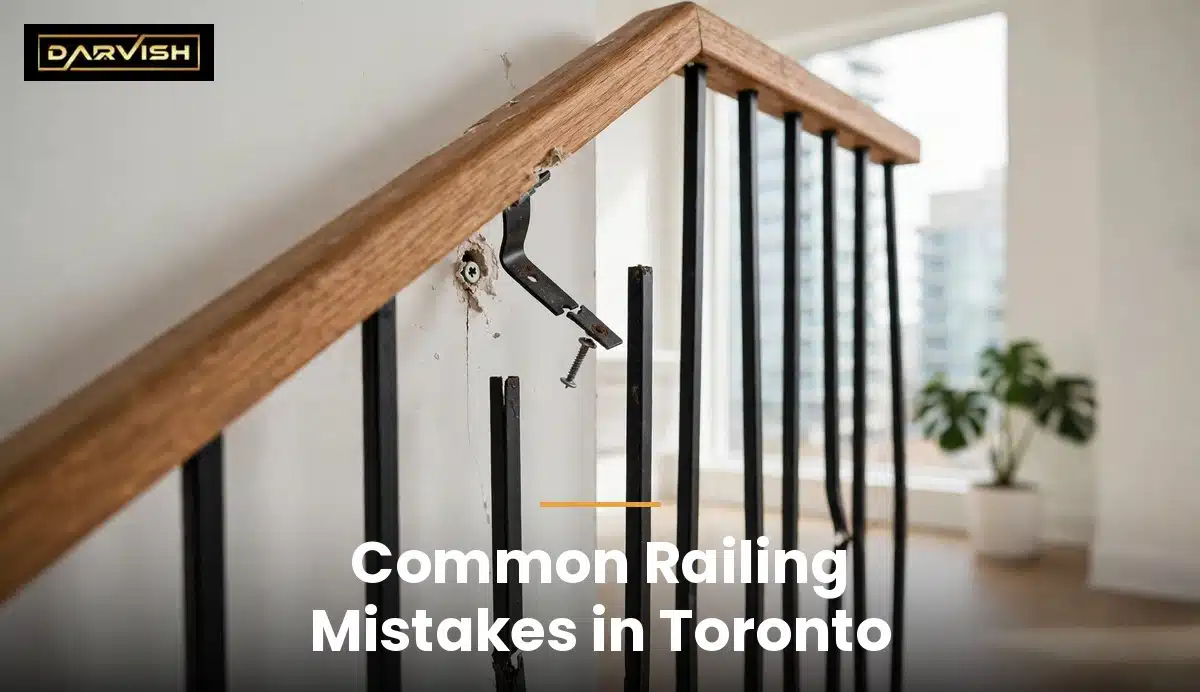
1. Ignoring Building Code Requirements (Leading to Costly Rework)
Many homeowners start with style inspiration from Pinterest, Instagram, or model homes and forget to confirm whether the design meets Ontario Building Code requirements. Of all the railing mistakes to avoid, this is one of the most expensive you can make.
Why It’s a Problem
- Incorrect railing height
- Improper spacing between balusters
- Unsafe glass thickness
- Non compliant structural support
Any of these issues can result in failed inspections, forced reinstallation, and serious safety risks for children, seniors, or pets. These are classic railing installation mistakes: the design was chosen first and the code was checked last.
Better Alternative Work with a contractor experienced in code compliant railing installation in Toronto. A professional team will ensure your railings meet all legal and safety standards from day one.
2. Choosing Aesthetics Over Safety
It’s easy to fall in love with sleek designs like ultra minimal frames, floating glass, or thin metal posts. But style should never come at the cost of structural strength. Toronto showrooms are full of them, and the railing mistakes toronto buyers make most often start with falling in love with a look before checking its strength.
Risks
- Wobbling or unstable railings
- Weak or uncomfortable handrails
- Breakable or low grade materials
- Poor load bearing performance
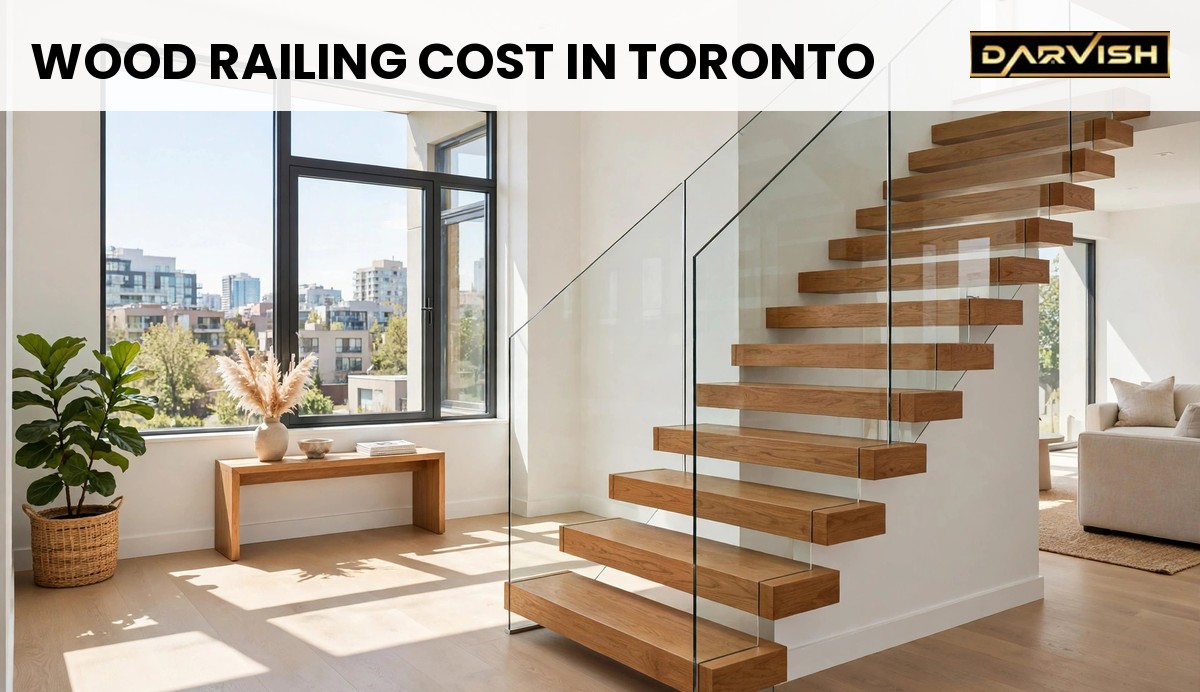
Better Alternative Choose materials engineered for durability and impact resistance, such as tempered or laminated glass, solid hardwood, or high grade metal. The railing mistakes to avoid in this category are the ultra-minimal frames and thin posts that look elegant and perform poorly. Professional glass railing systems are designed to balance modern aesthetics with real world safety.
3. Not Matching the Railing to Your Home’s Architecture
Toronto homes vary widely, from modern downtown condos to traditional detached houses. A railing that looks perfect in one setting may feel completely out of place in another, and most common railing mistakes start exactly here — with a style chosen for a different house.
Common Mismatches
- Heavy wrought iron in minimalist interiors
- Ultramodern glass in classic or heritage homes
- Rustic wood in sleek urban condos
Better Alternative Select a railing style that complements your home’s architecture instead of competing with it. When you are choosing railings for your home, bring photos of the room and a note of the materials already in it — the floor, the trim, the window frames. A professional stair and railing company can help you create visual harmony while maintaining safety and function.
4. Choosing Low Quality Hardware or Budget Installers
Low cost installers often reduce prices by cutting corners on materials and craftsmanship. Most railing installation mistakes trace back to this trade-off — a lower quote paid for with thinner metal and untested glass.
Common Shortcuts
- Low quality brackets and fasteners
- Thin or weak metal components
- Untested or low grade glass
- Inexperienced fabricators
What This Leads To
- Loose or shaky railings
- Early rust and corrosion
- Glass discoloration or damage
- Short lifespan and costly replacements
Better Alternative Invest in a specialized railing fabricator and installer. High quality workmanship, like the custom solutions offered by Darvish Inc., delivers long term durability, safety, and added property value. Skipping the cheapest quote is one of the simplest railing mistakes to avoid — the savings vanish the first time a bracket fails.
5. Not Considering Long Term Maintenance
Many homeowners focus only on how railings look on installation day, not how they perform years later. That short-term thinking is behind many common railing mistakes — and the railing mistakes toronto installers see most often are the ones chosen for day one, not year five.
Examples
- Hardwood requires refinishing over time
- Low grade metals can rust or corrode
- Poor quality glass scratches easily
Better Alternative Choose materials that match your lifestyle and maintenance expectations. The railing mistakes to avoid here are the ones made on installation day: choosing a finish you will not maintain. Glass railings for easy cleaning and a modern look; metal for durability indoors and outdoors; wood railings for warmth and timeless appeal. An experienced railing specialist can explain realistic maintenance needs before you commit.
6. Forgetting About Child, Senior, or Pet Safety
Every household has different safety needs. Many Toronto families choose railings without considering who uses the stairs daily. Forgetting who uses the stairs is one of the quietest railing mistakes to avoid — nothing fails on day one, and everything fails at once.
Common Safety Gaps
- Horizontal bars that children can climb
- Wide gaps that pets can slip through
- Sharp metal edges
- Handrails that are hard to grip for seniors
Better Alternative Opt for railings designed with real life use in mind. Choosing railings for your home means choosing for the people who actually use the stairs — the toddler, the grandparent, and the dog included:
- Anti climb designs for children
- Narrow spacing for pet safety
- Comfort grip handrails for seniors
- Tempered or laminated glass for added security
7. Trying to Install Railings DIY
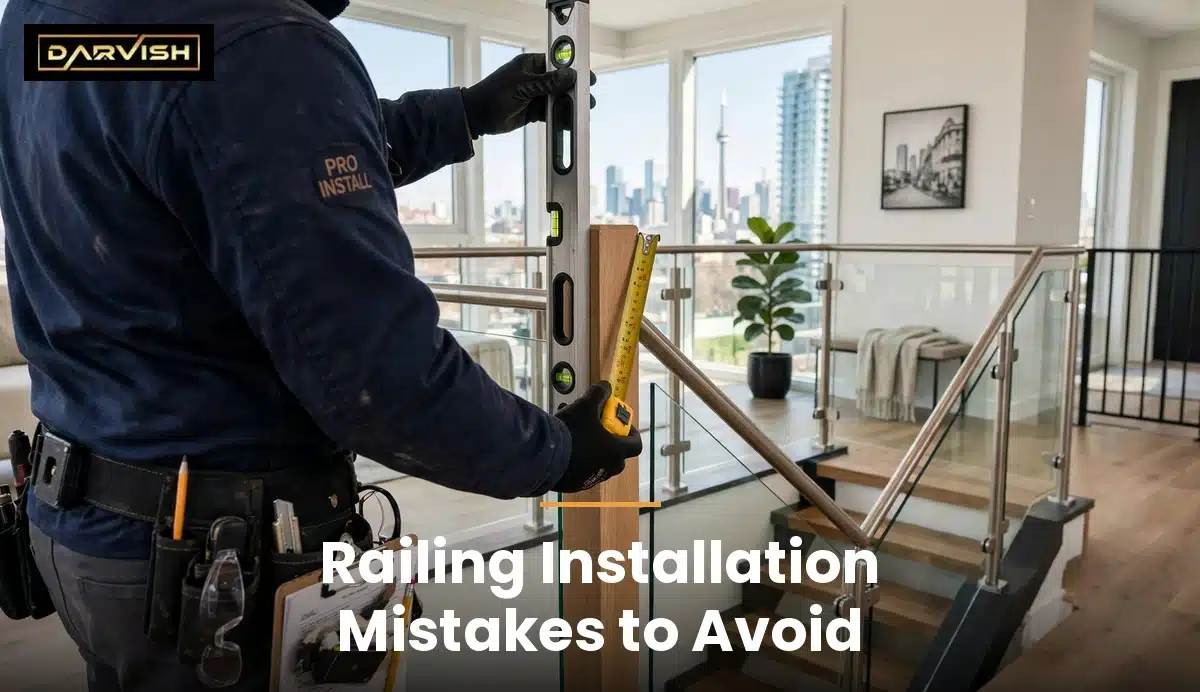
Railing installation often looks simple, until small errors compromise safety and code compliance. DIY is one of the railing mistakes to avoid if you have never measured, anchored, and inspected a guard before. The railing installation mistakes that follow are almost always the same: uneven posts, loose clamps, wrong measurements, unsafe mounting points.
Common DIY Failures
- Uneven posts
- Loose glass clamps
- Incorrect measurements
- Unsafe mounting points
Better Alternative Hire a professional railing installer who can:
- Measure with precision
- Ensure structural integrity
- Meet building code standards
- Deliver a clean, seamless finish
A professional installer also knows when metal railings are the safer choice for a busy stairwell — and when glass is the better one.
Before You Sign: A 5-Minute Checklist
Before you sign a contract, walk through this checklist: the guard height, the baluster spacing, the handrail grip, the finish, and the warranty. Choosing railings for your home is a decision you will live with every day, so the ten minutes you spend on this list are the cheapest insurance in the whole project.
Ask your installer how they anchor the posts and what the warranty covers. Railing installation mistakes usually hide in the anchoring, not in the panels — so ask to see a past installation, check that the quote names the materials and the finish, and confirm who handles the permit if one is needed. If an installer cannot answer those questions clearly, that is information too.
Final Advice: Partner With the Right Experts
Whether you live in a condo, townhouse, or detached home in Toronto, choosing railings should balance design, durability, safety, and long term performance. Avoiding the railing mistakes to avoid above is not about spending more — it is about deciding in the right order: code first, then materials, then the installer, then the style.
For the best results, work with a professional team that specializes in avoiding the railing mistakes toronto homeowners make most often:
- Custom railing fabrication
- Building code compliance
- Modern and traditional railing designs
- High quality installation
- Long term durability
Making the right choice today protects your family and enhances your home’s value for years to come.
Ready to Choose Railings Without the Mistakes?
If you are ready to choose railings without repeating the railing mistakes to avoid in this guide, start with a conversation. Bring photos of your stairs or balcony, and tell us who uses them every day — we will show you the options that fit your home, your budget, and the code.
Darvish Inc. designs and installs custom stairs and railings across Toronto and the GTA, and every project starts with a free quote. You can also find Darvish Inc on Google to read what Toronto homeowners say about our work. Tell us about your project, and we will help you choose railings you will still love in ten years.

Frequently Asked Questions
▾What mistakes do Toronto homeowners make most often with railings?
The 7 common railing mistakes in this guide are the ones Toronto homeowners make most often: ignoring the building code, choosing looks over safety, mismatching the home’s style, hiring on price alone, forgetting maintenance, forgetting who uses the stairs, and trying to install railings DIY. Every one of them is avoidable — and this guide shows the smarter alternative for each.
▾How do I choose railings for my home?
Start by checking the code requirements, then the materials, then the installer — choosing railings for your home in that order prevents most of the mistakes in this guide. Measure the drop, note who uses the stairs, shortlist two materials, and ask for a drawing before you sign. A measured drawing shows the guard height, the baluster spacing, and how the handrail meets the wall.
▾Do I need a permit for new railings in Toronto?
It depends on the scope of the work. A like-for-like replacement usually does not need one, but a new guard, a changed stair layout, or structural work often does. The provincial building code sets the guard and handrail rules, and your installer should confirm whether a permit applies to your specific project before ordering. Never start structural work on a promise that “no permit is needed” — get it in writing.
▾What is the most expensive railing mistake?
The most expensive railing installation mistakes are the ones discovered at inspection: wrong guard height, wrong spacing, and glass that is too thin. Each one means removing work that is already installed and paying for it twice — the original installation plus the rework. A drawing checked against the code before fabrication costs nothing; a failed inspection costs weeks.
▾Can I fix a bad railing instead of replacing it?
Sometimes. A loose bracket, a worn handrail, or a scratched panel can often be repaired. But a guard that is the wrong height, a structure that is not anchored properly, or glass that is too thin cannot be fixed with a repair — it has to be replaced. Most railing mistakes toronto homeowners make are avoidable — the code, the materials, and the installer decide the outcome, in that order.