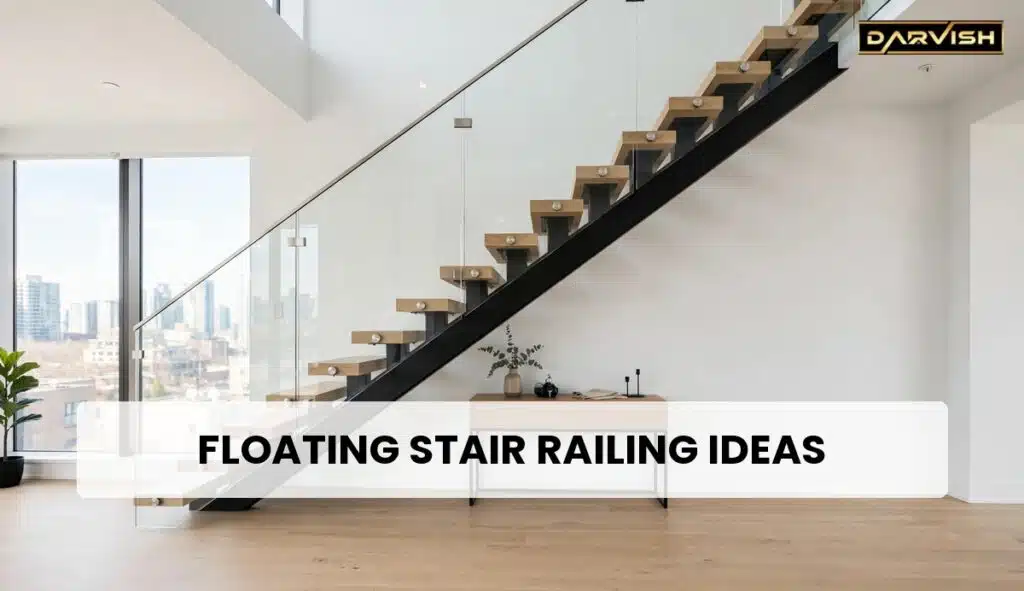
A floating staircase can make a hallway feel twice as wide, but the railing is what makes it safe. One of the first questions homeowners ask our team is about floating stair railing ideas, and the honest answer is that the best design depends on four things: the look you want, the light in your home, the budget, and the code rules your staircase must meet. A frameless glass panel costs far more than a slim cable run, even on the same staircase.
In this guide, we walk through the floating stair railing ideas Toronto homeowners choose most in 2026, with real installed prices per foot, the pros and cons of each style, and the code rules that keep you safe. We also compare glass, cable, metal and wood side by side, so you can see which railing fits your staircase and budget. By the end, you will know what a fair quote looks like.
At Darvish Inc, our own team handles floating staircases and railings across Toronto and the GTA, from on-site measuring to the final install, so the advice below comes from real homes and real railings. This guide covers the floating stair railing ideas most Toronto homeowners choose, the installed prices we see in 2026, and what pushes a quote up or down.
In this guide:
Glass, Cable, Metal and Wood: The 4 Styles Compared
Four styles cover almost every floating staircase in Toronto. Each one looks different, cleans differently and sits in a different price bracket. The floating stair railing ideas below are the ones our installers fit most often — browse our floating staircases in Toronto page to see how they look once they are in.
Frameless and Semi-Frameless Glass Railings
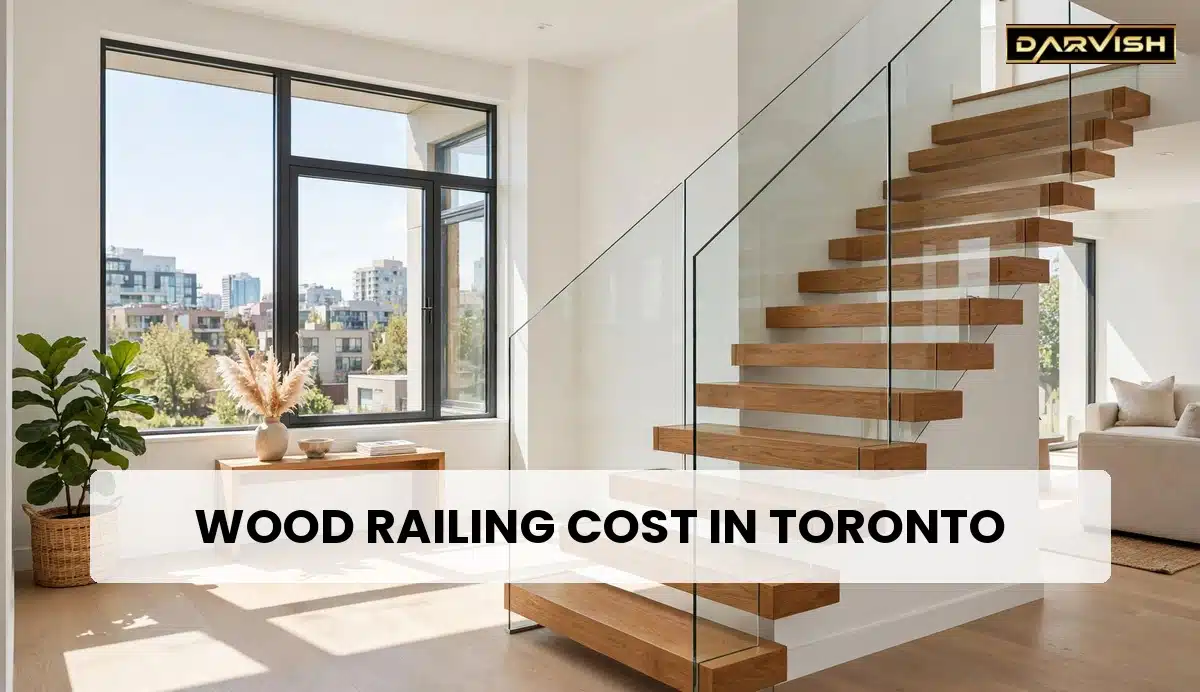
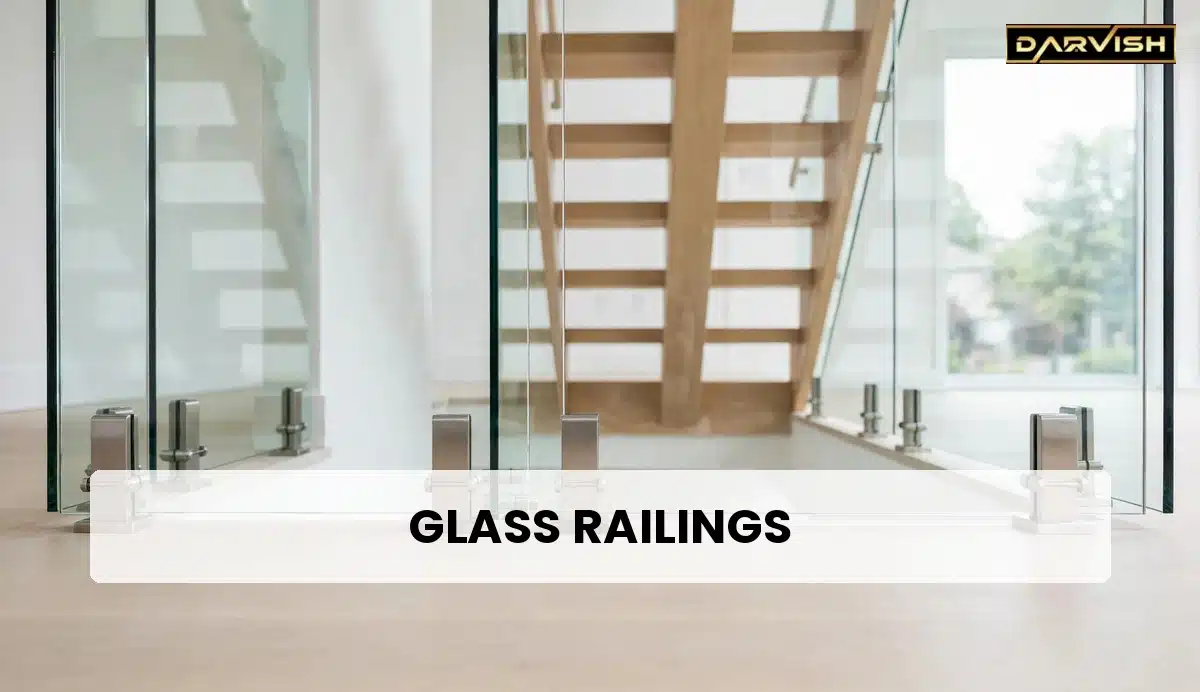
Frameless glass railings use thick tempered glass, usually 10 mm or 12 mm, held by stainless clamps or a base channel. Because the glass itself is the guard, you get the cleanest look and the most light, which is why a glass railing for floating stairs leads for open-plan homes. A glass railing on floating stairs costs more mainly because of the glass: moving from 8 mm to 10 mm roughly doubles the glass cost. See our glass railings page for the full range.
Heavier glass also needs stronger fixings, careful handling and an installer who can set every panel perfectly level, since no frame hides a crooked tread or an out-of-square wall. For most homes, a frameless glass run costs about $200 to $320 per linear foot installed, and a stainless top rail takes it to $230 to $360. When you compare quotes, check that both list the same thickness and fixing system — and browse our glass railing design ideas page first.
Cable Railings
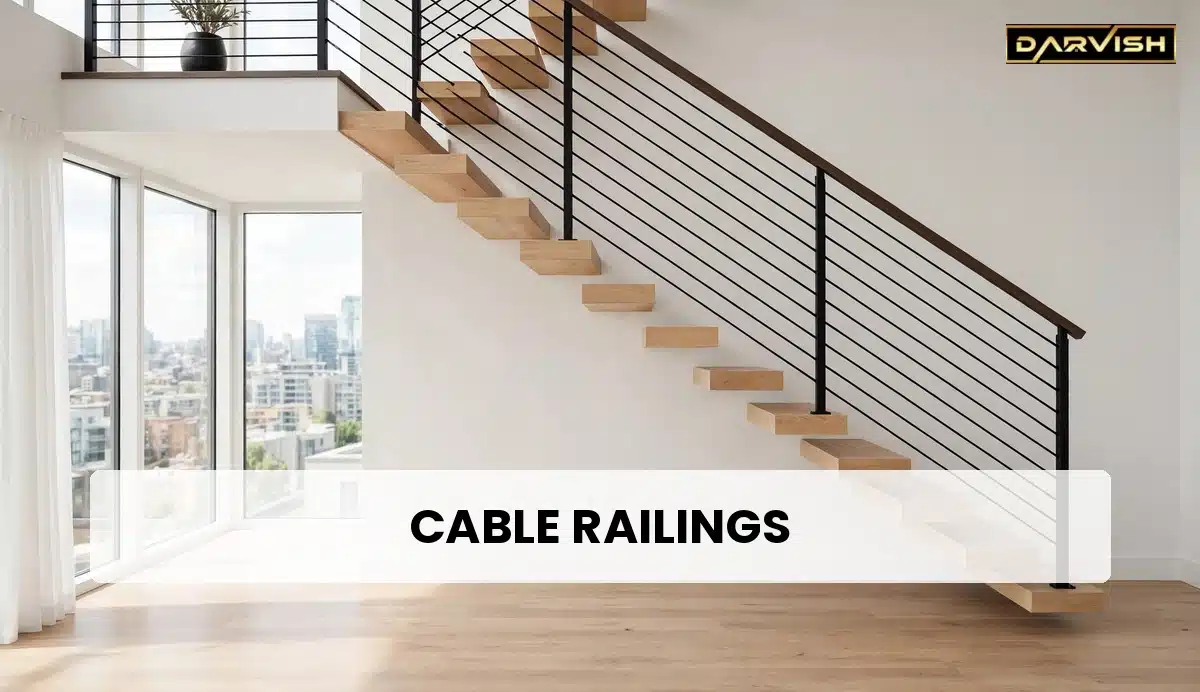
Cable railings use slim horizontal steel cables pulled tight between slim posts, topped by a wood or metal handrail. The look is light and industrial, and the cables almost disappear from across the room. A cable railing on floating stairs usually costs $150 to $280 per linear foot installed, depending on the number of cables and the posts. See our metal railing page.
Cables must stay tight, so the posts and handrail must hold the tension without bending. A turnbuckle at each end lets the cables be tightened again later. A cable railing floating stairs Toronto families buy for a busy staircase should use stainless cables, which stand up to hands, pets and cleaning far better than plain steel.
One code warning before you choose cable: the Building Code says a required guard must be designed so nothing between 140 mm and 900 mm above the floor makes climbing easy. Horizontal cables sit in that band and can act as rungs, so a horizontal cable run may not pass inspection where a guard is required. Ask your installer whether they fit cables vertically, or only where no guard is required.
Metal Railings: Steel and Iron
Metal railings use steel or wrought iron posts and balusters, often topped by a wood handrail. They are the strongest option and the most forgiving to install, which is why you see them on busy family staircases. A metal railing for floating stairs usually costs $180 to $320 per linear foot installed, with the finish and the baluster pattern setting the price. See our metal railing page.
A metal railing for floating stairs can be powder-coated matte black, brushed steel or a colour to match your home. Black is the most popular finish in Toronto, because it matches the steel stringer. Painted steel needs a touch-up now and then, while powder-coated steel holds its finish for years.
Wood Handrails and Metal Balusters
A wood handrail with slim metal balusters is the warmest option and usually the most affordable. The handrail gives you a comfortable grip, while the balusters keep the guard safe. Oak, maple and walnut are the most popular handrail woods, and a clear finish shows the grain. This style suits homes where the staircase should feel classic. See our wood stair railings page.
Wood needs a little more care than metal or glass. Seal the handrail when it is installed and again once a year, wipe it down now and then, and sand out a scuff in minutes. On a floating staircase, the handrail is usually fixed to the wall or to slim posts — ask your installer how it is supported.
| Feature | Glass | Cable | Metal | Wood + Metal |
|---|---|---|---|---|
| Typical cost per foot | $200 to $360 | $150 to $280 | $180 to $320 | $120 to $250 |
| Look | Clearest and most open | Slim and industrial | Bold and classic | Warm and classic |
| Best for | Modern open plans | Lofts and modern homes | Busy family homes | Budget-friendly projects |
| Cleaning | Wipe glass often | Wipe cables now and then | Wipe posts now and then | Seal wood once a year |
How Much Does a Floating Stair Railing Cost in Toronto?
Based on installed prices from GTA railing installers in 2026, a floating stair railing usually runs from about $120 per linear foot for a wood handrail with metal balusters to $360 or more for frameless glass with a stainless steel top rail.
| Type | Look | Installed cost per foot (plus HST) | Best for |
|---|---|---|---|
| Frameless glass railing | Clear and open | $200 to $360 | Modern open plans |
| Semi-frameless glass railing | Slim channels, open top | $170 to $260 | Family homes |
| Cable railing | Slim and industrial | $150 to $280 | Lofts and modern homes |
| Metal railing | Bold and classic | $180 to $320 | Traditional and modern homes |
| Wood handrail with metal balusters | Warm and classic | $120 to $250 | Budget-friendly projects |
These ranges cover the railing, hardware and installation — not HST, removal of an old railing, or repairs. They sit on top of the staircase installation cost in Toronto, which covers the treads and the stringer. Treat them as a planning guide: the price of floating stair railing ideas depends on measurements, materials and the condition of your home.
What Affects the Cost of a Floating Stair Railing?
Two homes with the same railing style can get very different quotes. When it comes to floating stair railing ideas, these factors move the number the most.
- Railing style: glass, cable, metal or wood.
- Materials: tempered glass, stainless steel and walnut cost more than painted steel and poplar.
- Length and layout: a long run with corners needs more panels, cables or balusters.
- Handrail: a wood or stainless handrail adds to the price; a curved one costs the most.
- Site condition: a sound wall and level treads are quick to work with; repairs add cost.
- Extras: removing an old railing, core drilling into concrete, or a glass panel made to measure.
Handrails: Height, Grip and Style
The handrail is the part you touch every day, so it matters more than it looks. The best handrails for floating stairs pair a comfortable grip with a clean line: a slim wood rail on glass, or a round steel rail on a cable run. The handrail must sit at the right height, usually 865 mm to 1,070 mm above the tread nosing. A handrail and a guard are two different parts: the handrail is the grip you hold, while the guard is the barrier that stops a fall — which is why the two have different heights.
Wood Handrails
A wood handrail feels warm in the hand and suits almost any home. Oak is the most popular choice, with maple close behind. A wood rail needs sealing when installed and again once a year, but a scuff sands out in minutes.
Metal Handrails
A metal handrail is slim, strong and easy to clean. Brushed stainless steel is the most popular handrail finish, with matte black close behind, and both match the steel stringer. Floating stair handrail ideas in metal suit modern homes best.
Glass Thickness and Safety Glass
Thickness is the biggest line item in most glass quotes. Thin 6 mm glass works in framed railings; frameless railings need 10 mm or 12 mm. A glass railing for floating stairs should always use tempered or laminated safety glass that meets the CAN/CGSB-12.1 standard, so a broken panel crumbles instead of shattering into sharp shards. For what thickness does to the price, see our glass railing cost in Toronto guide.
Floating Stair Railing Ideas for Small Spaces
Small halls and tight stairwells are where a floating staircase earns its keep. The best floating stair railing ideas for a small space keep the guard as light as possible: frameless glass, slim cables, or a single wood handrail on the wall side.
Light colours help too: a white wall, pale oak treads and a clear glass guard make a narrow hall feel wider. If your hall is dark, add a light under each tread.
Open Risers and Light
Open risers are what make a floating staircase feel light — the railing should not undo that. A frameless glass guard lets the light travel through the room, while a cable run breaks the view into thin lines.
How to Keep Your Floating Stair Railing Code-Safe
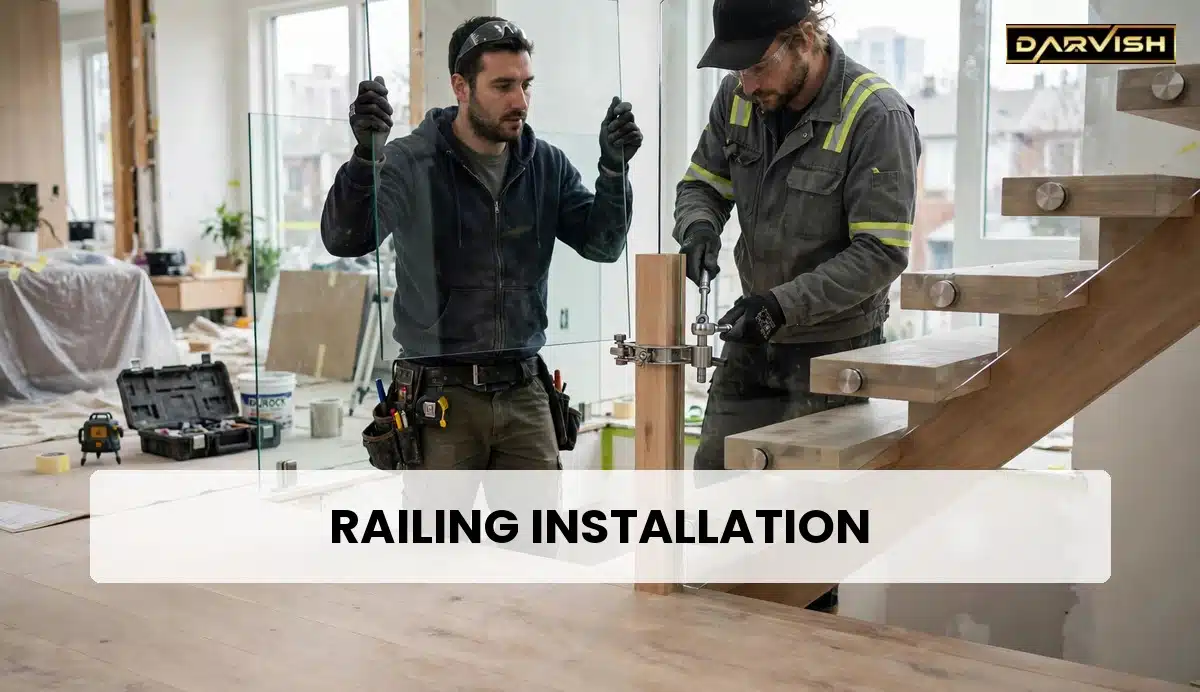
Whatever railing you choose, it has to meet the code. Ontario Building Code rules for guards cover height, strength and loads, and a railing that is too low or too weak can fail an inspection. A guard on a staircase must be at least 900 mm high, measured from the tread nosing, and 900 mm high on a landing inside the home; 1,070 mm applies outside the dwelling unit.
The gaps matter as much as the height. No opening in a guard may let a 100 mm ball pass through, which is why cable and baluster spacing are set so tight. The floating stair railing ideas in this guide all meet that rule when installed properly, so ask your installer to confirm the spacing in writing.
Guard Height and Gaps
Guard height is measured from the tread nosing on a staircase and from the floor on a landing. On a floating staircase, the guard follows the slope of the treads, so every panel or cable run is cut to a different length. If your staircase has a landing, measure the guard there too before you order.
Permits and Inspections
A permit is usually needed when you move a staircase, cut a new opening or change the structure. An inspector checks the guard height, the gaps and the strength of the fixings.
Sample Budgets for Floating Stair Railings
These planning ranges are based on current GTA pricing, not fixed quotes: the floating stair railing ideas below are the ones Toronto homeowners budget for most — a cable railing floating stairs Toronto families choose for a standard flight usually runs $3,000 to $7,000, while a metal railing for floating stairs usually runs $3,500 to $8,000.
| Project | Typical Setup | Budget (Installed, plus HST) |
|---|---|---|
| Standard floating stair, glass railing | Frameless glass, stainless clamps | $4,000 to $9,000 |
| Floating stair, cable railing | Stainless steel cables, wood handrail | $3,000 to $7,000 |
| Floating stair, metal railing | Steel posts, wood handrail | $3,500 to $8,000 |
| Small floating stair, wood and metal | Wood handrail, metal balusters | $2,500 to $6,000 |
If a quote falls well outside these ranges, ask why — a much lower price often means thinner glass, lighter cables or no proper measurement.
How to Choose the Right Railing for Your Home
Match the Railing to the Space
You do not always need frameless glass. For a standard Toronto home, a cable or metal railing is strong, beautiful and usually all you need. Save frameless glass for an open-plan main floor, where the light and the look are worth the price — the floating stair railing ideas that age best fit the house, not just the trend. Browse our stair railing options to see the full range.
Plan the Railing Before You Build or Renovate
Plan your railing before the staircase is built or the walls are finished. Solid blocking, level treads and a properly sized opening make installation faster, and all three are cheaper to add during a renovation. A cable railing fitted during framing costs less than one retrofitted later, and a glass guard needs its clamps set into solid backing from the start — and if the railing is a required guard, confirm the cables meet the anti-climbing rule first.
Choose Standard Finishes Where It Counts
For floating stair railing ideas on a budget, clear glass and chrome or brushed stainless hardware keep the price lowest, and standard sizes and finishes are always cheaper than custom colours and curved glass.
Get an On-Site Measurement
Phone estimates are rough guesses. A free on-site measurement gives you a written quote based on your actual treads and headroom. A metal railing for floating stairs is measured tread by tread, so only a site visit prices it fairly.
How Darvish Inc Quotes and Installs Floating Stair Railings
Darvish Inc is a Toronto-area team that installs stairs, railings and glass showers. Our floating stair railings follow a simple four-step process: assess your space and style, prepare detailed drawings, have the railing made to your exact measurements, and install it cleanly. We have done this since 2017 with our own crew, not subcontractors. The floating stair railing ideas we install most are listed line by line in our quotes, and the floating stair handrail ideas we recommend are agreed before work begins.
A railing is the part of a staircase you touch every day, so we plan it that way. The same care goes into every railing we install, and you can read about the benefits of a custom staircase before you book. Every railing comes with post-installation support, and a written quote first.
Our work has earned four Consumer Choice Awards in York Region (2022 to 2025), and you can read Darvish Inc reviews from GTA homeowners on Google before you book. We work across Toronto, North York, Vaughan, Markham, Richmond Hill and Oakville.
Final Thoughts on Floating Stair Railing Ideas
So, which railing is right for your floating staircase? In most cases, floating stair railing ideas come down to three choices: look, budget, and light. A glass railing stays the most open, a cable railing the slimmest, and a metal railing the strongest — and any of them can be code-safe when measured and installed properly.
Whatever floating stair railing ideas you choose, make sure your quote names the materials, confirms code compliance and lists every extra. If you would like a number based on your home, our team can measure your space and give you a written quote.