
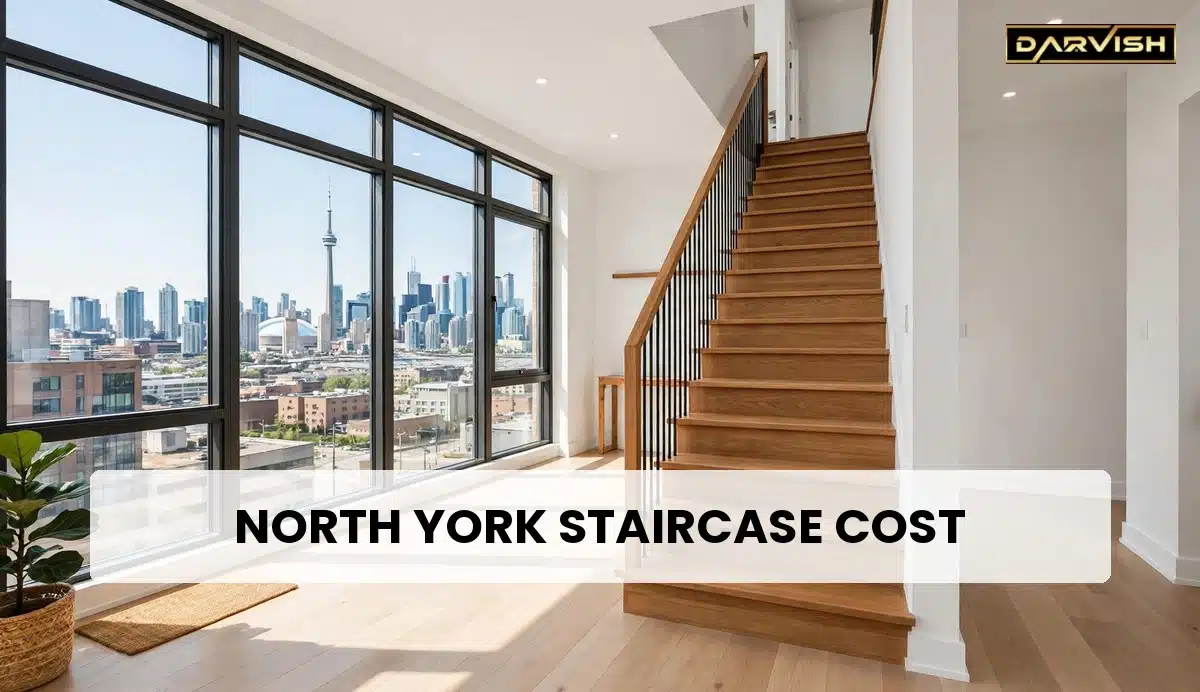




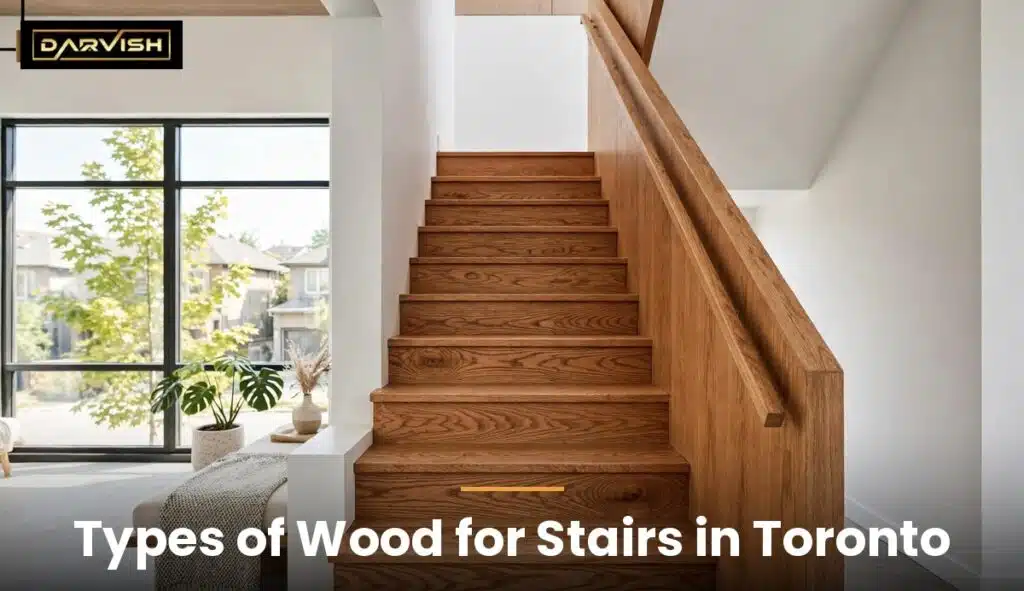
When it comes to wood, there are hundreds of types and qualities available in the market. But when it comes to building your homes, we at Darvish Inc. trust only a few — and the types of wood for stairs are a shorter list than most homeowners expect, because a stair tread is not a tabletop: it takes a footstep a thousand times a day, and the wrong wood shows it within a year. We stock only the best kind of wood for building stairs. But well, the best kind of wood is not always the most affordable. And affordability is a major factor for many when building homes. See our wood railings for stairs projects to get a sense of what each wood looks like finished, and read on for the species, the hardness numbers, and the honest trade-offs. The list below is the one we install most, and the table after it is the one we measure by.
Popularly Available Woods
Our woods are available in a diverse range of colors and shades, providing you with plenty of options to choose from based on your preferences and the aesthetic you desire for your project. The types of wood for stairs that Darvish stocks most often are the ones that balance hardness, workability and price — and the list below is the short list, not the catalogue. The best wood for stairs is the one that balances all three, not the one that is hardest or cheapest. Ten woods appear on it, and each one earns its place for a different reason: some for hardness, some for grain, some for price. The one wood that does not belong on a stair is the one chosen for colour alone, because colour fades and dents do not.
The popularly available woods in Toronto are red oak, white oak, yellow pine, ash, mahogany, Brazilian cherry, cypress, hard maple and American cherry. Yellow pine appears twice in the original list — that was a copy error, and it is listed once here. Each of these woods is described in the next section, with its distinctive qualities, and the table after that compares them by hardness and cost.
Types of Wood and Their Distinctive Qualities
Red Oak
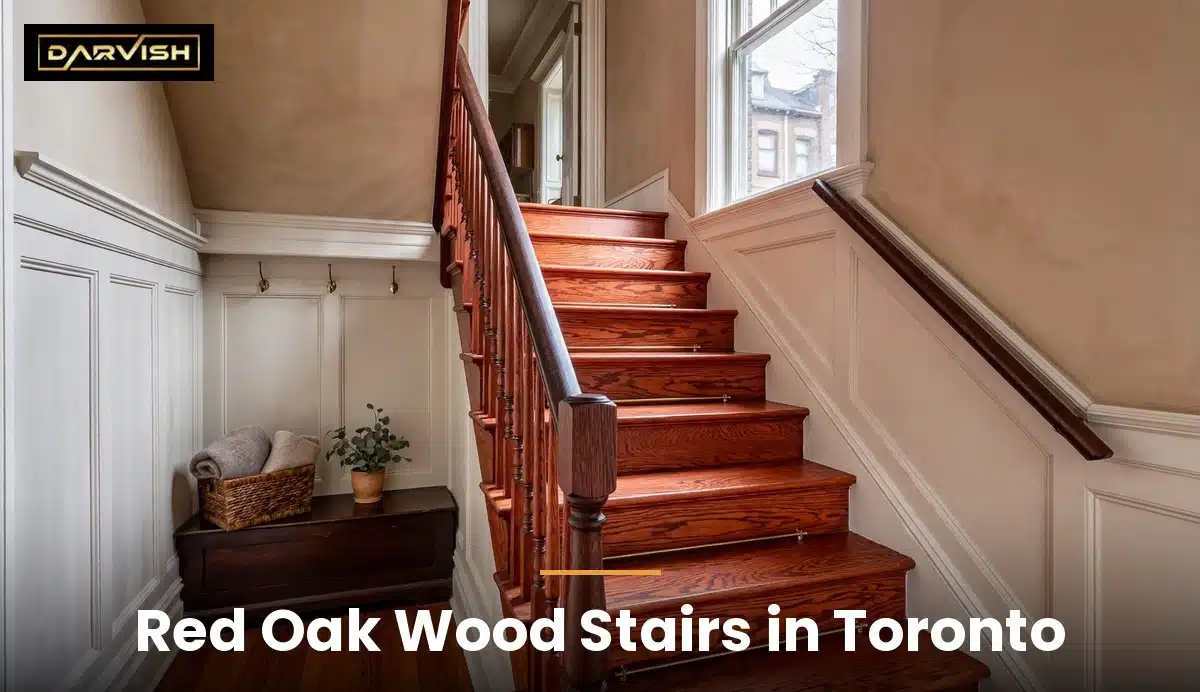
Red oak is hard and heavy. Found in abundance. Medium stiffness. Medium bending strength. High crushing strength. Popularly used for furniture, kitchen cabinets, floorwork, architectural millwork and panelling. The types of wood for stairs that a Toronto homeowner is most likely to meet first are red oak, because it is the most stocked and the most affordable of the hardwoods — and red oak for stairs is the default choice for a reason: it is hard enough for a tread, it takes stain evenly, and it is available in every size a stair needs. A wooden handrail in red oak is the same story: strong, straight-grained, and easy to finish. The grain is open, which means it shows the stain — and that is either the look you want or the reason to choose white oak instead.
White Oak
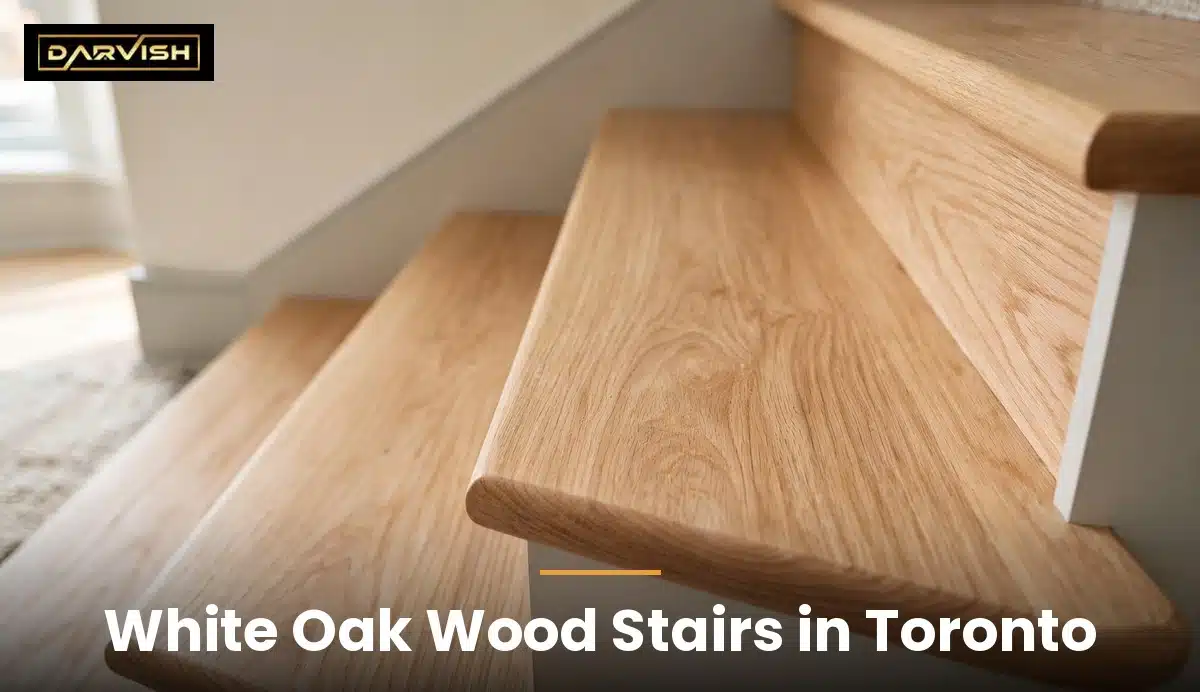
White oak is rot resistant. Beautiful grain. Easy to work with. Affordable. Strong and durable. Widely used for furniture making. White oak for stairs is the choice when the stair will see water — a basement stair, a mudroom stair, or any stair near an exterior door — because the closed grain resists moisture in a way red oak does not. The types of wood for stairs that last longest in a damp house are the closed-grain ones, and white oak is the most available of them. White oak for stairs is also the wood most often chosen for stair treads Markham homeowners ask us about, because the grain is quieter than red oak and the finish is more even. A wooden handrail in white oak is smooth under the hand and does not splinter, which is the part of the stair you actually touch. White oak treads pair well with glass railings, which keep the stair light and let the grain show.
Yellow Pine
Yellow pine has high strength. It is stiff and dense. Finely textured with straight grain. It holds nails and other fasteners well. It is durable. Popularly used in residential and commercial constructions, given its strength and density. It is not commonly used in making furniture. Yellow pine is the affordable wood on this list, and the honest place for it on a stair is the stringer and the structure — the parts that carry the load and never show. As a tread it is softer than the oaks and the maple, so it dents sooner, and the dents are the reason most homeowners choose a hardwood for the treads and keep the pine where it cannot be seen.
Ash
Ash is relatively dense. It has high strength, a coarse, grainy texture, and it is easy to work with and finish. It is affordable, hard and stiff, it absorbs shock well, it has good durability and good bending ability, and it is easily stained. It is widely used in making fine furnishings. Ash is the wood for a bent railing: its bending ability is the best on this list, so a curved handrail in ash is the one that holds its shape. As a tread it is hard enough, and the shock absorption is the part you feel — a stair in ash is quieter underfoot than a stair in maple, because the wood gives a little with each step.
Mahogany
Mahogany is a rich red stained wood. It has excellent workability, it is extremely durable, it has a fine and even grain, it is less susceptible to swelling and shrinking, and it is naturally smooth and free of marks and holes. It is expensive. Mahogany is the most expensive wood on this list alongside Brazilian cherry, and the reason is the grain: it is fine, even and stable, so a mahogany handrail stays smooth and does not move with the seasons. The colour is the other reason — a deep red that darkens with age, and no stain can copy it. For a stair that is meant to be looked at, mahogany is the wood; for a stair that is meant to be used hard, the oaks are the better spend.
Brazilian Cherry
Brazilian cherry is an extreme hardwood, more so than oak. It is strong and durable, resistant to scratch and dents, and popularly used for flooring. Brazilian cherry is the hardest wood on this list by a wide margin — harder than hard maple, harder than the oaks — and that hardness is the reason it is chosen for treads that will see the most traffic. The colour is a deep red-brown that darkens with light, so a Brazilian cherry stair looks different in its second year than in its first, and that is part of the appeal. The price is the trade-off: it is the most expensive wood here with mahogany, and the hardness that makes it durable also makes it harder to work.
Cypress
Cypress has moderate workability due to easy tear out. It is resistant to decay. It is high to moderately durable depending on its age — the older, the more durable. It is valuable and hence expensive. Cypress is the wood for a stair that will see weather: an exterior stair, a porch stair, or any stair that is not fully indoors. The decay resistance is the point, and it is the reason cypress costs more than its hardness would suggest. As an interior tread it is softer than the oaks, so it is not the first choice for a busy stair — but for the stair that has to survive the weather, it is the right wood.
Hard Maple
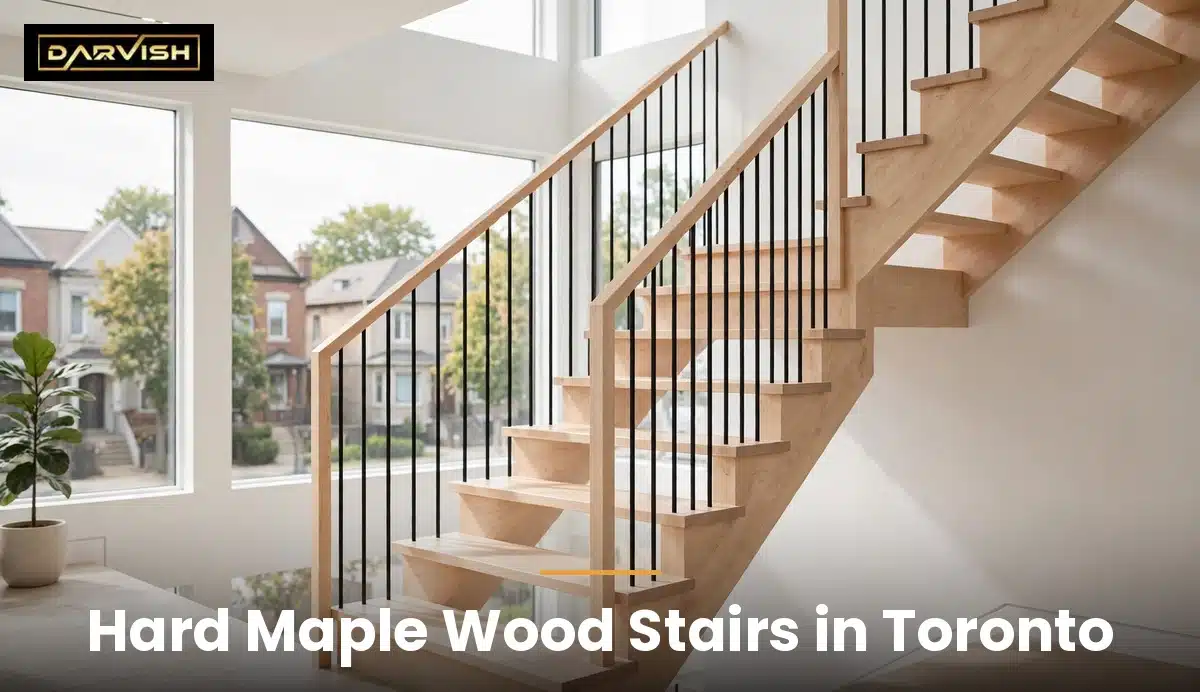
Hard maple is hard and heavy. It is resistant to abrasion, fine textured and straight grained, it bends easily, and it has great workability. The types of wood for stairs that take the most punishment are hard maple, because the abrasion resistance is the best of the pale woods — a hard maple tread keeps its finish longer than an oak tread under the same traffic. Hard maple is the wood most often chosen for stair treads Markham homeowners ask us about when the stair is the main route through the house, because the traffic is the argument and the maple is the answer. A handrail in hard maple is smooth, pale and modern, and it is the wood that shows the least grain — which is either the look you want or the reason to choose an oak.
American Cherry
American cherry is a supreme hardwood. It has a smooth and satiny texture, easy workability, moderate strength, and great bending ability. American cherry is the wood for the handrail and the trim, not the tread: the moderate strength is enough for a rail, and the satiny texture is the part your hand remembers. It darkens with light like Brazilian cherry but more gently, so a cherry handrail deepens over the years without the price of the Brazilian wood. As a tread it is softer than the oaks, so it is not the first choice for a busy stair — but for the part of the stair you touch, it is the most pleasant wood on this list.
Other Woods Worth Knowing
The gallery that used to sit at the end of this article showed more woods than the nine above, and they are worth a line each. Birch is pale, hard and affordable, and it is the wood most often used for a painted stair. Poplar is soft, cheap and easy to paint, and it belongs on a painted stair and nowhere else. Hickory is harder than the oaks and the most shock-resistant wood here, and it is the wood for a stair that will take a beating. Heart pine is the old-growth pine with a deep colour and a hard surface, and it is the wood for a heritage stair. Ipe is the hardest and most weather-resistant wood of all, and it belongs on an exterior stair. Each of these is a good wood for the right stair — and the wrong wood for the wrong one.
Wood Species at a Glance
The table below compares the seven species with published hardness figures, so the choice is a number and not a feeling — and the types of wood for stairs in the table are the ones Darvish stocks. The hardness figures are Janka ratings — the force in pounds needed to press a steel ball halfway into the wood — and they were checked against the Wood Database on 2026-11-14. Red oak for stairs is the baseline most Toronto homeowners know: 1,220 lbf, hard enough for a tread and affordable. White oak for stairs is a little harder at 1,350 lbf, and the closed grain is the reason it resists moisture. The relative cost column is the article’s own judgement — no dollar figures, because the price of a wood moves with the market and the only honest price is the one in a quote.
| Species | Janka Hardness | Best For | Relative Cost |
|---|---|---|---|
| Red oak | 1,220 lbf | Treads and railings | Moderate |
| White oak | 1,350 lbf | Treads, damp areas | Moderate |
| Hard maple | 1,450 lbf | High-traffic treads | Moderate to high |
| White ash | 1,320 lbf | Bent railings | Moderate |
| Brazilian cherry (jatoba) | 2,690 lbf | Floors and treads | High |
| Mahogany (Honduran) | 900 lbf | Railings and trim | High |
| American cherry (black cherry) | 950 lbf | Railings and trim | High |
The table is a starting point, not a verdict: the hardest wood is not always the best wood for your stair, because hardness is only one of the four things that matter — the other three are workability, stability and looks. A wood that is hard to work with costs more to install, a wood that moves with the seasons costs more to maintain, and a wood whose colour you do not love is the wrong wood at any price. The species in the table are the ones with published hardness figures; yellow pine and cypress are not in it, because no published figure was used for them here — they are covered in the text above.
How to Choose the Right Types of Wood for Stairs
The types of wood for stairs that are right for your home are the ones that match four things: the traffic, the moisture, the look, and the budget. The traffic decides the hardness: a stair that a family of five uses a dozen times a day needs a hard tread — hard maple, white oak, or Brazilian cherry — while a stair to a guest room can be a softer wood without regret. A wooden handrail is a different question from a tread: the handrail is touched, not stepped on, so the smoothness and the stability matter more than the hardness, and mahogany and American cherry are the woods for it. The moisture decides the grain: a closed-grain wood for a damp stair, an open-grain wood for a dry one. The look decides the colour and the grain, and the budget decides how much of the hardest wood you can afford.
The code decides the rest. The Ontario Building Code sets the rules for riser height, tread depth, handrail height and the gap between balusters, and the wood you choose has to meet them — a tread that is too thin for its span will flex, and a handrail that is too small to grip will fail inspection. The code does not name a wood, but it names the numbers, and the numbers are what the wood has to satisfy. Stair treads Markham inspectors check are the same numbers Toronto inspectors check, because the code is provincial — so the wood choice is the same in both cities, and the difference is the installer, not the rule.
The same wood that works on a closed stair works on floating staircases — the choice is about the tread, not the stringer. A floating stair in hard maple is the most common version, because the pale wood and the open risers make the stair look lighter than it is. Red oak for stairs is the other common choice for a floating design, because the grain is the star and the open risers show it. The railing that goes with a floating stair is usually glass, because the glass does not hide the wood — and the wood is the point of the stair. If you are choosing between two woods and cannot decide, choose the harder one: the regret is almost always that the tread was too soft, never that it was too hard.
Final Thoughts
There is no sure short way of telling which wood is best. But given that pricing affects most decisions, Mahogany and Brazilian Cherry are the most expensive. While plain yellow wood, ash and pine are comparatively affordable choices. The types of wood for stairs that Darvish trusts are the ones on this page, and the reason is simple: they are the woods that have held up in Toronto homes, through Toronto winters, under Toronto feet. For more details and information regarding woods and their best use, call now. Or, if you are in Toronto, Richmond Hill, or North York or nearby, pay us a visit, and our senior woodworker will help you determine the right choice of wood. You can also see recent work and reviews on Darvish Inc on Google.
If you are still deciding, talk to a custom staircases specialist before you buy the wood — the stair is built once, and the wood is the part you live with. For stair treads Markham homeowners, the usual advice is the same: choose the harder wood, because the regret is almost always that the tread was too soft.
Frequently Asked Questions
▾Which wood is hardest for stairs?
Brazilian cherry is the hardest wood on this page, at 2,690 lbf on the Janka scale — harder than hard maple at 1,450 lbf, and more than twice as hard as red oak at 1,220 lbf. The types of wood for stairs that take the most punishment are the hardest ones, and Brazilian cherry is the hardest of them. White oak for stairs is the middle ground: 1,350 lbf, hard enough for a busy tread, and the closed grain resists moisture in a way the other hardwoods do not. For a basement stair, white oak for stairs is the first choice, because the closed grain resists the damp. Hardness is not the whole answer, though — a wood that is hard to work with costs more to install, and the hardest wood is not always the best wood for your stair.
▾What wood is best for a handrail?
A wooden handrail should be smooth, stable and pleasant to grip — and mahogany and American cherry are the woods for it, because both are fine-grained and do not move much with the seasons. The red oak version is the affordable one: strong, straight-grained, and easy to finish, though the open grain shows the stain. The handrail is the part of the stair you touch every day, so the texture matters more than the hardness — and the wood that feels best under your hand is the right one, even if it is not the hardest on the page.
▾Where can I buy stair treads in Markham?
Stair treads Markham homeowners buy most often are white oak and hard maple, and Darvish supplies and installs both across the GTA, including Markham. The tread is usually ordered to the stair, not bought off the shelf, because the tread depth, the nosing and the finish have to match the stair it goes on. If you are in Markham, the best first step is a visit and a measurement — the wood choice follows the stair, not the other way around.
▾Is red oak good for stairs?
Red oak for stairs is the most common choice in Toronto, and it is good for stairs: hard enough for a tread at 1,220 lbf, easy to work with, and the most affordable of the hardwoods. Red oak for stairs takes stain evenly, so the colour can be matched to the floor, and it is available in every size a stair needs. The one thing to know is the open grain: it shows the stain, and it is not the wood for a damp stair — white oak is the better choice there, because the closed grain resists moisture.
▾How do I keep a wood handrail looking new?
A wooden handrail stays looking new with the same care as any finished wood: wipe it with a damp cloth, never with a harsh cleaner, and re-oil or re-coat it when the finish starts to look thin. The finish is the part that wears, not the wood — and a handrail that is re-coated every few years will look new for decades. If the handrail is mahogany or American cherry, the colour will deepen with light, and that is the wood aging well, not wearing out.